blue spruce
Picea pungens · Accepted scientific name
Scientific literature: Very Sparse (4 studies) · ★☆☆☆☆
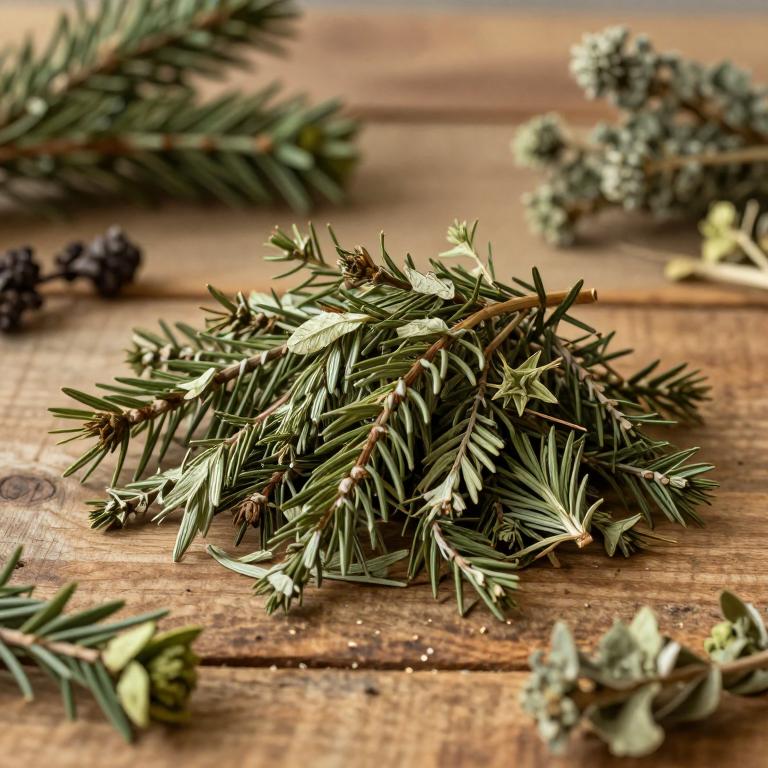
Blue spruce, scientifically known as Picea pungens, is a majestic evergreen prized for its striking silvery-blue needles. Beyond its ornamental beauty, this coniferous powerhouse offers medicinal potential, historically used in traditional practices for its aromatic resins and essential oils, which possess antioxidant, antimicrobial, and soothing properties for holistic wellness.
Names and Synonyms
Common Names
- Colorado blue spruce
- Colorado spruce
- blue spruce
- silver spruce
- Colorado Blue-Spruce
Scientific Names
Accepted name
Picea pungensSynonyms
- Picea pungens glauca-pendens
- Picea parryana
- Picea menziesii var. parryana
- Abies menziesii var. parryana
- Abies commutata var. glauca
- Picea pungens var. viridis
- Picea pungens f. glauca-pendula
- Picea pungens f. viridis
- Picea commutata
- Picea pungens var. glauca
- Picea pungens f. glauca
- Pinus armata
- Picea pungens f. coerulea
- Picea pungens f. perpendicularis
- Picea parryana argentea
- Picea pungens f. compacta
- Picea pungens f. argentea
- Picea pungens var. compacta
- Picea pungens subvar. pendula
- Abies parlatorei
- Picea parryana glauca-pendens
- Picea parryana glauca-pendula
- Picea pungens var. kosteriana
- Picea pungens f. kosteriana
- Picea pungens var. pendula
- Picea pungens f. pendens
- Picea pungens var. hunnewelliana
- Picea pungens f. hunnewelliana
Regional and Traditional Names
Spanish:
- Picea azul
- Pícea de Colorado
- Píceas azules
- Pícea azul del Colorado
- Picea de Colorado
- Pícea azul
- Picea pungens glauca
- Piceas azules
- Picea azul del Colorado
- pícea azul
- Pícea de Colorado
German:
- Stech-Fichte
- Picea pungens ‘Glauca’
- Blaue Stech-Fichte
- Blaue Stechfichte
- Blau-Fichte
- Stechfichte
- Picea pungens 'Glauca'
- Picea parryana
- Blaufichte
- Stechfichte
- Blau-Fichte
- Blaufichte
- Stech-Fichte
French:
- Épicéa bleu
- Épinette du Colorado
- Épicéa du Colorado
- Épicéa bleu
- épicéa bleu
- épicéa du Colorado
- épicéa piquant
- épinette bleue
- épinette du Colorado
Sources: Wikidata, Catalogue of Life
Taxonomical Classification
This plant belongs to the kingdom Plantae and is classified within the phylum Streptophyta and class Equisetopsida. It is further organized under the subclass Pinidae and order Pinales, falling into the family Pinaceae. Finally, its taxonomic identity is defined by the genus Picea.
| Rank | Classification |
|---|---|
| Kingdom | Plantae |
| Phylum | Streptophyta |
| Class | Equisetopsida |
| Subclass | Pinidae |
| Order | Pinales |
| Family | Pinaceae |
| Genus | Picea |
Sources: The World Checklist of Vascular Plants (WCVP)
Distribution
This plant exhibits a broad distribution across several regions of Northern and Middle Europe. In the northernmost reaches, it can be found growing in the landscapes of Iceland. Its presence extends through the Scandinavian Peninsula, specifically within the territories of Norway and Sweden. Moving toward the British Isles, the species is also documented in Great Britain. Finally, its geographical range reaches into Middle Europe, where it is located in Austria.
| Region | Area |
|---|---|
| Northern Europe | Great Britain |
| Northern Europe | Iceland |
| Northern Europe | Norway |
| Northern Europe | Sweden |
| Middle Europe | Austria |
| Middle Europe | Belgium |
| Middle Europe | Czechia-Slovakia |
| Middle Europe | Germany |
| Middle Europe | Switzerland |
| Southwestern Europe | France |
Sources: The World Checklist of Vascular Plants (WCVP)
Botanical Identification
Ecology
The ecology of Picea pungens is defined by its preference for specific high-altitude environments, typically occupying an elevational range between 2000 m AMSL and a maximum of 3000 m AMSL. Within these mountainous regions, the species establishes itself in distinct moisture-rich habitats, specifically thriving in areas such as rivers and swamps.
- Elevational range max:
- 3000 m AMSL
- Elevational range min:
- 2000 m AMSL
- Habitat :
- rivers, swamps
Life history
The life history of Picea pungens is characterized by its status as a perennial organism, allowing it to persist through multiple growing seasons and establish long-term presence within its ecosystem. As a phanerophyte, its regenerative buds are located high above the ground on woody stems, a structural adaptation that enables the species to thrive in diverse environmental conditions. This phanerophyte life form ensures that the plant can withstand various climatic stresses while maintaining its vertical growth habit over its extended lifespan.
- Life form :
- phanerophyte
- Lifecycle :
- perennial
Morphology
The morphology of Picea pungens is characterized by its stature as a large, woody tree, exhibiting a robust and self-supporting growth form. It is a terrestrial species that grows independently, lacking parasitic or epiphytic tendencies. As a substantial tree, it reaches an average height of approximately 32.5 m, though it is capable of attaining a maximum height of up to 50 m.
- Aquatic :
- terrestrial
- Climber :
- self-supporting
- Epiphyte :
- terrestrial
- Growth form :
- tree
- Parasite :
- independent
- Plant height max:
- 50 m
- Plant height mean:
- 32.5 m
- Woodiness :
- woody
Physiology
The physiology of Picea pungens is characterized by a metabolic framework typical of coniferous gymnosperms, utilizing a C3 photosynthetic pathway to facilitate carbon fixation. In this process, the plant captures atmospheric carbon dioxide through its stomata, where it is initially fixed by the enzyme RuBisCO into a three-carbon compound within the mesophyll cells. This metabolic route is essential for the synthesis of carbohydrates required for growth and structural maintenance in its needle-like foliage. Furthermore, the species is strictly non-carnivorous, relying entirely on its root system and soil nutrient uptake for the acquisition of essential minerals and water, rather than capturing and digesting prey to supplement its nutritional requirements.
- Carnivory :
- non-carnivorous
- Photosynthetic pathway :
- C3
Reproduction
The reproduction of Picea pungens is characterized by a reliance on sexual processes, as asexual reproduction is notably absent. The flowering period is highly concentrated, with both the flowering start and end occurring in May. The plant utilizes an abiotic pollination syndrome, specifically relying on the wind for the transfer of pollen. Following successful pollination, the species produces seeds with a highly consistent mass; the mean seed mass is approximately 0.00429755566666667 g, with individual seeds ranging from a minimum of 0.00423 g to a maximum of 0.005 g.
- Flowering time :
- May
- Pollination syndrome :
- wind
- Pollination syndrome :
- abiotic
- Reproduction asexual :
- absent
- Seed mass max:
- 0.005 g
- Seed mass mean:
- 0.00429755566666667 g
- Seed mass min:
- 0.00423 g
Sources: Global Inventory of Floras and Traits (GIFT)
Plant Parts
Picea pungens has 1 reported plant parts identified across 1 scientific publications and several other databases that are studied for medicinal purposes. The most consistently reported plant part include seed.
| Plant part | Supporting sources | Consensus |
|---|---|---|
| Seed | 1 supporting sources | ★☆☆☆☆ |
Seed
- Chemistry & biodiversity
Chemicals
Picea pungens has 1 reported phytochemicals identified across 1 scientific publications and several other databases. The most consistently reported chemicals include LIMONENE.
| Chemical | Supporting sources | Consensus |
|---|---|---|
| LIMONENE | 1 supporting sources | ★☆☆☆☆ |
LIMONENE
- Chemistry & biodiversity
Preparations
Picea pungens has 3 reported preparations identified across 1 scientific publications and several other databases. The most consistently reported preparations include Seed and Cone Essential Oils, oil from Picea pungens cones, oils.
| Preparation | Supporting sources | Consensus |
|---|---|---|
| Seed and cone essential oils | 1 supporting sources | ★☆☆☆☆ |
| Oil from picea pungens cones | 1 supporting sources | ★☆☆☆☆ |
| Oils | 1 supporting sources | ★☆☆☆☆ |
Seed and cone essential oils
- Chemistry & biodiversity
Oil from picea pungens cones
- Chemistry & biodiversity
Oils
- Chemistry & biodiversity