Tigertail Spruce
Picea polita · Accepted scientific name
Scientific literature: Very Sparse (4 studies) · ★☆☆☆☆
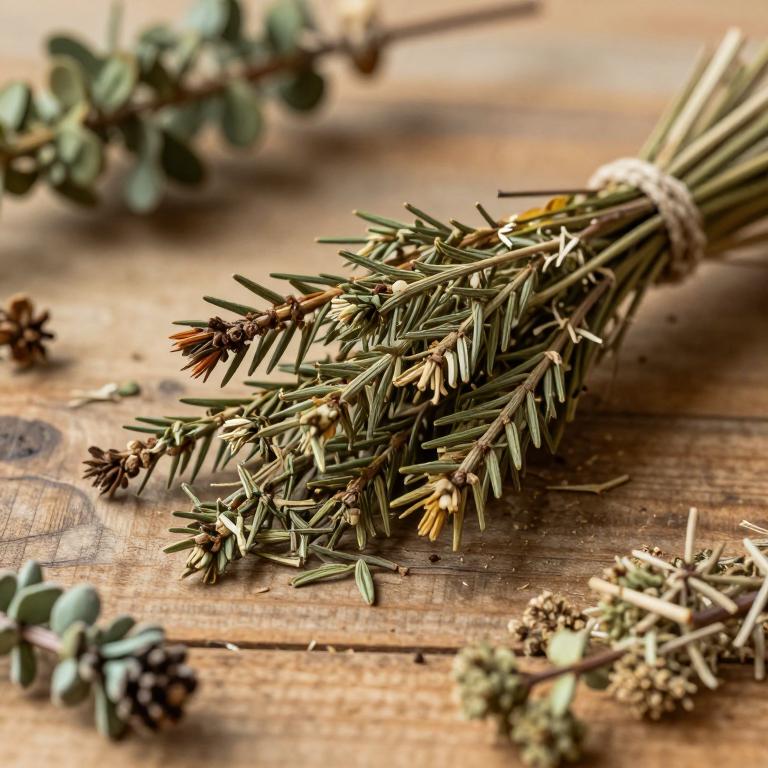
Tigertail Spruce, scientifically known as Picea polita, is a striking ornamental conifer celebrated for its unique, upward-curving needles. While primarily valued in landscaping for its distinctive texture and architectural form, this resilient evergreen offers aesthetic beauty and provides essential habitat for local wildlife within diverse garden ecosystems.
Names and Synonyms
Common Names
- Pinus thunbergii
- Tiger-Tail Spruce
- tigertail spruce
- Japanese Black-Pine
- Japanese Black Pine
- black pine
Scientific Names
Accepted name
Picea politaSynonyms
- Picea torano f. rubriflora
- Abies polita
- Pinus thunbergii
- Pinus polita
- Abies thunbergii
- Picea polita f. rubriflora
- Picea thunbergii
Regional and Traditional Names
Spanish:
- Pinus thunbergii
- Pino japonés de Thunberg
- Pino japones de Thunberg
- Pino negro japonés
German:
- Japanische Schwarzkiefer
- Pinus thunbergii
- Pinus thunbergiana
- Tigerschwanzfichte
- Tigerschwanz-Fichte
- Thunbergs Kiefer
- japanische Schwarzkiefer
French:
- pin noir du Japon
- Pin noir japonais
- Pinus thunbergii
- Épicéa queue-de-tigre
- Épinette queue-de-tigre
- Pin noir du Japon
Sources: Wikidata, Catalogue of Life
Taxonomical Classification
This plant belongs to the kingdom Plantae and is classified under the phylum Streptophyta and class Equisetopsida. Within the subclass Pinidae and order Pinales, it is further categorized into the family Pinaceae. Finally, it is identified under the genus Pinus as Piccea polita.
| Rank | Classification |
|---|---|
| Kingdom | Plantae |
| Phylum | Streptophyta |
| Class | Equisetopsida |
| Subclass | Pinidae |
| Order | Pinales |
| Family | Pinaceae |
| Genus | Pinus |
Sources: The World Checklist of Vascular Plants (WCVP)
Distribution
This plant, known scientifically as Picea polita, possesses a very specific and limited natural range. Its geographical distribution is primarily concentrated within the region of Eastern Asia. Specifically, this medicinal species is found growing in the natural habitats of Japan. Because its occurrence is so localized, it is considered an endemic element of the Japanese landscape. Understanding this restricted territory is essential for the conservation and study of the species.
| Region | Area |
|---|---|
| Eastern Asia | Japan |
Sources: The World Checklist of Vascular Plants (WCVP)
Botanical Identification
Life history
The life history of Picea polita is characterized by its classification as a phanerophyte, a growth form where the reproductive buds are located on well-developed aerial shoots well above the ground. Specifically, it functions as both a phanerophyte and a nanophanerophyte, indicating its ability to maintain its structural integrity through various stages of development. As a perennial species, it follows a long-term lifecycle, establishing itself as a permanent fixture within its ecosystem and enduring through multiple growing seasons rather than completing its cycle in a single year. This persistent life strategy allows the plant to develop extensive woody structures and maintain consistent physiological processes over an extended lifespan.
- Life form :
- phanerophyte
- Lifecycle :
- perennial
Morphology
The morphology of Picea polita is characterized by its stature as a substantial tree, exhibiting a robust and woody structure. As a self-supporting organism, it does not function as a climber, liana, or vine, nor does it rely on other structures for vertical growth. The plant is strictly terrestrial in its habitat, lacking any aquatic or semiaquatic tendencies, and it is not an epiphyte, maintaining a terrestrial life strategy. Furthermore, Picea polita is an independent species that does not exhibit parasitic behavior, functioning entirely on its own nutritional requirements through its woody growth form.
- Aquatic :
- terrestrial
- Climber :
- self-supporting
- Epiphyte :
- terrestrial
- Growth form :
- tree
- Parasite :
- independent
- Woodiness :
- woody
Physiology
The physiology of Picea polita is characterized by its specific metabolic and structural adaptations to its environment. As a gymnosperm, it utilizes the C3 photosynthetic pathway, a process defined by the initial fixation of carbon dioxide into a three-carbon compound, which is typical for most coniferous species operating in temperate climates. In addition to its carbon fixation strategy, the plant exhibits distinct morphological properties regarding its structural integrity, specifically maintaining a mean stem specific density (SSD) of 557 mg/cm³. This density value reflects the internal cellular arrangement and lignification within the stem, contributing to the plant's overall mechanical strength and hydraulic efficiency.
- Photosynthetic pathway :
- C3
- Stem specific density (SSD) mean:
- 557 mg/cm³
Reproduction
The reproduction of Picea polita is characterized by the production of seeds that exhibit specific mass variations across different observations. Based on collected data, the seed mass demonstrates a degree of variability, with one set of measurements showing a mean mass of approximately 0.0134425 g, ranging from a minimum of 0.0067 g to a maximum of 0.01667 g. A secondary dataset provides a slightly different profile, indicating a mean seed mass of 0.013583 g, with the individual seed weights fluctuating between a minimum of 0.0115 g and a maximum of 0.016 g. These measurements highlight the small, lightweight nature of the seeds produced during the plant's reproductive cycle.
- Seed mass max:
- 0.01667 g
- Seed mass max:
- 0.016 g
- Seed mass mean:
- 0.0134425 g
- Seed mass mean:
- 0.013583 g
- Seed mass min:
- 0.0067 g
- Seed mass min:
- 0.0115 g
Sources: Global Inventory of Floras and Traits (GIFT)
Chemicals
Picea polita has 1 reported phytochemicals identified across 0 scientific publications and several other databases. The most consistently reported chemicals include asparagine.
| Chemical | Supporting sources | Consensus |
|---|---|---|
| asparagine | 1 supporting sources | ★☆☆☆☆ |
asparagine
- Yakugaku zasshi : Journal of the Pharmaceutical Society of Japan
Preparations
Picea polita has 3 reported preparations identified across 0 scientific publications and several other databases. The most consistently reported preparations include defoliated twigs, needles, outer bark.
| Preparation | Supporting sources | Consensus |
|---|---|---|
| Defoliated twigs | 1 supporting sources | ★☆☆☆☆ |
| Needles | 1 supporting sources | ★☆☆☆☆ |
| Outer bark | 1 supporting sources | ★☆☆☆☆ |
Defoliated twigs
- Natural product communications
Needles
- Natural product communications
Outer bark
- Natural product communications