Caucasian Spruce
Picea orientalis · Accepted scientific name
Scientific literature: Very Sparse (7 studies) · ★☆☆☆☆
Caucasian Spruce, scientifically known as Picea orientalis, is a majestic evergreen native to the Caucasus Mountains. Renowned for its dense, conical form and fragrant needles, this resilient conifer offers significant medicinal potential. Its essential oils and resinous extracts are traditionally utilized for their antimicrobial and therapeutic properties.
- Family
- Pinaceae
- Native range
- Europe
- Parts used
- Flower · Seed
- Common names
- Caucasian Spruce · Oriental Spruce
- Scientific synonyms
- Abies Orientalis · Picea Orientalis F. Nutans · 9 more
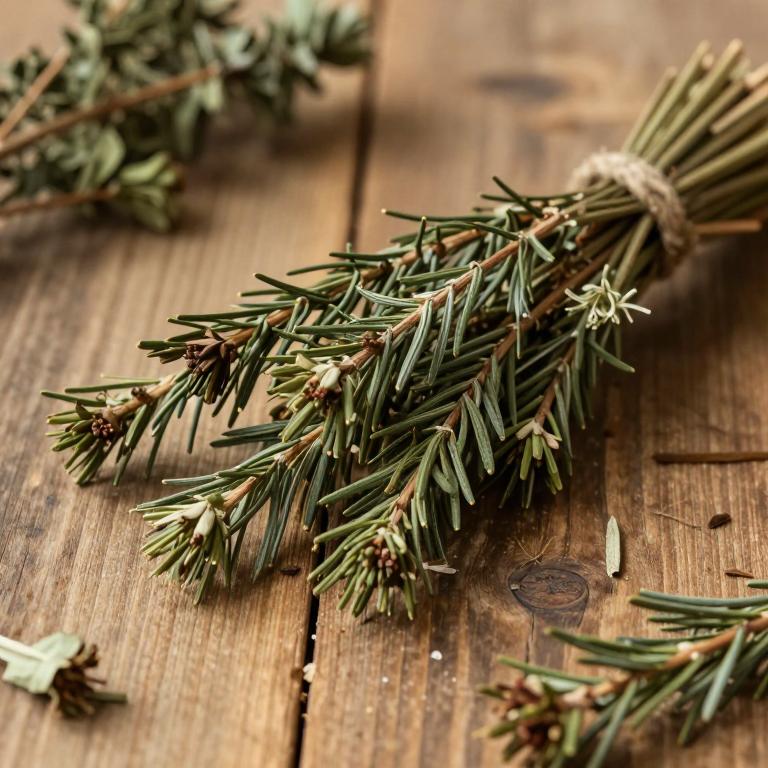
Names and Synonyms
Common Names
- Caucasian Spruce
- Oriental Spruce
Scientific Names
Accepted name
Picea orientalisSynonyms
- Abies orientalis
- Picea orientalis f. nutans
- Picea orientalis f. atrovirens
- Abies wittmanniana
- Picea orientalis f. aureospicata
- Picea withmanniana
- Picea orientalis var. aurea
- Picea orientalis f. aurea
- Picea orientalis var. nana
- Picea orientalis f. nana
- Picea wittmanniana
Regional and Traditional Names
Spanish:
- Picea oriental
- Picea de Asia Menor
- Picea del Caucaso
- Pícea del Cáucaso
- Pícea de Asia Menor
- Pícea oriental
German:
- Kaukasus-Fichte
- Sapindusfichte
- Orient-Fichte
- Sapindus-Fichte
- Kaukasusfichte
- Orientfichte
French:
- Épicéa d'Orient
- Épicéa d’Orient
- Sapinette du Caucase
Sources: Wikidata, Catalogue of Life
Taxonomical Classification
This plant belongs to the kingdom Plantae and the phylum Streptophyta, falling under the class Equisetopsida and subclass Pinidae. Within the order Pinales and the family Pinaceae, it is classified under the genus Picea.
| Rank | Classification |
|---|---|
| Kingdom | Plantae |
| Phylum | Streptophyta |
| Class | Equisetopsida |
| Subclass | Pinidae |
| Order | Pinales |
| Family | Pinaceae |
| Genus | Picea |
Sources: The World Checklist of Vascular Plants (WCVP)
Distribution
This plant exhibits a broad presence across several key regions of the European continent. In Northern Europe, its range extends through Denmark, Great Britain, and Ireland. Moving toward the center of the continent, it can also be found within Middle Europe. Specifically, the species is documented in the mountainous terrains of Austria. Finally, its distribution reaches further west into Belgium, completing its regional spread.
| Region | Area |
|---|---|
| Northern Europe | Denmark |
| Northern Europe | Great Britain |
| Northern Europe | Ireland |
| Middle Europe | Austria |
| Middle Europe | Belgium |
| Middle Europe | Poland |
| Southeastern Europe | Italy |
| Southeastern Europe | Türkiye-in-Europe |
| Caucasus | North Caucasus |
| Caucasus | Transcaucasus |
Sources: The World Checklist of Vascular Plants (WCVP)
Botanical Identification
Ecology
The ecology of Picea orientalis is characterized by its preference for mountainous forest environments, where it thrives within established woodland ecosystems. This species exhibits a broad altitudinal distribution, occupying diverse ecological niches across a significant vertical gradient. It is typically found at elevations ranging from a minimum of 300 m AMSL to a maximum of 2100 m AMSL, allowing it to adapt to varying temperature regimes and moisture levels provided by different mountain strata.
- Elevational range max:
- 2100 m AMSL
- Elevational range min:
- 300 m AMSL
- Habitat :
- forest, mountains
Life history
The life history of Picea orientalis is characterized by its status as a perennial organism, ensuring its long-term persistence within its natural montane habitats. As a phanerophyte, the plant maintains its photosynthetic organs on elevated branches well above the ground level, a structural adaptation that allows it to thrive in diverse environmental conditions. This phanerophyte life form is consistent across its development, as it utilizes its woody architecture to sustain growth through multiple seasons and years.
- Life form :
- phanerophyte
- Lifecycle :
- perennial
Morphology
The morphology of Picea orientalis is characterized by its robust growth form as a large, woody tree, capable of reaching a maximum plant height of approximately 50 m. It is a self-supporting species that does not function as a climber, liana, or vine, nor does it exhibit climbing habits. The plant is strictly terrestrial in its ecological niche, lacking aquatic or semiaquatic tendencies, and it functions as an independent organism rather than a parasite or an epiphyte. Its structural integrity is defined by its significant woodiness, which supports its towering stature in forest ecosystems.
- Aquatic :
- terrestrial
- Climber :
- self-supporting
- Epiphyte :
- terrestrial
- Growth form :
- tree
- Parasite :
- independent
- Plant height max:
- 50 m
- Woodiness :
- woody
Physiology
The physiology of Picea orientalis is characterized by a standard C3 photosynthetic pathway, a common mechanism in most coniferous species where carbon fixation occurs through the Calvin cycle during the light-independent reactions. This metabolic process allows the plant to efficiently utilize atmospheric carbon dioxide under typical temperate environmental conditions. Furthermore, the plant is strictly non-carnivorous, meaning it relies entirely on its root system and soil-based nutrient uptake for the acquisition of essential minerals and nitrogen, rather than capturing and digesting organic prey.
- Carnivory :
- non-carnivorous
- Photosynthetic pathway :
- C3
Reproduction
The reproduction of Picea orientalis is characterized by a reliance on sexual processes, as asexual reproduction is notably absent. The flowering cycle is concentrated within a specific seasonal window, with flowering starting and ending in May. The pollination mechanism is strictly abiotic, utilizing wind as the primary pollination syndrome to facilitate fertilization. Following successful pollination, the plant produces seeds with a highly specific mass profile; the seed mass ranges from a minimum of 0.0057 g to a maximum of 0.00638 g, maintaining a mean seed mass of approximately 0.005914 g.
- Flowering time :
- May
- Pollination syndrome :
- wind
- Pollination syndrome :
- abiotic
- Reproduction asexual :
- absent
- Seed mass max:
- 0.00638 g
- Seed mass mean:
- 0.005914 g
- Seed mass min:
- 0.0057 g
Sources: Global Inventory of Floras and Traits (GIFT)
Plant Parts
Picea orientalis has 2 reported plant parts identified across 2 scientific publications and several other databases that are studied for medicinal purposes. The most consistently reported plant part include flower, seed.
| Plant part | Supporting sources | Consensus |
|---|---|---|
| Flower | 1 supporting sources | ★☆☆☆☆ |
| Seed | 1 supporting sources | ★☆☆☆☆ |
Flower
- Journal of ethnobiology and ethnomedicine
Seed
- Chemistry & biodiversity
Chemicals
Picea orientalis has 1 reported phytochemicals identified across 2 scientific publications and several other databases. The most consistently reported chemicals include LIMONENE.
| Chemical | Supporting sources | Consensus |
|---|---|---|
| LIMONENE | 1 supporting sources | ★☆☆☆☆ |
LIMONENE
- Chemistry & biodiversity
Conditions
Picea orientalis has 1 reported investigations on conditions identified across 2 scientific publications and several other databases. The most consistently reported conditions include wound healing.
| Condition | Supporting sources | Consensus |
|---|---|---|
| Wound healing | 1 supporting sources | ★☆☆☆☆ |
Wound healing
- Journal of ethnopharmacology
Preparations
Picea orientalis has 4 reported preparations identified across 2 scientific publications and several other databases. The most consistently reported preparations include Seed and Cone Essential Oils, cone oil, essential oils, oil from Picea orientalis cones.
| Preparation | Supporting sources | Consensus |
|---|---|---|
| Seed and cone essential oils | 1 supporting sources | ★☆☆☆☆ |
| Cone oil | 1 supporting sources | ★☆☆☆☆ |
| Essential oils | 1 supporting sources | ★☆☆☆☆ |
| Oil from picea orientalis cones | 1 supporting sources | ★☆☆☆☆ |
Seed and cone essential oils
- Chemistry & biodiversity
Cone oil
- Chemistry & biodiversity
Essential oils
- Journal of ethnopharmacology
Oil from picea orientalis cones
- Chemistry & biodiversity