Picea laxa
Picea laxa · Accepted scientific name
Scientific literature: Extensive (192 studies) · ★★★★☆
, scientifically known as Picea laxa, is a versatile medicinal plant valued for its therapeutic properties. Often used in traditional remedies, it contains unique bioactive compounds that support respiratory health and reduce inflammation. Understanding its botanical characteristics and medicinal applications is essential for exploring its potential in natural wellness treatments.
- Family
- Pinaceae
- Native range
- Europe
- Parts used
- Not available
- Common names
- Not available
- Scientific synonyms
- Picea Glauca F. Aurea · Picea Glauca F. Nana · 31 more
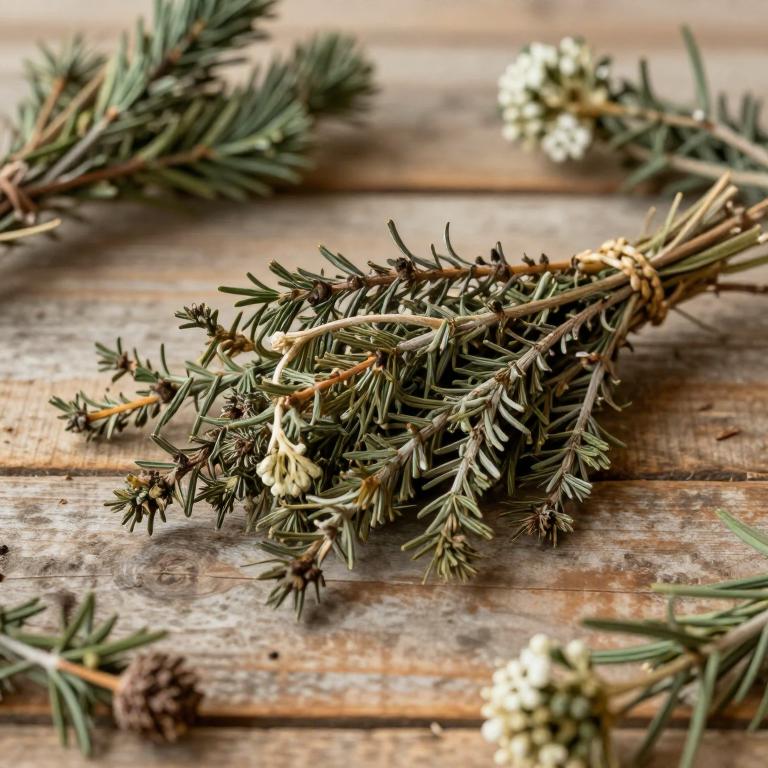
Names and Synonyms
Scientific Names
Accepted name
Picea laxaSynonyms
- Picea glauca f. aurea
- Picea glauca f. nana
- Pinus alba var. nana
- Picea canadensis var. nana
- Picea alba
- Pinus alba var. arctica
- Picea alba var. coerulea
- Abies rubra var. violacea
- Picea glauca f. parva
- Picea canadensis var. glauca
- Abies alba var. caerulea
- Pinus laxa
- Picea glauca f. caerulea
- Picea alba var. pendula
- Picea canadensis var. pendula
- Picea glauca var. pendula
- Pinus tetragona
- Abies canadensis var. aurea
- Abies alba var. nana
- Picea canadensis var. albertiana
- Picea canadensis f. parva
- Picea glauca f. buxoides
- Picea alba var. foetida
- Pinus canadensis var. alba
- Picea glauca f. conica
- Picea alba f. acutissima
- Picea glauca
- Picea coerulea
- Abies laxa
- Abies virescens
- Abies alba var. virescens
- Abies coerulea
- Pinus glauca
Sources: Wikidata
Taxonomical Classification
This plant belongs to the kingdom Plantae and the phylum Streptophyta. Within the class Equisetopsida and subclass Pinidae, it is categorized under the order Pinales and the family Pinaceae. Finally, its specific taxonomic classification is defined by the genus Picea.
| Rank | Classification |
|---|---|
| Kingdom | Plantae |
| Phylum | Streptophyta |
| Class | Equisetopsida |
| Subclass | Pinidae |
| Order | Pinales |
| Family | Pinaceae |
| Genus | Picea |
Sources: The World Checklist of Vascular Plants (WCVP)
Distribution
This plant exhibits a specific geographical distribution across several regions in Northern Europe. It can be found inhabiting the natural landscapes of Denmark and Finland. Additionally, its presence extends to the island territories of Iceland and the Førøya Islands. The species also makes its way to the coastal areas of Great Britain. Together, these locations define the primary range of this medicinal species.
| Region | Area |
|---|---|
| Northern Europe | Denmark |
| Northern Europe | Finland |
| Northern Europe | Føroyar |
| Northern Europe | Great Britain |
| Northern Europe | Iceland |
| Northern Europe | Norway |
| Northern Europe | Sweden |
| Middle Europe | Austria |
| Middle Europe | Germany |
| Middle Europe | Poland |
Sources: The World Checklist of Vascular Plants (WCVP)
Botanical Identification
Ecology
The ecology of Picea laxa is characterized by its specific distribution patterns and environmental requirements, notably its historical and documented occurrence within the regions of the former USSR. As a species adapted to particular forest ecosystems, its habitat is defined by its ability to thrive within certain climatic and edaphic parameters found in these northern territories. The plant's presence in these areas suggests an ecological niche that favors the specific soil compositions and moisture levels prevalent in the subarctic or montane landscapes of the Soviet era, where it plays a role in the structural complexity of its native forest communities.
- Habitat :
- Vorkommen in USSR ???
Life history
The life history of Picea laxa is characterized by its status as a perennial organism, ensuring its presence in the ecosystem over many successive years. As a phanerophyte, its regenerative buds are located high above the ground on woody branches, a structural adaptation that allows it to thrive in its specific environmental niche. This phanerophyte life form is consistent across its development, maintaining elevated growth points that facilitate survival through varying seasonal conditions.
- Life form :
- phanerophyte
- Lifecycle :
- perennial
Morphology
The morphology of Picea laxa is characterized by its growth form as a woody tree, which functions as a self-supporting organism rather than a climber or vine. It is a terrestrial species, existing independently without parasitic or epiphytic dependencies. In terms of stature, the plant reaches a maximum height of 30 m, with an average plant height also recorded at 30 m.
- Aquatic :
- terrestrial
- Climber :
- self-supporting
- Epiphyte :
- terrestrial
- Growth form :
- tree
- Parasite :
- independent
- Plant height mean:
- 30 m
- Woodiness :
- woody
Physiology
The physiology of Picea laxa is characterized by a specialized metabolic and structural framework adapted to its environmental niche. This species utilizes a C3 photosynthetic pathway, a mechanism common among gymnosperms that involves the direct fixation of carbon dioxide through the Calvin cycle, which is efficient under the temperate and cool conditions typically inhabited by this conifer. Furthermore, its structural efficiency is reflected in its leaf morphology, specifically demonstrated by a mean Specific Leaf Area (SLA) of 149.12 cm²/g. This value represents the ratio of leaf area to dry mass, indicating a physiological balance between light interception capabilities and the metabolic costs associated with maintaining leaf tissue density and structural integrity.
- Photosynthetic pathway :
- C3
- Specific Leaf Area (SLA) mean:
- 149.12 cm²/g
Reproduction
The reproduction of Picea laxa is characterized by a specific seed morphology and a specialized dispersal strategy. The seeds produced by this species are notably small, with a minimum mass of 0.0018 g and a maximum mass of 0.0035 g, resulting in an average seed mass of approximately 0.00245237033333333 g. Regarding its reproductive dispersal, the species exhibits an anemochorous syndrome, meaning that the seeds are primarily dispersed by the wind, a common trait among many coniferous species that allows for the colonization of new territories through aerodynamic transport.
- Dispersal syndrome :
- anemochorous
- Seed mass max:
- 0.0035 g
- Seed mass mean:
- 0.00245237033333333 g
- Seed mass min:
- 0.0018 g
Sources: Global Inventory of Floras and Traits (GIFT)
Chemicals
Picea laxa has 36 reported phytochemicals identified across 0 scientific publications and several other databases. The most consistently reported chemicals include 7 -Hydroxymatairesinol, ABIETIC ACID, ALPHA-PHELLANDRENE, ALPHA-PINENE, ALPHA-THUJENE.
| Chemical | Supporting sources | Consensus |
|---|---|---|
| 7 -Hydroxymatairesinol | 1 supporting sources | ★☆☆☆☆ |
| ABIETIC ACID | 1 supporting sources | ★☆☆☆☆ |
| ALPHA-PHELLANDRENE | 1 supporting sources | ★☆☆☆☆ |
| ALPHA-PINENE | 1 supporting sources | ★☆☆☆☆ |
| ALPHA-THUJENE | 1 supporting sources | ★☆☆☆☆ |
| BETA-PHELLANDRENE | 1 supporting sources | ★☆☆☆☆ |
| BETA-PINENE | 1 supporting sources | ★☆☆☆☆ |
| BORNYL ACETATE | 1 supporting sources | ★☆☆☆☆ |
| Bornylene | 1 supporting sources | ★☆☆☆☆ |
| CADINENE | 1 supporting sources | ★☆☆☆☆ |
7 -Hydroxymatairesinol
- Journal of cutaneous medicine and surgery
ABIETIC ACID
- Dr. Duke
ALPHA-PHELLANDRENE
- Dr. Duke
ALPHA-PINENE
- Dr. Duke
ALPHA-THUJENE
- Dr. Duke
BETA-PHELLANDRENE
- Dr. Duke
BETA-PINENE
- Dr. Duke
BORNYL ACETATE
- Dr. Duke
Bornylene
- Dr. Duke
CADINENE
- Dr. Duke
Activities
Picea laxa has 128 reported activities identified across 0 scientific publications and several other databases. The most consistently reported activities include (-)-Chronotropic, (-)-Inotropic, ACE-Inhibitor, AChE-Inhibitor, Acaricide.
| Activity | Supporting sources | Consensus |
|---|---|---|
| (-)-Chronotropic | 1 supporting sources | ★☆☆☆☆ |
| (-)-Inotropic | 1 supporting sources | ★☆☆☆☆ |
| ACE-Inhibitor | 1 supporting sources | ★☆☆☆☆ |
| AChE-Inhibitor | 1 supporting sources | ★☆☆☆☆ |
| Acaricide | 1 supporting sources | ★☆☆☆☆ |
| Additive | 1 supporting sources | ★☆☆☆☆ |
| Aldose-Reductase-Inhibitor | 1 supporting sources | ★☆☆☆☆ |
| Allelochemic | 1 supporting sources | ★☆☆☆☆ |
| Allelopathic | 1 supporting sources | ★☆☆☆☆ |
| Allergenic | 1 supporting sources | ★☆☆☆☆ |
(-)-Chronotropic
- Dr. Duke
(-)-Inotropic
- Dr. Duke
ACE-Inhibitor
- Dr. Duke
AChE-Inhibitor
- Dr. Duke
Acaricide
- Dr. Duke
Additive
- Dr. Duke
Aldose-Reductase-Inhibitor
- Dr. Duke
Allelochemic
- Dr. Duke
Allelopathic
- Dr. Duke
Allergenic
- Dr. Duke
Preparations
Picea laxa has 5 reported preparations identified across 0 scientific publications and several other databases. The most consistently reported preparations include Pitch preparations, aqueous extract, aqueous preparation, bark extracts, ethanolic extracts.
| Preparation | Supporting sources | Consensus |
|---|---|---|
| Pitch preparations | 1 supporting sources | ★☆☆☆☆ |
| Aqueous extract | 1 supporting sources | ★☆☆☆☆ |
| Aqueous preparation | 1 supporting sources | ★☆☆☆☆ |
| Bark extracts | 1 supporting sources | ★☆☆☆☆ |
| Ethanolic extracts | 1 supporting sources | ★☆☆☆☆ |
Pitch preparations
- Journal of ethnopharmacology
Aqueous extract
- Anticancer research
Aqueous preparation
- Anticancer research
Bark extracts
- Antioxidants (Basel, Switzerland)
Ethanolic extracts
- Canadian journal of physiology and pharmacology