Sakhalin spruce
Picea glehnii · Accepted scientific name
Scientific literature: Very Sparse (1 studies) · ★☆☆☆☆
Sakhalin spruce, scientifically known as Picéa glehnii, is a resilient coniferous evergreen native to East Asia. Valued in traditional medicine, its needles and bark possess bioactive compounds with antioxidant and antimicrobial properties. Often utilized in regional therapies, this hardy species offers significant potential for developing natural therapeutic treatments.
- Family
- Pinaceae
- Native range
- Asia-Temperate
- Parts used
- Not available
- Common names
- Sakhalin Spruce · Glehn'S Spruce
- Scientific synonyms
- Abies Glehnii · Pinus Glehnii
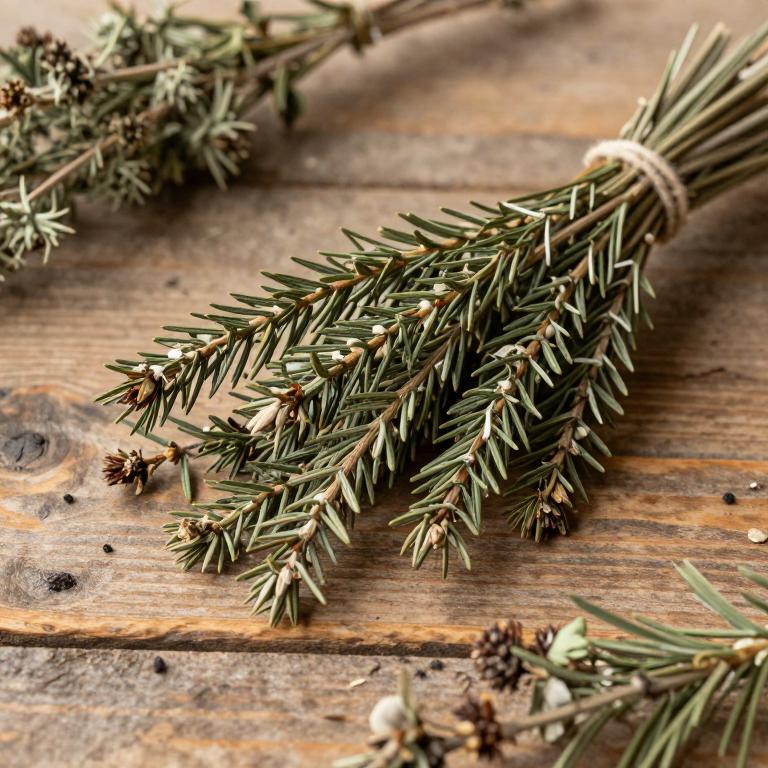
Names and Synonyms
Common Names
- Sakhalin Spruce
- Glehn's spruce
Scientific Names
Accepted name
Picea glehniiSynonyms
- Abies glehnii
- Pinus glehnii
Regional and Traditional Names
German:
- Sachalinfichte
French:
- Épicéa de Sakhaline
- Épinette de Sakhaline
Sources: Wikidata, Catalogue of Life
Taxonomical Classification
This plant belongs to the kingdom Plantae and is classified under the phylum Streptophyta within the class Equisetopsida. Its taxonomic hierarchy continues through the subclass Pinidae and the order Pinales, placing it in the family Pinaceae. Finally, it is identified under the genus Picea.
| Rank | Classification |
|---|---|
| Kingdom | Plantae |
| Phylum | Streptophyta |
| Class | Equisetopsida |
| Subclass | Pinidae |
| Order | Pinales |
| Family | Pinaceae |
| Genus | Picea |
Sources: The World Checklist of Vascular Plants (WCVP)
Distribution
This plant exhibits a specific and limited geographical distribution within the temperate regions of East Asia. Its presence is notably documented across the Russian Far East, particularly on the island of Sakhalin. Additionally, the species can be found within the mountainous territories of Japan. These locations represent the primary natural habitats where the species thrives. Consequently, its range is restricted to these distinct pockets of the North Pacific rim.
| Region | Area |
|---|---|
| Russian Far East | Sakhalin |
| Eastern Asia | Japan |
Sources: The World Checklist of Vascular Plants (WCVP)
Botanical Identification
Ecology
The ecology of Picea glehnii is characterized by its ability to thrive in specialized, moisture-rich environments. This species is primarily found colonizing various types of forest landscapes, where it integrates into the canopy and understory structures. Beyond traditional forest settings, it demonstrates a high degree of adaptability to riparian and wetland ecosystems, frequently occurring along shores and within swamps. These habitats provide the consistent moisture levels and specific soil compositions necessary for its growth, allowing the plant to occupy ecological niches that are often too saturated for other coniferous species.
- Habitat :
- forest, shores, swamps
Life history
The life history of Picea glehnii is characterized by its status as a perennial species, allowing it to maintain a stable presence within its ecological niche over many years. As a phanerophyte, its buds are borne on aerial shoots well above the ground, a structural adaptation that facilitates its growth and survival in its specific habitat. This phanerophyte life form ensures that its reproductive and vegetative structures remain elevated, contributing to its long-term developmental strategy within the forest ecosystem.
- Life form :
- phanerophyte
- Lifecycle :
- perennial
Morphology
The morphology of Picea glehnii is characterized by its growth form as a woody tree, which functions as a self-supporting structure rather than a climber or liana. As an independent organism, it does not exhibit parasitic behavior and is strictly terrestrial in its ecological habit, lacking aquatic or epiphytic tendencies. This species reaches a maximum plant height of approximately 40 meters, maintaining a robust, woody composition throughout its development.
- Aquatic :
- terrestrial
- Climber :
- self-supporting
- Epiphyte :
- terrestrial
- Growth form :
- tree
- Parasite :
- independent
- Plant height max:
- 40 m
- Woodiness :
- woody
Physiology
The physiology of Picea glehnii is characterized by its specialized metabolic adaptations to high-altitude and subalpine environments, most notably through its photosynthetic pathway, which utilizes the C3 mechanism. This C3 pathway involves the direct fixation of carbon dioxide by the enzyme RuBisCO during the Calvin cycle, a process that is highly efficient under the cool, moist, and temperate conditions typical of its native montane habitats. To support this carbon fixation, the plant exhibits specific physiological responses to seasonal variations, including regulated stomatal conductance to manage transpiration rates and a high degree of frost tolerance to maintain cellular integrity during extreme temperature fluctuations. Furthermore, its physiological processes are geared toward maximizing light interception and nutrient uptake in nutrient-poor, acidic soils, ensuring robust growth and metabolic stability throughout its life cycle.
- Photosynthetic pathway :
- C3
Reproduction
Reproduction in Picea glehnii is centered around the production of specialized seeds that exhibit specific morphological and mass-related characteristics. The reproductive cycle culminates in the development of seeds that fall within a very narrow and precise weight range, ensuring consistency in their dispersal and germination potential. Based on quantitative data, the seed mass of this species shows a mean value of 0.00317 g. The variation in mass is minimal, with the smallest recorded seed mass being 0.00291 g and the largest reaching a maximum of 0.0033 g. This high degree of uniformity in seed mass suggests a stabilized reproductive strategy optimized for the environmental conditions in which the plant thrives.
- Seed mass max:
- 0.0033 g
- Seed mass mean:
- 0.00317 g
- Seed mass min:
- 0.00291 g
Sources: Global Inventory of Floras and Traits (GIFT)
Chemicals
Picea glehnii has 1 reported phytochemicals identified across 0 scientific publications and several other databases. The most consistently reported chemicals include Piceanonol A.
| Chemical | Supporting sources | Consensus |
|---|---|---|
| Piceanonol A | 1 supporting sources | ★☆☆☆☆ |
Piceanonol A
- Planta medica