Norway spruce
Picea abies · Accepted scientific name
Scientific literature: Very Sparse (33 studies) · ★☆☆☆☆
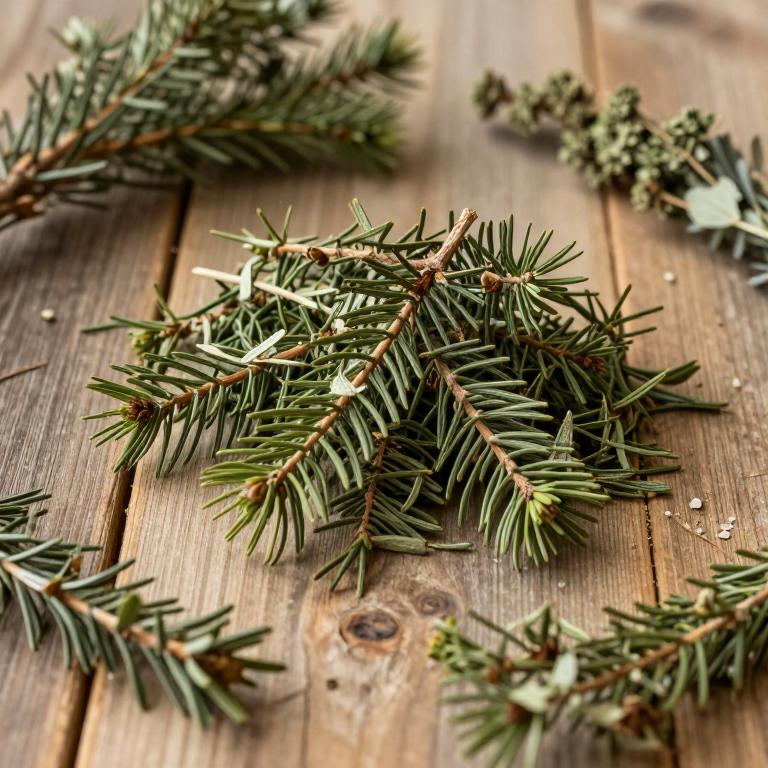
Norway spruce, scientifically known as Picea abies, is a versatile evergreen renowned for its diverse medicinal properties. Rich in essential oils, resins, and antioxidants, it is traditionally used to support respiratory health, alleviate inflammation, and boost immunity. Its therapeutic extracts offer potent antimicrobial benefits in holistic wellness practices.
- Family
- Pinaceae
- Native range
- Europe
- Parts used
- Not available
- Common names
- Norway Spruce · White Spruce
- Scientific synonyms
- Pinus Abies
Names and Synonyms
Common Names
- Norway spruce
- white spruce
Scientific Names
Accepted name
Picea abiesSynonyms
- Pinus abies
Regional and Traditional Names
Spanish:
- Picea abies var europaea
- Abies picea
- Falso abeto
- Picea de Noruega
- Abeto rojo
- Picea común
German:
- Gemeine Fichte
- Rot-Tanne
- Gewöhnliche Fichte
- Rottanne
- Rotfichte
- Fichte
- Gemeine Fichte
- Rotfichte
- Gewöhnliche Fichte
- Gewöhnliche Fichte (Unterart)
- Rot-Fichte
- Fichte
- Rottanne
French:
- Sapin rouge
- Sapinette
- Épinette de Norvège
- Faux sapin
- Sérente
- Pin pleureur
- Sapin du Nord
- Gentil sapin
- Pesse
- Épicéa commun
- Épicéa à poix
- épicéa commun
- épinette de Norvège
- Epicéa commun
- épicéa
- épicéa élevé
- Epicea
- Sapin rouge
Sources: Wikidata, Catalogue of Life
Taxonomical Classification
This plant belongs to the kingdom Plantae and the phylum Streptophyta, falling under the class Equisetopsida and subclass Pinidae. Within the order Pinales and the family Pinaceae, it is classified under the genus Picea.
| Rank | Classification |
|---|---|
| Kingdom | Plantae |
| Phylum | Streptophyta |
| Class | Equisetopsida |
| Subclass | Pinidae |
| Order | Pinales |
| Family | Pinaceae |
| Genus | Picea |
Sources: The World Checklist of Vascular Plants (WCVP)
Distribution
This plant exhibits a specific distribution pattern across various regions of Northern Europe. It can be found growing within the natural landscapes of Denmark and Finland. Additionally, its presence extends to the island territories of Føroyar and Iceland. The species is also documented to inhabit parts of Great Britain. Collectively, these locations define the northern geographical range of this medicinal species.
| Region | Area |
|---|---|
| Northern Europe | Denmark |
| Northern Europe | Finland |
| Northern Europe | Føroyar |
| Northern Europe | Great Britain |
| Northern Europe | Iceland |
| Northern Europe | Ireland |
| Northern Europe | Norway |
| Northern Europe | Sweden |
| Middle Europe | Austria |
| Middle Europe | Belgium |
Sources: The World Checklist of Vascular Plants (WCVP)
Botanical Identification
Ecology
The ecology of Picea abies is characterized by its role in forming dense, expansive forests, where it serves as a foundational structural component of the ecosystem. This species thrives primarily in loamy, damp soils that provide the consistent moisture levels necessary for its root systems to flourish. Due to its physiological adaptations, it is notably shade-resistant, allowing it to establish itself under a forest canopy and persist through various successional stages. This ability to tolerate lower light levels enables the species to dominate stable, moist forest environments where it influences local microclimates and nutrient cycling patterns.
- Habitat :
- forming forests; loamy, damp soils, shade-resistant
Life history
The life history of Picea abies is characterized by its status as a perennial organism, allowing it to persist through many growing seasons and establish long-term dominance within its ecosystem. As a phanerophyte, its reproductive shoots are borne on long stems elevated well above the ground, a structural adaptation that facilitates efficient light capture and seed dispersal. The plant maintains an evergreen deciduousness, retaining its needle-like foliage throughout the year to maximize photosynthetic opportunities even during shorter growing periods. This combination of a long-lived lifecycle, a high-reaching phanerophyte growth form, and a constant evergreen presence defines its robust ecological strategy.
- Deciduousness :
- evergreen
- Life form :
- phanerophyte
- Lifecycle :
- perennial
Morphology
The morphology of Picea abies is characterized by a large, woody growth form, specifically classified as a tree. As a self-supporting organism, it does not function as a climber or a liana, and it grows as an independent species rather than a parasite or an epiphyte, maintaining a terrestrial existence. The plant exhibits significant vertical development, with height measurements ranging from a minimum of 10 m to a maximum of 50 m, resulting in an average plant height of approximately 45 m.
- Aquatic :
- terrestrial
- Climber :
- self-supporting
- Epiphyte :
- terrestrial
- Growth form :
- tree
- Parasite :
- independent
- Plant height max:
- 50 m
- Plant height mean:
- 45 m
- Plant height min:
- 10 m
- Woodiness :
- woody
Physiology
The physiology of Picea abies is characterized by a C3 photosynthetic pathway, which is typical for many temperate coniferous species. The plant is non-carnivorous and does not function as a nitrogen fixer, relying instead on soil nutrient uptake. Its foliage consists of needles with a leaf length ranging from a minimum of 1 cm to a maximum of 2 cm, maintaining a mean Specific Leaf Area (SLA) of 68.46 cm²/g. Structurally, the stem exhibits specific density (SSD) characteristics with a mean value of 467.5 mg/cm³, although recorded values show a minimum and maximum of 370.2 mg/cm³.
- Carnivory :
- non-carnivorous
- Leaf length max:
- 2 cm
- Leaf length min:
- 1 cm
- Nitrogen fixer :
- no
- Photosynthetic pathway :
- C3
- Specific Leaf Area (SLA) mean:
- 68.46 cm²/g
- Stem specific density (SSD) mean:
- 467.5 mg/cm³
- Stem specific density (SSD) min:
- 370.2 mg/cm³
Reproduction
The reproduction of Picea abies is characterized by a strictly sexual process, as both self-fertilization and asexual reproduction are absent. The flowering period typically begins in May and concludes in June. The plant utilizes an abiotic pollination syndrome, specifically relying on the wind for the transfer of pollen. Once fertilization occurs, the resulting seeds exhibit a range of masses, with a minimum weight of 0.0059 g, a mean mass of approximately 0.0174878858 g, and a maximum mass of 0.0605 g. Following maturation, the dispersal of these seeds follows an anemochorous syndrome, meaning they are dispersed via wind.
- Dispersal syndrome :
- anemochorous
- Flowering time :
- May
- Flowering time :
- Jun
- Pollination syndrome :
- wind
- Pollination syndrome :
- abiotic
- Reproduction asexual :
- absent
- Seed mass max:
- 0.0605 g
- Seed mass mean:
- 0.0174878858 g
- Seed mass min:
- 0.0059 g
- Self fertilization :
- absent
Sources: Global Inventory of Floras and Traits (GIFT)
Chemicals
Picea abies has 25 reported phytochemicals identified across 0 scientific publications and several other databases. The most consistently reported chemicals include ZN, Al, As, BA, CA.
| Chemical | Supporting sources | Consensus |
|---|---|---|
| ZN | 2 supporting sources | ★☆☆☆☆ |
| Al | 1 supporting sources | ★☆☆☆☆ |
| As | 1 supporting sources | ★☆☆☆☆ |
| BA | 1 supporting sources | ★☆☆☆☆ |
| CA | 1 supporting sources | ★☆☆☆☆ |
| CALCIUM | 1 supporting sources | ★☆☆☆☆ |
| CD | 1 supporting sources | ★☆☆☆☆ |
| CO | 1 supporting sources | ★☆☆☆☆ |
| CR | 1 supporting sources | ★☆☆☆☆ |
| CU | 1 supporting sources | ★☆☆☆☆ |
ZN
- Journal of pharmaceutical and biomedical analysis
- Food and chemical toxicology : an international journal published for the British Industrial Biological Research Association
Al
- Journal of pharmaceutical and biomedical analysis
As
- Journal of pharmaceutical and biomedical analysis
BA
- Journal of pharmaceutical and biomedical analysis
CA
- Journal of pharmaceutical and biomedical analysis
CALCIUM
- Molecules (Basel, Switzerland)
CD
- Journal of pharmaceutical and biomedical analysis
CO
- Journal of pharmaceutical and biomedical analysis
CR
- Journal of pharmaceutical and biomedical analysis
CU
- Journal of pharmaceutical and biomedical analysis
Conditions
Picea abies has 2 reported investigations on conditions identified across 0 scientific publications and several other databases. The most consistently reported conditions include wound healing, wounds.
| Condition | Supporting sources | Consensus |
|---|---|---|
| Wound healing | 1 supporting sources | ★☆☆☆☆ |
| Wounds | 1 supporting sources | ★☆☆☆☆ |
Wound healing
- Planta medica
Wounds
- Plants (Basel, Switzerland)
Preparations
Picea abies has 2 reported preparations identified across 0 scientific publications and several other databases. The most consistently reported preparations include Balm, resins.
| Preparation | Supporting sources | Consensus |
|---|---|---|
| Balm | 1 supporting sources | ★☆☆☆☆ |
| Resins | 1 supporting sources | ★☆☆☆☆ |
Balm
- Plants (Basel, Switzerland)
Resins
- Plants (Basel, Switzerland)