pokeberry
Phytolacca · Accepted scientific name
Scientific literature: Very Sparse (6 studies) · ★☆☆☆☆
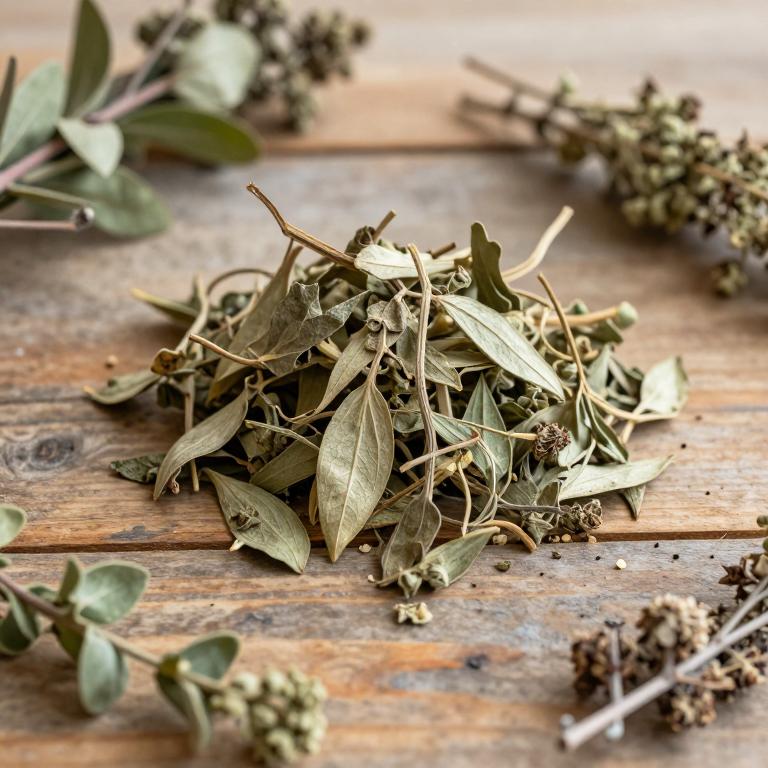
Pokeberry, scientifically known as Phytolacca, is a perennial herb renowned for its striking dark purple berries and deep red stems. While widely recognized in traditional medicine for its potent bioactive compounds, it requires careful handling due to its toxicity. This versatile plant offers significant pharmacological potential in modern herbal research.
Names and Synonyms
Common Names
- pokeweed
- Pokeberries
- Pokeweeds
Scientific Names
Accepted name
PhytolaccaSynonyms
- Pircunia
- Sarcoca
- Nowickea
Regional and Traditional Names
Spanish:
- Sarcoca
- Phytolaca
- Pircunia
- Guabas
- Ombús y mazorquillas
German:
- Kermesbeeren
- Kermesbeere
French:
- Phytolaque
Sources: Wikidata, Catalogue of Life
Taxonomical Classification
This plant belongs to the kingdom Plantae and the phylum Streptophyta, falling under the class Equisetopsida and subclass Magnoliidae. It is further classified within the order Caryophyllales and the family Phytolaccaceae. Ultimately, the medicinal species is categorized under the genus Phytolacca.
| Rank | Classification |
|---|---|
| Kingdom | Plantae |
| Phylum | Streptophyta |
| Class | Equisetopsida |
| Subclass | Magnoliidae |
| Order | Caryophyllales |
| Family | Phytolaccaceae |
| Genus | Phytolacca |
Sources: The World Checklist of Vascular Plants (WCVP)
Distribution
This plant exhibits a specific distribution across several regions of the European continent. In Northern Europe, its presence is documented in Denmark and Great Britain. The species can also be found throughout the landscapes of Ireland and Sweden. Moving toward Middle Europe, the plant's range extends into Austria. These locations highlight the various environmental niches the species inhabits across these northern and central territories.
| Region | Area |
|---|---|
| Northern Europe | Denmark |
| Northern Europe | Great Britain |
| Northern Europe | Ireland |
| Northern Europe | Sweden |
| Middle Europe | Austria |
| Middle Europe | Belgium |
| Middle Europe | Czechia-Slovakia |
| Middle Europe | Germany |
| Middle Europe | Hungary |
| Middle Europe | Netherlands |
Sources: The World Checklist of Vascular Plants (WCVP)
Chemicals
Phytolacca has 2 reported phytochemicals identified across 0 scientific publications and several other databases. The most consistently reported chemicals include Flavonoids, triterpenoids.
| Chemical | Supporting sources | Consensus |
|---|---|---|
| Flavonoids | 1 supporting sources | ★☆☆☆☆ |
| triterpenoids | 1 supporting sources | ★☆☆☆☆ |
Flavonoids
- Zhongguo Zhong yao za zhi = Zhongguo zhongyao zazhi = China journal of Chinese materia medica
triterpenoids
- Zhongguo Zhong yao za zhi = Zhongguo zhongyao zazhi = China journal of Chinese materia medica
Conditions
Phytolacca has 4 reported investigations on conditions identified across 0 scientific publications and several other databases. The most consistently reported conditions include antiviral, earache, fatigue, headache.
| Condition | Supporting sources | Consensus |
|---|---|---|
| Antiviral | 1 supporting sources | ★☆☆☆☆ |
| Earache | 1 supporting sources | ★☆☆☆☆ |
| Fatigue | 1 supporting sources | ★☆☆☆☆ |
| Headache | 1 supporting sources | ★☆☆☆☆ |
Antiviral
- Journal of natural products
Earache
- Advances in therapy
Fatigue
- Advances in therapy
Headache
- Advances in therapy
Preparations
Phytolacca has 2 reported preparations identified across 0 scientific publications and several other databases. The most consistently reported preparations include liquid, tablet formulation.
| Preparation | Supporting sources | Consensus |
|---|---|---|
| Liquid | 1 supporting sources | ★☆☆☆☆ |
| Tablet formulation | 1 supporting sources | ★☆☆☆☆ |
Liquid
- Advances in therapy
Tablet formulation
- Advances in therapy