Button Pokeweed
Phytolacca icosandra · Accepted scientific name
Scientific literature: Very Sparse (6 studies) · ★☆☆☆☆
Button Pokeweed, scientifically known as Phytolacca icosandra, is a versatile medicinal herb valued in traditional healing practices. Known for its distinctive berries, this plant contains bioactive compounds used to treat various ailments. Understanding its therapeutic properties and careful application is essential for harnessing its natural benefits in holistic medicine.
- Family
- Phytolaccaceae
- Native range
- Europe
- Parts used
- Leaf
- Common names
- Button Pokeweed · Red Inkplant · 1 more
- Scientific synonyms
- Sarcoca Icosandra
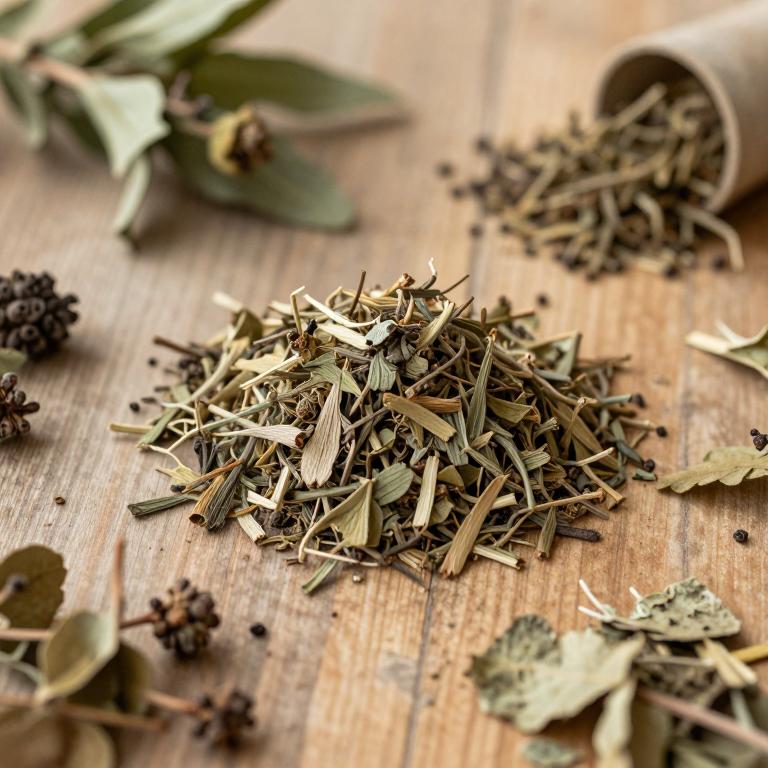
Names and Synonyms
Common Names
- Button Pokeweed
- red inkplant
- tropical pokeweed
Scientific Names
Accepted name
Phytolacca icosandraSynonyms
- Sarcoca icosandra
Regional and Traditional Names
Spanish:
- almorsaca
- jaboncillo
- mazorquilla
- scorpion-tail
Sources: Wikidata, Catalogue of Life
Taxonomical Classification
This plant belongs to the kingdom Plantae and is classified under the phylum Streptophyta within the class Equisetopsida. As a member of the subclass Magnoliidae and the order Caryophyllales, it is further categorized into the family Phytolaccaceae. Ultimately, its taxonomic identity is defined by its placement within the genus Phytolacca.
| Rank | Classification |
|---|---|
| Kingdom | Plantae |
| Phylum | Streptophyta |
| Class | Equisetopsida |
| Subclass | Magnoliidae |
| Order | Caryophyllales |
| Family | Phytolaccaceae |
| Genus | Phytolacca |
Sources: The World Checklist of Vascular Plants (WCVP)
Distribution
This plant exhibits a remarkably wide geographical distribution across several different continents and regions. In Southwestern Europe, it can be found specifically within the Baleares islands. Its presence extends to the Macaronesian region, particularly on the island of Madeira. The species is also documented in Eastern Asia, specifically in Taiwan, as well as in the Malesian region of Jawa. Finally, its range reaches into the Southwestern United States, where it is located in Arizona.
| Region | Area |
|---|---|
| Southwestern Europe | Baleares |
| Macaronesia | Madeira |
| Eastern Asia | Taiwan |
| Malesia | Jawa |
| Southwestern U.S.A. | Arizona |
| Southwestern U.S.A. | California |
| Southeastern U.S.A. | Maryland |
| Mexico | Mexico Central |
| Mexico | Mexico Northeast |
| Mexico | Mexico Gulf |
Sources: The World Checklist of Vascular Plants (WCVP)
Botanical Identification
Ecology
The ecology of Phytolacca icosandra is characterized by an expansive altitudinal distribution that allows it to occupy a diverse array of habitats. This species exhibits remarkable ecological plasticity, capable of thriving across a broad gradient ranging from sea level (0 m AMSL) to high-altitude montane environments reaching up to 3,800 m AMSL. This wide elevational range suggests that the plant can adapt to varying climatic conditions, including fluctuations in temperature, atmospheric pressure, and moisture availability found from tropical lowlands to sub-alpine zones. Such a vast vertical range indicates that its niche encompasses various soil types and microclimates, enabling it to persist in both humid lowland ecosystems and more rugged, high-elevation landscapes.
- Elevational range max:
- 3800 m AMSL
- Elevational range min:
- 0 m AMSL
Life history
The life history of Phytolacca icosandra is characterized by its nature as a perennial organism, allowing it to persist through multiple growing seasons. As a perennial, the plant avoids the complete senescence seen in annuals, instead establishing a robust physiological presence that enables it to undergo repeated cycles of vegetative growth and reproductive development. This long-lived life strategy allows the species to stabilize within its ecological niche, utilizing its perennial structure to recover from seasonal fluctuations and invest resources into sustained survival and eventual seed production.
- Lifecycle :
- perennial
Morphology
The morphology of Phytolacca icosandra is characterized by its growth habit as a non-woody herb and forb, typically reaching a mean plant height of approximately 3 m. As a terrestrial species, it does not function as an epiphyte or an aquatic plant, maintaining an independent existence without parasitic behavior. Although it possesses a self-supporting climbing structure, it does not rely on other organisms for physical support, behaving as a self-supporting organism rather than an obligatory or facultative liana or vine.
- Aquatic :
- terrestrial
- Climber :
- self-supporting
- Epiphyte :
- terrestrial
- Growth form :
- herb
- Growth form :
- forb
- Parasite :
- independent
- Plant height mean:
- 3 m
- Woodiness :
- non-woody
Reproduction
The reproduction of Phytolacca icosandra is characterized by the production of fleshy fruits, which suggests a dispersal mechanism potentially involving biotic agents. Within these fruits, the seeds exhibit highly consistent physical dimensions, maintaining a uniform seed volume with both a maximum and minimum value, as well as a mean volume, of 5.2 mm³. The seed mass also displays a specific range, varying from a minimum of 0.00446 g to a maximum of 0.0065 g, resulting in an overall mean seed mass of 0.00548 g. This precise quantitative data regarding seed size and weight contributes to the plant's reproductive strategy and its ability to colonize suitable habitats.
- Fruit dryness :
- fleshy
- Seed mass max:
- 0.0065 g
- Seed mass mean:
- 0.00548 g
- Seed mass min:
- 0.00446 g
- Seed volume max:
- 5.2 mm³
Sources: Global Inventory of Floras and Traits (GIFT)
Plant Parts
Phytolacca icosandra has 1 reported plant parts identified across 1 scientific publications and several other databases that are studied for medicinal purposes. The most consistently reported plant part include leaf.
| Plant part | Supporting sources | Consensus |
|---|---|---|
| Leaf | 1 supporting sources | ★☆☆☆☆ |
Leaf
- Veterinary parasitology
Chemicals
Phytolacca icosandra has 5 reported phytochemicals identified across 1 scientific publications and several other databases. The most consistently reported chemicals include Coumarins, Flavonoids, Saponins, Steroids, Terpenoids.
| Chemical | Supporting sources | Consensus |
|---|---|---|
| Coumarins | 1 supporting sources | ★☆☆☆☆ |
| Flavonoids | 1 supporting sources | ★☆☆☆☆ |
| Saponins | 1 supporting sources | ★☆☆☆☆ |
| Steroids | 1 supporting sources | ★☆☆☆☆ |
| Terpenoids | 1 supporting sources | ★☆☆☆☆ |
Coumarins
- Veterinary parasitology
Flavonoids
- Veterinary parasitology
Saponins
- Veterinary parasitology
Steroids
- Veterinary parasitology
Terpenoids
- Veterinary parasitology
Preparations
Phytolacca icosandra has 1 reported preparations identified across 1 scientific publications and several other databases. The most consistently reported preparations include leaf extracts.
| Preparation | Supporting sources | Consensus |
|---|---|---|
| Leaf extracts | 1 supporting sources | ★☆☆☆☆ |
Leaf extracts
- Veterinary parasitology