ground-cherry
Physalis · Accepted scientific name
Scientific literature: Very Sparse (23 studies) · ★☆☆☆☆
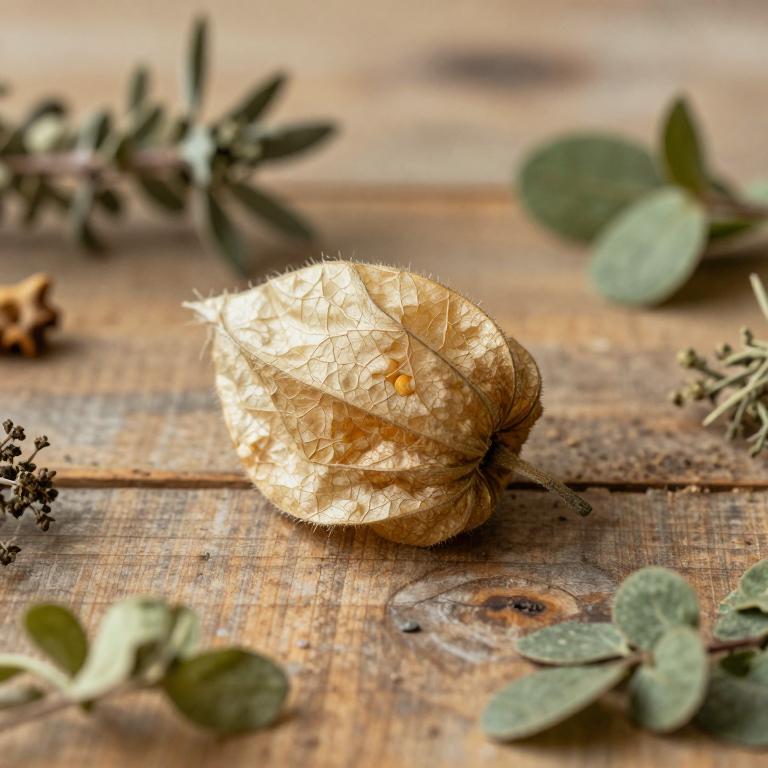
Ground-cherry, scientifically known as Physalis, is a versatile medicinal plant prized for its unique bladder-like husks. Rich in vitamins and antioxidants, it offers potent anti-inflammatory and digestive benefits. Historically used in traditional medicine, this nutrient-dense fruit serves as both a delicious dietary supplement and a therapeutic botanical powerhouse.
- Family
- Solanaceae
- Native range
- Europe
- Parts used
- Leaf · Root
- Common names
- Ground-Cherry · Ground Cherries
- Scientific synonyms
- Pentaphiltrum · Herschelia · 2 more
Names and Synonyms
Common Names
- ground-cherry
- ground cherries
Scientific Names
Accepted name
PhysalisSynonyms
- Pentaphiltrum
- Herschelia
- Alicabon
- Margaranthus
Regional and Traditional Names
Spanish:
- Tomates
- Tomatillos
German:
- Blasenkirschen
- Blasenkirsche
- Judenkirschen
- Lampionpflanze
- Judenkirsche
- Blasenkirsche
- Blasenkirschen
- Judenkirschen
French:
- Margaranthus
- Lanterne chinoise
- Cerise de Terre
- Coqueret
- Amour en cage
- Groseille du Cap
- Lanterne japonaise
- Coquerets
Sources: Wikidata, Catalogue of Life
Taxonomical Classification
This plant belongs to the kingdom Plantae and is classified under the phylum Streptophyta within the class Equisetopsida. As a member of the subclass Magnoliidae and the order Solanales, it falls under the family Solanaceae. Specifically, it is categorized within the genus Physalis.
| Rank | Classification |
|---|---|
| Kingdom | Plantae |
| Phylum | Streptophyta |
| Class | Equisetopsida |
| Subclass | Magnoliidae |
| Order | Solanales |
| Family | Solanaceae |
| Genus | Physalis |
Sources: The World Checklist of Vascular Plants (WCVP)
Distribution
This plant exhibits a varied geographical distribution across several regions of Europe. In Northern Europe, its presence can be noted in both Great Britain and Ireland. Moving toward Middle Europe, the species is also found within the borders of Austria. Furthermore, it occupies territories in Belgium. Finally, the plant's range extends through the central region of Czechia-Slovakia.
| Region | Area |
|---|---|
| Northern Europe | Great Britain |
| Northern Europe | Ireland |
| Middle Europe | Austria |
| Middle Europe | Belgium |
| Middle Europe | Czechia-Slovakia |
| Middle Europe | Germany |
| Middle Europe | Hungary |
| Middle Europe | Switzerland |
| Southwestern Europe | Baleares |
| Southwestern Europe | France |
Sources: The World Checklist of Vascular Plants (WCVP)
Plant Parts
Physalis has 2 reported plant parts identified across 2 scientific publications and several other databases that are studied for medicinal purposes. The most consistently reported plant part include leaf, root.
| Plant part | Supporting sources | Consensus |
|---|---|---|
| Leaf | 1 supporting sources | ★☆☆☆☆ |
| Root | 1 supporting sources | ★☆☆☆☆ |
Leaf
- Food technology and biotechnology
Root
- Molecules (Basel, Switzerland)
Chemicals
Physalis has 1 reported phytochemicals identified across 2 scientific publications and several other databases. The most consistently reported chemicals include PHYSALIN D.
| Chemical | Supporting sources | Consensus |
|---|---|---|
| PHYSALIN D | 1 supporting sources | ★☆☆☆☆ |
PHYSALIN D
- Journal of biomolecular structure & dynamics
Activities
Physalis has 4 reported activities identified across 2 scientific publications and several other databases. The most consistently reported activities include Anticancer, Antidiabetic, Antimicrobial, Antinociceptive.
| Activity | Supporting sources | Consensus |
|---|---|---|
| Anticancer | 2 supporting sources | ★☆☆☆☆ |
| Antidiabetic | 1 supporting sources | ★☆☆☆☆ |
| Antimicrobial | 1 supporting sources | ★☆☆☆☆ |
| Antinociceptive | 1 supporting sources | ★☆☆☆☆ |
Anticancer
- Postepy higieny i medycyny doswiadczalnej (Online)
- Phytochemistry
Antidiabetic
- Phytochemistry
Antimicrobial
- Phytochemistry
Antinociceptive
- Phytochemistry
Conditions
Physalis has 10 reported investigations on conditions identified across 2 scientific publications and several other databases. The most consistently reported conditions include asthma, cancer, hepatitis, malaria, antidiabetic.
| Condition | Supporting sources | Consensus |
|---|---|---|
| Asthma | 2 supporting sources | ★☆☆☆☆ |
| Cancer | 2 supporting sources | ★☆☆☆☆ |
| Hepatitis | 2 supporting sources | ★☆☆☆☆ |
| Malaria | 2 supporting sources | ★☆☆☆☆ |
| Antidiabetic | 1 supporting sources | ★☆☆☆☆ |
| Dermatitis | 1 supporting sources | ★☆☆☆☆ |
| Gonorrhea | 1 supporting sources | ★☆☆☆☆ |
| Rheumatism | 1 supporting sources | ★☆☆☆☆ |
| Skin diseases | 1 supporting sources | ★☆☆☆☆ |
| Ulcers | 1 supporting sources | ★☆☆☆☆ |
Asthma
- Frontiers in plant science
- Zhongguo Zhong yao za zhi = Zhongguo zhongyao zazhi = China journal of Chinese materia medica
Cancer
- Postepy higieny i medycyny doswiadczalnej (Online)
- Zhongguo Zhong yao za zhi = Zhongguo zhongyao zazhi = China journal of Chinese materia medica
Hepatitis
- Frontiers in plant science
- Zhongguo Zhong yao za zhi = Zhongguo zhongyao zazhi = China journal of Chinese materia medica
Malaria
- Frontiers in plant science
- Zhongguo Zhong yao za zhi = Zhongguo zhongyao zazhi = China journal of Chinese materia medica
Antidiabetic
- Phytochemistry
Dermatitis
- Frontiers in plant science
Gonorrhea
- Postepy higieny i medycyny doswiadczalnej (Online)
Rheumatism
- Zhongguo Zhong yao za zhi = Zhongguo zhongyao zazhi = China journal of Chinese materia medica
Skin diseases
- Postepy higieny i medycyny doswiadczalnej (Online)
Ulcers
- Postepy higieny i medycyny doswiadczalnej (Online)
Preparations
Physalis has 7 reported preparations identified across 2 scientific publications and several other databases. The most consistently reported preparations include Azotobacter biofertilizer, Kitoplus®, PLE, Sae, leaf extract.
| Preparation | Supporting sources | Consensus |
|---|---|---|
| Azotobacter biofertilizer | 1 supporting sources | ★☆☆☆☆ |
| Kitoplus® | 1 supporting sources | ★☆☆☆☆ |
| Ple | 1 supporting sources | ★☆☆☆☆ |
| Sae | 1 supporting sources | ★☆☆☆☆ |
| Leaf extract | 1 supporting sources | ★☆☆☆☆ |
| Physalis | 1 supporting sources | ★☆☆☆☆ |
| Physalis juice | 1 supporting sources | ★☆☆☆☆ |
Azotobacter biofertilizer
- Food science & nutrition
Kitoplus®
- Food science & nutrition
Ple
- Food technology and biotechnology
Sae
- Food science & nutrition
Leaf extract
- Food technology and biotechnology
Physalis
- CNS & neurological disorders drug targets
Physalis juice
- CNS & neurological disorders drug targets