Physalis lagascae
Physalis lagascae · Accepted scientific name
Scientific literature: Very Sparse (8 studies) · ★☆☆☆☆
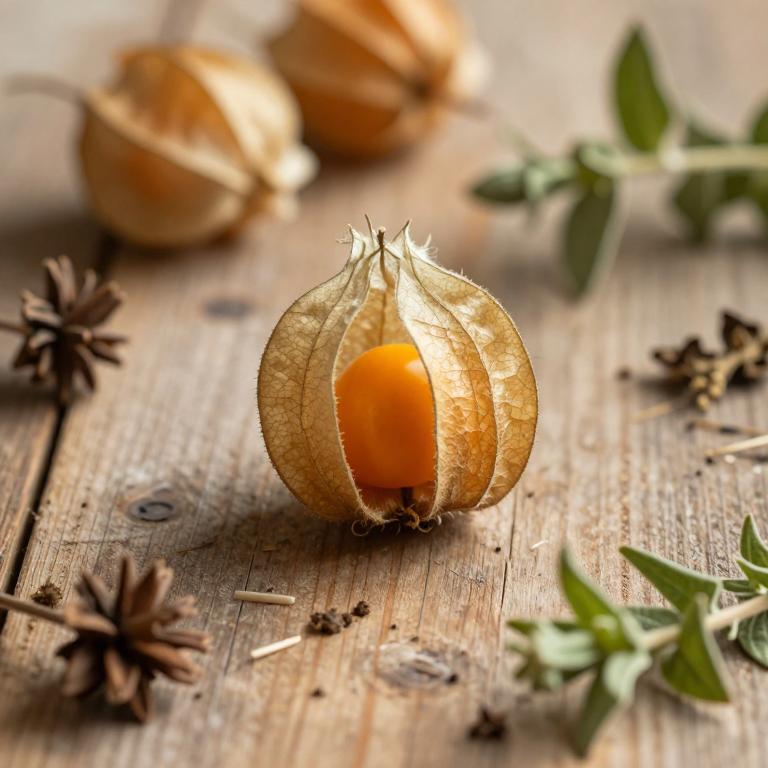
, scientifically known as Physalis lagascae, is a versatile medicinal plant belonging to the Solanaceae family. Often referred to as groundcherry, it is valued for its antioxidant properties and traditional uses in treating inflammatory conditions. This resilient species offers significant therapeutic potential for modern pharmacological research and holistic wellness.
- Family
- Solanaceae
- Native range
- Europe
- Parts used
- Fruit
- Common names
- Not available
- Scientific synonyms
- Physalis Parviculea · Physalis Dunalii · 7 more
Names and Synonyms
Scientific Names
Accepted name
Physalis lagascaeSynonyms
- Physalis parviculea
- Physalis dunalii
- Physalis timorensis
- Physalis minima f. paraguariensis
- Physalis lagascae var. glabrescens
- Physalis minima var. hermannii
- Physalis diffusa
- Physalis pseudoangulata
- Physalis alkekengi var. digitalifolia
Sources: Wikidata, Catalogue of Life
Taxonomical Classification
This plant belongs to the kingdom Plantae within the phylum Streptophyta and the class Equisetopsida. It is further classified under the subclass Magnoliidae, the order Solanales, and the family Solanaceae. Ultimately, Physalis lagaascae is identified by the genus Physalis.
| Rank | Classification |
|---|---|
| Kingdom | Plantae |
| Phylum | Streptophyta |
| Class | Equisetopsida |
| Subclass | Magnoliidae |
| Order | Solanales |
| Family | Solanaceae |
| Genus | Physalis |
Sources: The World Checklist of Vascular Plants (WCVP)
Distribution
This plant exhibits a broad and diverse geographical distribution spanning multiple continents. In Middle Europe, its presence can be identified within the borders of Germany. Moving toward the African continent, it is found in the Northern African nation of Libya. Its range extends into the Macaronesian islands, specifically reaching Cape Verde. Finally, the species is documented in West Tropical Africa, occurring in both Benin and Burkina.
| Region | Area |
|---|---|
| Middle Europe | Germany |
| Northern Africa | Libya |
| Macaronesia | Cape Verde |
| West Tropical Africa | Benin |
| West Tropical Africa | Burkina |
| West Tropical Africa | Gambia |
| West Tropical Africa | Ghana |
| West Tropical Africa | Guinea-Bissau |
| West Tropical Africa | Guinea |
| West Tropical Africa | Ivory Coast |
Sources: The World Checklist of Vascular Plants (WCVP)
Botanical Identification
Ecology
The ecology of Physalis lagaascae is characterized by its distribution across a specific altitudinal gradient, primarily thriving in lowland to mid-elevation environments. The species exhibits a broad elevational range that begins at sea level (0 m AMSL) and extends up to a maximum altitude of 1000 m AMSL. Within this vertical distribution, the plant maintains a mean elevation of approximately 360 m AMSL, suggesting that its optimal ecological niche is centered in lower-altitude habitats. This distribution pattern indicates an adaptation to the specific temperature, moisture, and atmospheric conditions typical of these lower elevations.
- Elevational range max:
- 1000 m AMSL
- Elevational range mean:
- 360 m AMSL
- Elevational range min:
- 0 m AMSL
Life history
The life history of Physalis lagascae is characterized by an annual lifecycle, meaning the plant completes its entire developmental sequence from germination to seed production within a single growing season. As a therophyte, its survival strategy relies on completing its life cycle rapidly and producing hardy seeds that persist in the soil during unfavorable periods. This specific life form indicates that the plant avoids seasonal stress by dying back completely at the end of its reproductive cycle, leaving no permanent above-ground structures, which aligns with its classification as a therophyte in both morphological and ecological contexts.
- Life form :
- therophyte
- Lifecycle :
- annual
Morphology
The morphology of Physalis lagaascae is characterized by its growth form as a non-woody herb, specifically classified as a forb. This plant is strictly terrestrial in its habitat, lacking any aquatic, semiaquatic, or epiphytic tendencies, and it functions as an independent organism without any parasitic behavior. In terms of its structural habit, it is a self-supporting plant that does not exhibit climbing behaviors such as lianas or vines, nor does it require external support to maintain its upright posture.
- Aquatic :
- terrestrial
- Climber :
- self-supporting
- Epiphyte :
- terrestrial
- Growth form :
- herb
- Parasite :
- independent
- Woodiness :
- non-woody
Physiology
The physiology of Physalis lagascae is characterized by its metabolic processes and nutrient acquisition strategies, which are central to its growth and development. As a member of the Solanaceae family, the plant engages in standard photosynthetic pathways to convert solar energy into chemical energy, utilizing its leaf structure for gas exchange and carbon fixation. In terms of its symbiotic relationships and nutrient cycling, the plant is not a nitrogen fixer; it lacks the specialized root nodules and the necessary symbiotic association with diazotrophic bacteria (such as Rhizobium) required to convert atmospheric nitrogen into bioavailable forms. Consequently, its nitrogen acquisition is entirely dependent on the uptake of nitrates and ammonium from the soil through its root system. This dependency dictates its physiological requirement for nitrogen-rich substrates to support the synthesis of amino acids, proteins, and chlorophyll, which are essential for its overall metabolic vigor and reproductive success.
- Nitrogen fixer :
- no
Sources: Global Inventory of Floras and Traits (GIFT)
Plant Parts
Physalis lagascae has 1 reported plant parts identified across 2 scientific publications and several other databases that are studied for medicinal purposes. The most consistently reported plant part include fruit.
| Plant part | Supporting sources | Consensus |
|---|---|---|
| Fruit | 2 supporting sources | ★☆☆☆☆ |
Fruit
- International journal of molecular sciences
- Journal of ethnopharmacology
Chemicals
Physalis lagascae has 5 reported phytochemicals identified across 2 scientific publications and several other databases. The most consistently reported chemicals include CATALASE, Peroxidase, Superoxide dismutase, hydrogen peroxide, nitric oxide.
| Chemical | Supporting sources | Consensus |
|---|---|---|
| CATALASE | 1 supporting sources | ★☆☆☆☆ |
| Peroxidase | 1 supporting sources | ★☆☆☆☆ |
| Superoxide dismutase | 1 supporting sources | ★☆☆☆☆ |
| hydrogen peroxide | 1 supporting sources | ★☆☆☆☆ |
| nitric oxide | 1 supporting sources | ★☆☆☆☆ |
CATALASE
- Scientific reports
Peroxidase
- Scientific reports
Superoxide dismutase
- Scientific reports
hydrogen peroxide
- Scientific reports
nitric oxide
- Scientific reports
Activities
Physalis lagascae has 1 reported activities identified across 2 scientific publications and several other databases. The most consistently reported activities include Antioxidant.
| Activity | Supporting sources | Consensus |
|---|---|---|
| Antioxidant | 1 supporting sources | ★☆☆☆☆ |
Antioxidant
- Cancer gene therapy
Preparations
Physalis lagascae has 3 reported preparations identified across 2 scientific publications and several other databases. The most consistently reported preparations include aqueous extract, dried tissues, methanolic extracts.
| Preparation | Supporting sources | Consensus |
|---|---|---|
| Aqueous extract | 1 supporting sources | ★☆☆☆☆ |
| Dried tissues | 1 supporting sources | ★☆☆☆☆ |
| Methanolic extracts | 1 supporting sources | ★☆☆☆☆ |
Aqueous extract
- Chinese herbal medicines
Dried tissues
- Journal of complementary & integrative medicine
Methanolic extracts
- Iranian journal of basic medical sciences