Physalis philadelphica
Physalis ixocarpa · Accepted scientific name
Scientific literature: Very Extensive (378 studies) · ★★★★★
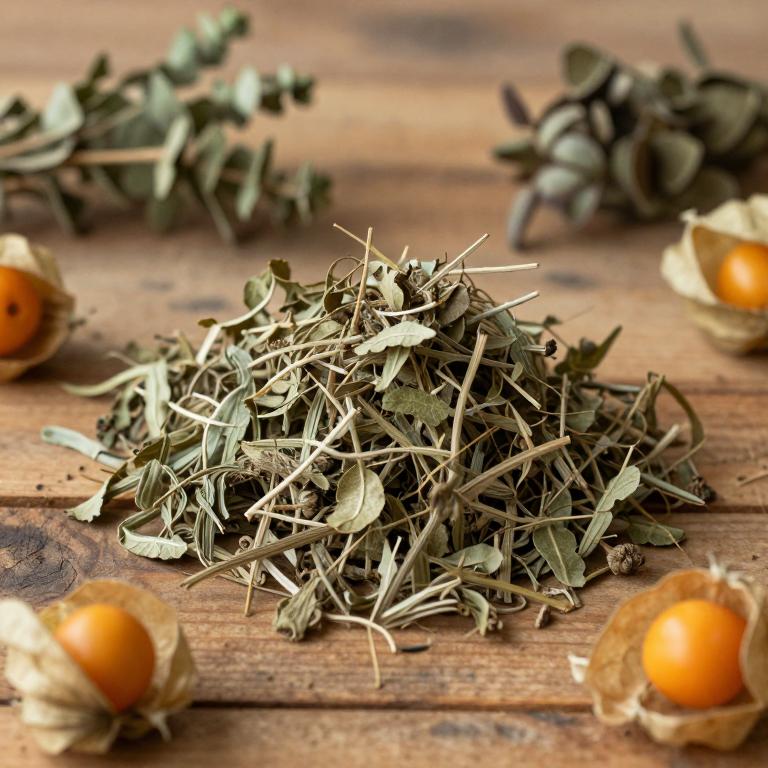
Physalis philadelphicica, scientifically known as Physalis ixocarpum, is a versatile medicinal plant belonging to the Solanaceae family. Commonly called the husk tomato, it features unique bladder-like calyxes. Renowned in traditional medicine, its fruits and leaves offer therapeutic potential, particularly for treating inflammatory conditions, digestive issues, and various skin ailments.
- Family
- Solanaceae
- Native range
- Europe
- Parts used
- Fruit · Leaf
- Common names
- Not available
- Scientific synonyms
- Physalis Ixocarpa Var. Parviflora · Physalis Philadelphica Var. Immaculata · 5 more
Names and Synonyms
Scientific Names
Accepted name
Physalis ixocarpaSynonyms
- Physalis ixocarpa var. parviflora
- Physalis philadelphica var. immaculata
- Physalis philadelphica var. parviflora
- Physalis ixocarpa var. immaculata
- Physalis philadelphica subsp. ixocarpa
- Physalis philadelphica var. inmaculata
- Physalis aequata
Regional and Traditional Names
Spanish:
- Physalis philadelphica
Sources: Wikidata
Taxonomical Classification
This plant belongs to the kingdom Plantae and is classified under the phylum Streptophyta and the class Equisetopsida. Within the subclass Magnoliidae, it falls under the order Solanales and the family Solanaceae. Finally, it is categorized under the genus Physalis.
| Rank | Classification |
|---|---|
| Kingdom | Plantae |
| Phylum | Streptophyta |
| Class | Equisetopsida |
| Subclass | Magnoliidae |
| Order | Solanales |
| Family | Solanaceae |
| Genus | Physalis |
Sources: The World Checklist of Vascular Plants (WCVP)
Distribution
This plant exhibits a diverse geographical distribution across several European regions. In Northern Europe, its presence can be noted within Great Britain. Moving into Middle Europe, the species is found throughout Germany. The plant also inhabits Southwestern Europe, specifically covering the territories of Portugal and Spain. Finally, its range extends into Southeastern Europe, where it is located in Greece.
| Region | Area |
|---|---|
| Northern Europe | Great Britain |
| Middle Europe | Germany |
| Southwestern Europe | Portugal |
| Southwestern Europe | Spain |
| Southeastern Europe | Greece |
| Northern Africa | Egypt |
| West-Central Tropical Africa | DR Congo |
| Northeast Tropical Africa | Eritrea |
| Northeast Tropical Africa | Ethiopia |
| South Tropical Africa | Zambia |
Sources: The World Checklist of Vascular Plants (WCVP)
Botanical Identification
Ecology
The ecology of Physalis ixocarpa is characterized by its versatile adaptability, as it is frequently found in both cultivated and sometimes wild settings. As a species that thrives in human-disturbed landscapes, it often colonizes open areas, gardens, and agricultural fringes where it can exploit available sunlight and soil nutrients. Its ability to persist in the wild suggests a resilient reproductive strategy, allowing it to establish populations in diverse environments ranging from semi-arid scrublands to managed horticultural plots. This dual existence between domestic cultivation and naturalized growth patterns indicates a high degree of ecological plasticity, enabling the plant to navigate various microclimates and soil conditions effectively.
- Habitat :
- cultivated and sometimes wild
Life history
The life history of Physalis ixocarpum is characterized by its classification as an annual species, meaning it completes its entire developmental cycle—from germination to seed production—within a single growing season. Functionally, it is categorized as a therophyte, a life form defined by its strategy of surviving unfavorable environmental conditions as dormant seeds rather than through persistent above-ground or below-ground vegetative structures. This therophytic nature ensures that the plant can rapidly colonize disturbed or seasonal habitats, emerging as a seasonal herbaceous growth that flourishes during favorable climatic periods before returning to a seed state.
- Life form :
- therophyte
- Lifecycle :
- annual
Morphology
The morphology of Physalis ixocarpa is characterized by a growth form classified as a non-woody herb and forb. It is a terrestrial plant that functions as an independent organism rather than a parasite or epiphyte. In terms of its structural habit, it is a self-supporting climber, meaning it does not require external structures for support like a vine or liana. The plant typically reaches a height ranging from a minimum of 0.5 m to a maximum and mean height of approximately 1.2 m.
- Aquatic :
- terrestrial
- Climber :
- self-supporting
- Epiphyte :
- terrestrial
- Growth form :
- herb
- Growth form :
- forb
- Parasite :
- independent
- Plant height mean:
- 1.2 m
- Plant height min:
- 0.5 m
- Woodiness :
- non-woody
Physiology
The physiology of Physalis ixocarpa is characterized by specific morphological and metabolic parameters that dictate its growth and energy acquisition. The plant utilizes a C3 photosynthetic pathway, which influences its carbon fixation processes and adaptation to its environmental niche. Its vegetative structure includes leaves that reach a maximum length of 6 cm and a maximum width of 0.6 cm. Furthermore, this species does not function as a nitrogen fixer, meaning it relies on external nitrogen sources from the soil rather than symbiotic nitrogen-fixing bacteria to meet its nutritional requirements.
- Leaf length max:
- 6 cm
- Leaf width max:
- 0.6 cm
- Nitrogen fixer :
- no
- Photosynthetic pathway :
- C3
Reproduction
The reproduction of Physalis ixocarpa is characterized by a biotic pollination syndrome, primarily relying on insects such as bees to facilitate fertilization. The flowering period for this species typically commences in June and continues through October. Following successful pollination, the plant produces a fruit classified as a berry, which is indehiscent in nature. The resulting seeds are quite small, with a consistent mean, minimum, and maximum seed mass of 0.00161 g, ensuring efficient dispersal through its fleshy fruit.
- Dehiscence :
- indehiscent
- Flowering time :
- Jun
- Flowering time :
- Oct
- Fruit type :
- berry
- Pollination syndrome :
- insect
- Pollination syndrome :
- bee
- Pollination syndrome :
- biotic
- Seed mass mean:
- 0.00161 g
Sources: Global Inventory of Floras and Traits (GIFT)
Plant Parts
Physalis ixocarpa has 3 reported plant parts identified across 3 scientific publications and several other databases that are studied for medicinal purposes. The most consistently reported plant part include fruit, leaf, stem.
| Plant part | Supporting sources | Consensus |
|---|---|---|
| Fruit | 1 supporting sources | ★☆☆☆☆ |
| Leaf | 1 supporting sources | ★☆☆☆☆ |
| Stem | 1 supporting sources | ★☆☆☆☆ |
Fruit
- Pakistan journal of pharmaceutical sciences
Leaf
- Pakistan journal of pharmaceutical sciences
Stem
- Pakistan journal of pharmaceutical sciences
Chemicals
Physalis ixocarpa has 36 reported phytochemicals identified across 3 scientific publications and several other databases. The most consistently reported chemicals include IXOCARPALACTONE A, Ash, CALCIUM, COPPER, Carotenes.
| Chemical | Supporting sources | Consensus |
|---|---|---|
| IXOCARPALACTONE A | 2 supporting sources | ★☆☆☆☆ |
| Ash | 1 supporting sources | ★☆☆☆☆ |
| CALCIUM | 1 supporting sources | ★☆☆☆☆ |
| COPPER | 1 supporting sources | ★☆☆☆☆ |
| Carotenes | 1 supporting sources | ★☆☆☆☆ |
| DEHYDROASCORBIC ACID | 1 supporting sources | ★☆☆☆☆ |
| FAT | 1 supporting sources | ★☆☆☆☆ |
| IRON | 1 supporting sources | ★☆☆☆☆ |
| MAGNESIUM | 1 supporting sources | ★☆☆☆☆ |
| PHOSPHORUS | 1 supporting sources | ★☆☆☆☆ |
IXOCARPALACTONE A
- Bioorganic & medicinal chemistry
- Food & function
Ash
- Dr. Duke
CALCIUM
- Dr. Duke
COPPER
- Dr. Duke
Carotenes
- Dr. Duke
DEHYDROASCORBIC ACID
- Dr. Duke
FAT
- Dr. Duke
IRON
- Dr. Duke
MAGNESIUM
- Dr. Duke
PHOSPHORUS
- Dr. Duke
Activities
Physalis ixocarpa has 330 reported activities identified across 3 scientific publications and several other databases. The most consistently reported activities include ACE-Inhibitor, Acaricide, Acarifuge, Acetylcholinergic, Acidulant.
| Activity | Supporting sources | Consensus |
|---|---|---|
| ACE-Inhibitor | 1 supporting sources | ★☆☆☆☆ |
| Acaricide | 1 supporting sources | ★☆☆☆☆ |
| Acarifuge | 1 supporting sources | ★☆☆☆☆ |
| Acetylcholinergic | 1 supporting sources | ★☆☆☆☆ |
| Acidulant | 1 supporting sources | ★☆☆☆☆ |
| Additive | 1 supporting sources | ★☆☆☆☆ |
| Aggregant | 1 supporting sources | ★☆☆☆☆ |
| Aldose-Reductase-Inhibitor | 1 supporting sources | ★☆☆☆☆ |
| Allergenic | 1 supporting sources | ★☆☆☆☆ |
| Alpha-Amylase-Inhibitor | 1 supporting sources | ★☆☆☆☆ |
ACE-Inhibitor
- Dr. Duke
Acaricide
- Dr. Duke
Acarifuge
- Dr. Duke
Acetylcholinergic
- Dr. Duke
Acidulant
- Dr. Duke
Additive
- Dr. Duke
Aggregant
- Dr. Duke
Aldose-Reductase-Inhibitor
- Dr. Duke
Allergenic
- Dr. Duke
Alpha-Amylase-Inhibitor
- Dr. Duke
Conditions
Physalis ixocarpa has 6 reported investigations on conditions identified across 3 scientific publications and several other databases. The most consistently reported conditions include Aspergillus niger, E. coli, Klebsiella pneumoniae, Penicillium chrysogenum, pancreatic cancer.
| Condition | Supporting sources | Consensus |
|---|---|---|
| Aspergillus niger | 1 supporting sources | ★☆☆☆☆ |
| E. coli | 1 supporting sources | ★☆☆☆☆ |
| Klebsiella pneumoniae | 1 supporting sources | ★☆☆☆☆ |
| Penicillium chrysogenum | 1 supporting sources | ★☆☆☆☆ |
| Pancreatic cancer | 1 supporting sources | ★☆☆☆☆ |
| Tumor | 1 supporting sources | ★☆☆☆☆ |
Aspergillus niger
- Pakistan journal of pharmaceutical sciences
E. coli
- Pakistan journal of pharmaceutical sciences
Klebsiella pneumoniae
- Pakistan journal of pharmaceutical sciences
Penicillium chrysogenum
- Pakistan journal of pharmaceutical sciences
Pancreatic cancer
- Food & function
Tumor
- Bioorganic & medicinal chemistry
Preparations
Physalis ixocarpa has 1 reported preparations identified across 3 scientific publications and several other databases. The most consistently reported preparations include solvent extracted samples.
| Preparation | Supporting sources | Consensus |
|---|---|---|
| Solvent extracted samples | 1 supporting sources | ★☆☆☆☆ |
Solvent extracted samples
- Pakistan journal of pharmaceutical sciences