Physalis cordata
Physalis cordata · Accepted scientific name
Scientific literature: Very Sparse (2 studies) · ★☆☆☆☆
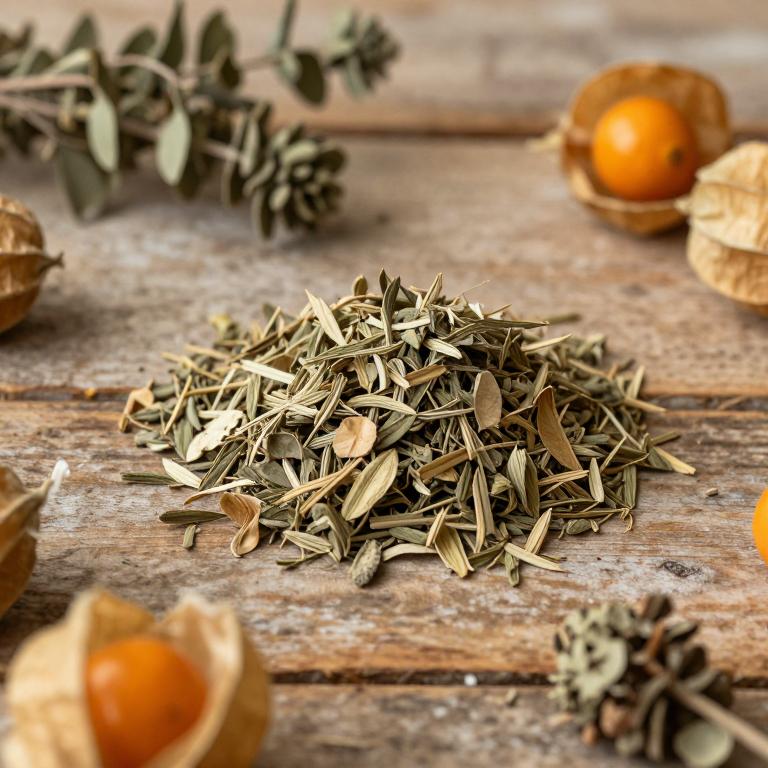
Physalis cordata, scientifically known as Physalis cordata, is a distinctive herbaceous plant celebrated in traditional medicine. Characterized by its heart-shaped leaves and delicate bladder-like husks, this species offers various therapeutic properties. It is frequently studied for its potential antioxidant and anti-inflammatory benefits within holistic healing practices.
- Family
- Solanaceae
- Native range
- Africa
- Parts used
- Not available
- Common names
- Not available
- Scientific synonyms
- Physalis Galapagoensis · Physalis Clarionensis · 1 more
Names and Synonyms
Scientific Names
Accepted name
Physalis cordataSynonyms
- Physalis galapagoensis
- Physalis clarionensis
- Physalis porrecta
Regional and Traditional Names
Spanish:
- Miltomate Montés
- Moench' o
- Tinogpupuy
- Tomatillo
Sources: Wikidata, Catalogue of Life
Taxonomical Classification
This plant belongs to the kingdom Plantae and the phylum Streptophyta, falling under the class Equisetopsida and subclass Magnoliidae. Within the order Solanales and the family Solanaceae, it is specifically classified under the genus Physalis.
| Rank | Classification |
|---|---|
| Kingdom | Plantae |
| Phylum | Streptophyta |
| Class | Equisetopsida |
| Subclass | Magnoliidae |
| Order | Solanales |
| Family | Solanaceae |
| Genus | Physalis |
Sources: The World Checklist of Vascular Plants (WCVP)
Distribution
This plant exhibits a diverse geographical range spanning across several distinct regions. In the Western Indian Ocean, its presence is noted in both Comoros and Madagascar. Its distribution extends into East Asia, specifically found on the island of Hainan in China. Additionally, the species is located within the Indo-China region. This encompasses the territories of both Cambodia and Laos.
| Region | Area |
|---|---|
| Western Indian Ocean | Comoros |
| Western Indian Ocean | Madagascar |
| China | Hainan |
| Indo-China | Cambodia |
| Indo-China | Laos |
| Indo-China | Vietnam |
| North-Central U.S.A. | Missouri |
| North-Central U.S.A. | Oklahoma |
| South-Central U.S.A. | Texas |
| Southeastern U.S.A. | Alabama |
Sources: The World Checklist of Vascular Plants (WCVP)
Botanical Identification
Ecology
The ecology of Physalis cordata is characterized by its adaptability to various terrains, spanning an elevational range that begins at sea level (0 m AMSL) and reaches a maximum altitude of 2000 m AMSL. While its mean elevation is recorded at 0 m AMSL, indicating a strong presence in lowland regions, the species demonstrates significant vertical plasticity. Regarding its preferred environmental settings, the plant is frequently documented within "Área Antrópica" (anthropic areas), suggesting that it thrives in landscapes modified by human activity, such as disturbed soils, agricultural fringes, or urbanized environments.
- Elevational range max:
- 2000 m AMSL
- Elevational range mean:
- 0 m AMSL
- Habitat :
- Área Antrópica
Life history
The life history of Physalis cordata is characterized by an annual lifecycle, meaning the plant completes its entire biological progression—from germination and vegetative growth to flowering and seed production—within a single growing season. Following the germination of seeds in favorable soil conditions, the plant undergoes a period of rapid vegetative development, establishing its foliage and structural integrity. As the season progresses, it enters a reproductive phase where it produces flowers and eventually develops fruit protected by a characteristic bladder-like calyx. Once the seeds have matured and are dispersed, the individual plant reaches the end of its life cycle, leaving the survival of the species dependent on the successful establishment of the next generation of seeds in the soil.
- Lifecycle :
- annual
Morphology
The morphology of Physalis cordata is characterized by its growth form as a non-woody herb, specifically categorized as a forb. It functions as an independent organism, maintaining an independent nutritional status without being a parasite. In terms of its ecological habit, the plant is terrestrial rather than aquatic or epiphytic, lacking any hemi-epiphytic or holo-epiphytic tendencies. Structurally, it is a self-supporting plant; although it exhibits traits related to climbing, it does not function as an obligatory vine or liana, but rather remains self-supporting in its physical stature.
- Aquatic :
- terrestrial
- Climber :
- self-supporting
- Epiphyte :
- terrestrial
- Growth form :
- herb
- Growth form :
- forb
- Parasite :
- independent
- Woodiness :
- non-woody
Sources: Global Inventory of Floras and Traits (GIFT)
Activities
Physalis cordata has 1 reported activities identified across 0 scientific publications and several other databases. The most consistently reported activities include Cytotoxic.
| Activity | Supporting sources | Consensus |
|---|---|---|
| Cytotoxic | 1 supporting sources | ★☆☆☆☆ |
Cytotoxic
- Phytotherapy research : PTR
Conditions
Physalis cordata has 1 reported investigations on conditions identified across 0 scientific publications and several other databases. The most consistently reported conditions include tumor cell lines.
| Condition | Supporting sources | Consensus |
|---|---|---|
| Tumor cell lines | 1 supporting sources | ★☆☆☆☆ |
Tumor cell lines
- Phytotherapy research : PTR
Preparations
Physalis cordata has 1 reported preparations identified across 0 scientific publications and several other databases. The most consistently reported preparations include extracts.
| Preparation | Supporting sources | Consensus |
|---|---|---|
| Extracts | 1 supporting sources | ★☆☆☆☆ |
Extracts
- Phytotherapy research : PTR