Phyllanthus sellowianus
Phyllanthus sellowianus · Accepted scientific name
Scientific literature: Very Sparse (15 studies) · ★☆☆☆☆
, scientifically known as Phyllanthus sellowiaanus, is a versatile medicinal plant cherished in traditional healing practices. Renowned for its diverse therapeutic properties, this species is frequently utilized to treat various ailments, including digestive issues and inflammatory conditions. Its unique phytochemical profile makes it a significant subject in ethnobotanical research.
- Family
- Phyllanthaceae
- Native range
- Southern America
- Parts used
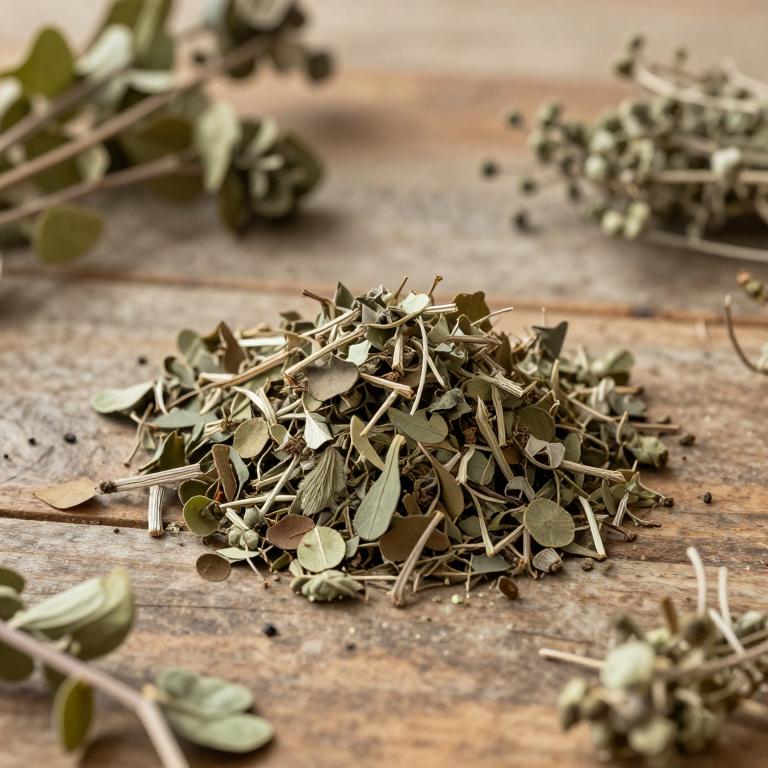
- Leaf · Stem
- Common names
- Not available
- Scientific synonyms
- Asterandra Sellowiana · Diasperus Sellowianus
Names and Synonyms
Scientific Names
Accepted name
Phyllanthus sellowianusSynonyms
- Asterandra sellowiana
- Diasperus sellowianus
Regional and Traditional Names
Spanish:
- Sarandí blanco
Sources: Wikidata, Catalogue of Life
Taxonomical Classification
This plant belongs to the kingdom Plantae and is classified under the phylum Streptophyta and class Equisetopsida. Within the subclass Magnoliidae, it follows the order Malpighiales and is a member of the family Phyllanthaceae. Ultimately, it is identified by the genus Phyllanthus.
| Rank | Classification |
|---|---|
| Kingdom | Plantae |
| Phylum | Streptophyta |
| Class | Equisetopsida |
| Subclass | Magnoliidae |
| Order | Malpighiales |
| Family | Phyllanthaceae |
| Genus | Phyllanthus |
Sources: The World Checklist of Vascular Plants (WCVP)
Distribution
This plant exhibits a specific distribution pattern across several regions of South America. In Brazil, its presence is primarily concentrated within the southern part of the country. Moving across the southern portion of the continent, it can also be found in the northeast region of Argentina. Additionally, the species is distributed throughout the territory of Paraguay. Finally, its geographical range extends into Uruguay, completing its presence in Southern South America.
| Region | Area |
|---|---|
| Brazil | Brazil South |
| Southern South America | Argentina Northeast |
| Southern South America | Paraguay |
| Southern South America | Uruguay |
Sources: The World Checklist of Vascular Plants (WCVP)
Botanical Identification
Ecology
The ecology of Phyllanthus sellowiaanus is characterized by its presence in specialized environments, specifically within the Campo Rupestre and vegetation growing over rocky outcrops (Vegetação Sobre Afloramentos Rochosos). This species demonstrates a broad altitudinal adaptability, occupying an elevational range that extends from sea level (0 m AMSL) up to a maximum altitude of 1300 m AMSL. This distribution suggests a capacity to thrive in diverse microclimates, ranging from lowland rocky terrains to higher elevation montane habitats.
- Elevational range max:
- 1300 m AMSL
- Elevational range min:
- 0 m AMSL
- Habitat :
- Campo Rupestre, Vegetação Sobre Afloramentos Rochosos
Life history
The life history of Phyllanthus selloinianus is characterized by its status as a perennial organism, allowing it to persist through multiple growing seasons. In terms of its structural growth habit and ecological positioning, the plant exhibits a complex life form profile, functioning as both a phanerophyte, with its stems extending above the ground level, and a nanophanerophyte, which indicates that its woody parts are maintained relatively close to the soil surface.
- Life form :
- nanophanerophyte
- Life form :
- phanerophyte
- Lifecycle :
- perennial
Morphology
The morphology of Phyllanthus selloinianus is characterized by a woody shrub growth form that typically reaches a maximum plant height of 3 meters. It functions as an independent organism, lacking parasitic tendencies, and maintains a terrestrial existence rather than being aquatic or epiphytic. Although it possesses a self-supporting structure, it does not exhibit the climbing habits of lianas or vines, instead growing as a robust, self-supporting shrub within its natural habitat.
- Aquatic :
- terrestrial
- Climber :
- self-supporting
- Epiphyte :
- terrestrial
- Growth form :
- shrub
- Parasite :
- independent
- Plant height max:
- 3 m
- Woodiness :
- woody
Sources: Global Inventory of Floras and Traits (GIFT)
Plant Parts
Phyllanthus sellowianus has 2 reported plant parts identified across 4 scientific publications and several other databases that are studied for medicinal purposes. The most consistently reported plant part include leaf, stem.
| Plant part | Supporting sources | Consensus |
|---|---|---|
| Leaf | 2 supporting sources | ★☆☆☆☆ |
| Stem | 2 supporting sources | ★☆☆☆☆ |
Leaf
- Planta medica
- Phytomedicine : international journal of phytotherapy and phytopharmacology
Stem
- Planta medica
- Phytomedicine : international journal of phytotherapy and phytopharmacology
Chemicals
Phyllanthus sellowianus has 2 reported phytochemicals identified across 4 scientific publications and several other databases. The most consistently reported chemicals include Furosin, Geraniin.
| Chemical | Supporting sources | Consensus |
|---|---|---|
| Furosin | 1 supporting sources | ★☆☆☆☆ |
| Geraniin | 1 supporting sources | ★☆☆☆☆ |
Furosin
- Planta medica
Geraniin
- Planta medica
Activities
Phyllanthus sellowianus has 4 reported activities identified across 4 scientific publications and several other databases. The most consistently reported activities include Antinociceptive, Antispasmodic, Diuretic, Hypoglycemic.
| Activity | Supporting sources | Consensus |
|---|---|---|
| Antinociceptive | 1 supporting sources | ★☆☆☆☆ |
| Antispasmodic | 1 supporting sources | ★☆☆☆☆ |
| Diuretic | 1 supporting sources | ★☆☆☆☆ |
| Hypoglycemic | 1 supporting sources | ★☆☆☆☆ |
Antinociceptive
- Planta medica
Antispasmodic
- Brazilian journal of medical and biological research = Revista brasileira de pesquisas medicas e biologicas
Diuretic
- Phytomedicine : international journal of phytotherapy and phytopharmacology
Hypoglycemic
- Phytomedicine : international journal of phytotherapy and phytopharmacology
Conditions
Phyllanthus sellowianus has 3 reported investigations on conditions identified across 4 scientific publications and several other databases. The most consistently reported conditions include diuretic, hypertension, hypoglycemic.
| Condition | Supporting sources | Consensus |
|---|---|---|
| Diuretic | 1 supporting sources | ★☆☆☆☆ |
| Hypertension | 1 supporting sources | ★☆☆☆☆ |
| Hypoglycemic | 1 supporting sources | ★☆☆☆☆ |
Diuretic
- Phytomedicine : international journal of phytotherapy and phytopharmacology
Hypertension
- Journal of ethnopharmacology
Hypoglycemic
- Phytomedicine : international journal of phytotherapy and phytopharmacology
Preparations
Phyllanthus sellowianus has 2 reported preparations identified across 4 scientific publications and several other databases. The most consistently reported preparations include Infusions, ethanolic extract of the leaves and stems.
| Preparation | Supporting sources | Consensus |
|---|---|---|
| Infusions | 1 supporting sources | ★☆☆☆☆ |
| Ethanolic extract of the leaves and stems | 1 supporting sources | ★☆☆☆☆ |
Infusions
- Brazilian journal of medical and biological research = Revista brasileira de pesquisas medicas e biologicas
Ethanolic extract of the leaves and stems
- Planta medica