Flor Escondida
Phyllanthus pulcher · Accepted scientific name
Scientific literature: Very Sparse (4 studies) · ★☆☆☆☆
Flor Escondiida, scientifically known as Phyllanthus pulcher, is a remarkable medicinal shrub native to tropical regions. Renowned for its vibrant flowers and unique foliage, this plant is deeply embedded in traditional healing practices, often utilized for its diverse pharmacological properties to treat various ailments and support overall wellness.
- Family
- Phyllanthaceae
- Native range
- Asia-Temperate
- Parts used
- Root
- Common names
- Not available
- Scientific synonyms
- Phyllanthus Zollingeri · Phyllanthus Zollingeri Var. Microphyllus · 7 more
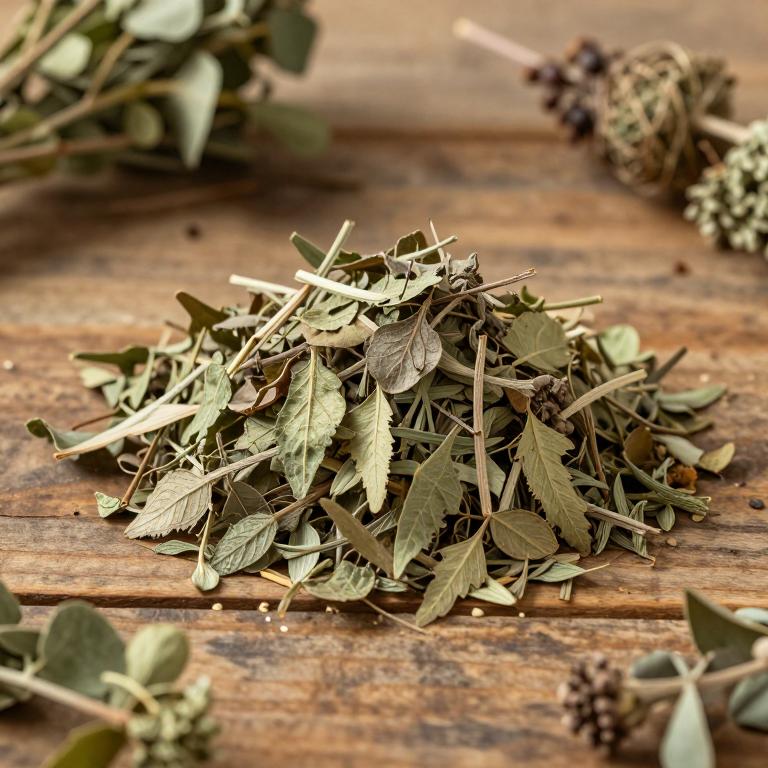
Names and Synonyms
Scientific Names
Accepted name
Phyllanthus pulcherSynonyms
- Phyllanthus zollingeri
- Phyllanthus zollingeri var. microphyllus
- Reidia glaucescens
- Phyllanthus lacerilobus
- Nymphanthus glaucescens
- Phyllanthus pulcher var. pallidus
- Phyllanthus asteranthos
- Diasperus pulcher
- Diasperus pallidifolius
Regional and Traditional Names
Spanish:
- Diasperus pulcher
- Reidia glaucescens
- Phyllanthus asteranthos
- Phyllanthus pallidus
- Epistylium phyllanthoides
- Phyllanthus lacerilobus
- Epistylium glaucescens
- Phyllanthus zollingeri var. microphyllus
- Diasperus pallidifolius
- Epistylium pulchrum
Sources: Wikidata
Taxonomical Classification
This plant belongs to the kingdom Plantae and is classified under the phylum Streptophyta and class Equisetopsida. Within the subclass Magnoliidae, it falls under the order Malpighiales and the family Phyllanthaceae. Ultimately, its taxonomic identity is defined by its placement within the genus Phyllanthus.
| Rank | Classification |
|---|---|
| Kingdom | Plantae |
| Phylum | Streptophyta |
| Class | Equisetopsida |
| Subclass | Magnoliidae |
| Order | Malpighiales |
| Family | Phyllanthaceae |
| Genus | Phyllanthus |
Sources: The World Checklist of Vascular Plants (WCVP)
Distribution
This plant exhibits a diverse geographical distribution across several key regions in Asia. Within China, it can be found throughout the South-Central and Southeast territories. Its range extends into the Indian Subcontinent, specifically inhabiting the East Himalaya and the nation of Nepal. Additionally, the species is documented within the Indo-China region, particularly in Cambodia. Together, these locations define the specific ecological footprint of Phyllanthus pulcher.
| Region | Area |
|---|---|
| China | China South-Central |
| China | China Southeast |
| Indian Subcontinent | East Himalaya |
| Indian Subcontinent | Nepal |
| Indo-China | Cambodia |
| Indo-China | Laos |
| Indo-China | Myanmar |
| Indo-China | Thailand |
| Indo-China | Vietnam |
| Malesia | Borneo |
Sources: The World Checklist of Vascular Plants (WCVP)
Botanical Identification
Ecology
The ecology of Phyllanthus pulcher is characterized by its specific altitudinal distribution within its natural habitat, where it thrives across a diverse vertical gradient. This species is typically found at elevations ranging from a minimum of 700 m AMSL to a maximum of 1760 m AMSL. Throughout its range, the plant maintains a mean elevation of approximately 1230 m AMSL, suggesting a preference for mid-altitude ecological zones. This elevational positioning dictates the specific climatic conditions, such as temperature fluctuations and moisture availability, to which the plant has adapted during its growth and distribution.
- Elevational range max:
- 1760 m AMSL
- Elevational range mean:
- 1230 m AMSL
- Elevational range min:
- 700 m AMSL
Life history
The life history of Phyllanthus pulcher is characterized by a perennial lifecycle, allowing the plant to persist through multiple growing seasons. In terms of its structural development and ecological positioning, it exhibits a dual life form classification, functioning as both a phanerophyte and a nanophanerophyte. As a phanerophyte, it maintains its buds well above the ground level, contributing to its established stature, while its nanophanerophytic traits indicate a capacity for growth where the reproductive or sustaining parts remain relatively close to the soil surface.
- Life form :
- nanophanerophyte
- Life form :
- phanerophyte
- Lifecycle :
- perennial
Morphology
The morphology of Phyllanthus pulcher is characterized by a woody, shrubby growth form that functions as a self-supporting structure rather than a vine or liana. This plant is strictly terrestrial, existing as an independent organism without parasitic or epiphytic tendencies. In terms of stature, it typically reaches a mean height of approximately 1 meter, though individual specimens can vary in size, ranging from a minimum of 0.5 meters to a maximum height of 1.5 meters.
- Aquatic :
- terrestrial
- Climber :
- self-supporting
- Epiphyte :
- terrestrial
- Growth form :
- shrub
- Parasite :
- independent
- Plant height max:
- 1.5 m
- Plant height mean:
- 1 m
- Plant height min:
- 0.5 m
- Woodiness :
- woody
Physiology
The physiology of Phyllanthus pulcher is characterized by specific morphological dimensions of its foliage that reflect its adaptive growth patterns. The leaves exhibit a measurable variation in size, with a mean length of 2.4 cm and a minimum length of 1.8 cm, reaching a maximum length of 3 cm. This longitudinal development is complemented by a width profile that fluctuates between a minimum of 0.8 cm and a maximum of 1.3 cm, maintaining an average width of 1.05 cm. These precise leaf dimensions suggest a structured approach to light interception and surface area optimization, which are essential for the plant's metabolic processes and overall physiological efficiency.
- Leaf length max:
- 3 cm
- Leaf length mean:
- 2.4 cm
- Leaf length min:
- 1.8 cm
- Leaf width max:
- 1.3 cm
- Leaf width mean:
- 1.05 cm
- Leaf width min:
- 0.8 cm
Reproduction
Reproduction in Phyllanthus pulcher is primarily achieved through the development of specialized fruits that follow the flowering stage. The resulting fruit is characterized by a highly consistent morphology, exhibiting a uniform width across various specimens. Detailed measurements indicate that the fruit width maintains a strict stability, with a minimum width of 0.3 cm, a mean width of 0.3 cm, and a maximum width of 0.3 cm. This lack of variance in fruit width suggests a highly standardized developmental process during the maturation of the reproductive organs.
- Fruit width max:
- 0.3 cm
Sources: Global Inventory of Floras and Traits (GIFT)
Plant Parts
Phyllanthus pulcher has 1 reported plant parts identified across 1 scientific publications and several other databases that are studied for medicinal purposes. The most consistently reported plant part include root.
| Plant part | Supporting sources | Consensus |
|---|---|---|
| Root | 1 supporting sources | ★☆☆☆☆ |
Root
- Molecules (Basel, Switzerland)
Chemicals
Phyllanthus pulcher has 1 reported phytochemicals identified across 1 scientific publications and several other databases. The most consistently reported chemicals include Lignans.
| Chemical | Supporting sources | Consensus |
|---|---|---|
| Lignans | 1 supporting sources | ★☆☆☆☆ |
Lignans
- Planta medica
Conditions
Phyllanthus pulcher has 1 reported investigations on conditions identified across 1 scientific publications and several other databases. The most consistently reported conditions include metastasis.
| Condition | Supporting sources | Consensus |
|---|---|---|
| Metastasis | 1 supporting sources | ★☆☆☆☆ |
Metastasis
- Planta medica