Phyllanthus puber
Phyllanthus puber · Accepted scientific name
Scientific literature: Very Sparse (1 studies) · ★☆☆☆☆
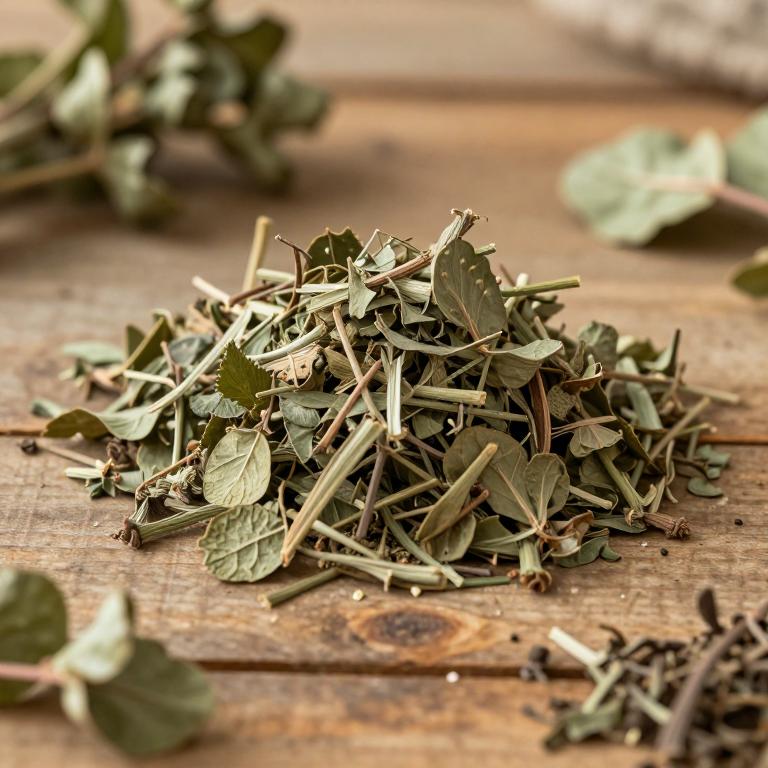
, scientifically known as Phyllanthus puber, is a significant medicinal herb valued in traditional healing systems. Renowned for its diverse pharmacological properties, this plant is frequently utilized for its antioxidant, anti-inflammatory, and antimicrobial effects. It serves as a vital natural resource in treating various ailments and supporting holistic wellness.
- Family
- Phyllanthaceae
- Native range
- Asia-Temperate
- Parts used
- Not available
- Common names
- Not available
- Scientific synonyms
- Glochidion Sinicum · Bradleia Sinica · 8 more
Names and Synonyms
Scientific Names
Accepted name
Phyllanthus puberSynonyms
- Glochidion sinicum
- Bradleia sinica
- Glochidion hayatae var. tsushimense
- Glochidion pseudo-obscurum
- Glochidion distichum
- Agyneia impubes
- Bradleia pubera
- Agyneia pinnata
- Glochidion puberum
- Agyneia sinica
Taxonomical Classification
This plant belongs to the kingdom Plantae and is classified under the phylum Streptophyta and class Equisetopsida. Within the subclass Magnoliidae, it follows the order Malpighiales and is a member of the family Phyllanthaceae. Finally, it is identified by the genus Phyllanthus.
| Rank | Classification |
|---|---|
| Kingdom | Plantae |
| Phylum | Streptophyta |
| Class | Equisetopsida |
| Subclass | Magnoliidae |
| Order | Malpighiales |
| Family | Phyllanthaceae |
| Genus | Phyllanthus |
Sources: The World Checklist of Vascular Plants (WCVP)
Distribution
This plant exhibits a diverse range of habitats across the various regions of China. Its presence is recorded within the South-Central areas of the country. Additionally, it can be found growing in the tropical environment of Hainan. The species also extends its reach into the North-Central provinces of China. Finally, its geographical distribution reaches into the high-altitude regions of Tibet.
| Region | Area |
|---|---|
| China | China South-Central |
| China | Hainan |
| China | China North-Central |
| China | China Southeast |
| China | Tibet |
| Eastern Asia | Japan |
| Eastern Asia | Taiwan |
| Southeastern U.S.A. | Alabama |
Sources: The World Checklist of Vascular Plants (WCVP)
Chemicals
Phyllanthus puber has 1 reported phytochemicals identified across 0 scientific publications and several other databases. The most consistently reported chemicals include Tannins.
| Chemical | Supporting sources | Consensus |
|---|---|---|
| Tannins | 1 supporting sources | ★☆☆☆☆ |
Tannins
- Journal of ethnopharmacology
Preparations
Phyllanthus puber has 1 reported preparations identified across 0 scientific publications and several other databases. The most consistently reported preparations include water and ethanol extracts.
| Preparation | Supporting sources | Consensus |
|---|---|---|
| Water and ethanol extracts | 1 supporting sources | ★☆☆☆☆ |
Water and ethanol extracts
- Journal of ethnopharmacology