Phyllanthus orbicularis
Phyllanthus orbicularis · Accepted scientific name
Scientific literature: Very Sparse (28 studies) · ★☆☆☆☆
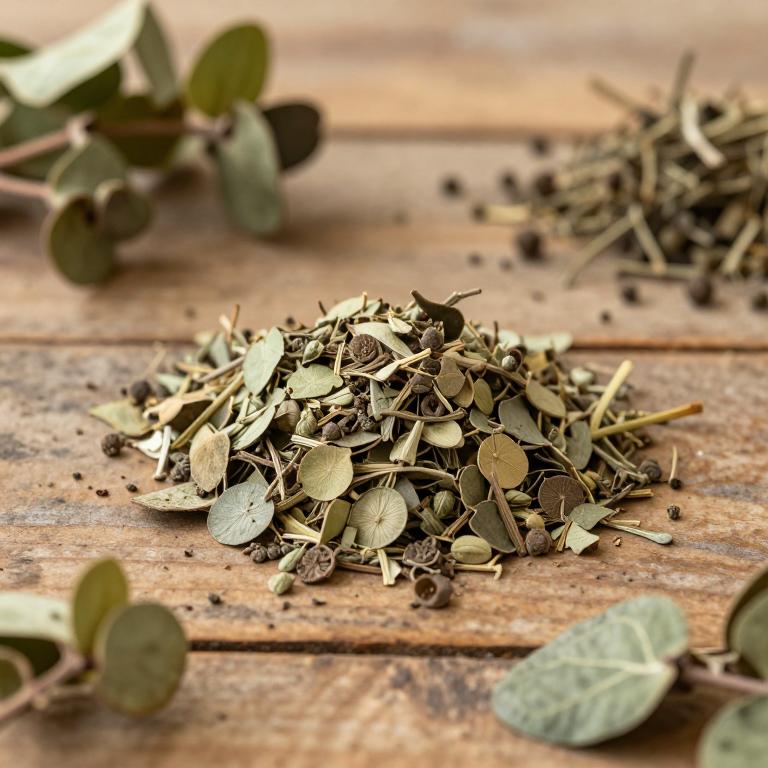
, scientifically known as Phyllanthus orbicularis, is a versatile medicinal shrub native to various tropical regions. Renowned for its diverse therapeutic properties, this plant is frequently utilized in traditional medicine to treat ailments ranging from digestive issues to skin conditions, offering a natural approach to enhancing overall holistic wellness.
- Family
- Phyllanthaceae
- Native range
- Southern America
- Parts used
- Leaf · Stem
- Common names
- Not available
- Scientific synonyms
- Diasperus Orbicularis · Orbicularia Phyllanthoides · 4 more
Names and Synonyms
Scientific Names
Accepted name
Phyllanthus orbicularisSynonyms
- Diasperus orbicularis
- Orbicularia phyllanthoides
- Phyllanthus orbicularis var. ellipticus
- Orbicularia orbicularis
- Phyllanthus orbicularis var. obovatus
- Phyllanthus orbicularis var. lignescens
Sources: Wikidata
Taxonomical Classification
This plant belongs to the kingdom Plantae and is classified under the phylum Streptophyta within the class Equisetopsida. It is further categorized under the subclass Magnoliidae and the order Malpighiales. Finally, it resides in the family Phyllanthaceae and is identified by the genus Phyllanthus.
| Rank | Classification |
|---|---|
| Kingdom | Plantae |
| Phylum | Streptophyta |
| Class | Equisetopsida |
| Subclass | Magnoliidae |
| Order | Malpighiales |
| Family | Phyllanthaceae |
| Genus | Phyllanthus |
Sources: The World Checklist of Vascular Plants (WCVP)
Distribution
This plant is found exclusively within the diverse ecosystems of the Caribbean region. Specifically, its natural range includes the island of Cuba, where it thrives in local habitats. It is also documented to grow across the Dominican Republic, contributing to the area's botanical richness. Furthermore, the species can be located within the territory of Haiti. Finally, its geographical presence extends to Puerto Rico, completing its distribution across these islands.
| Region | Area |
|---|---|
| Caribbean | Cuba |
| Caribbean | Dominican Republic |
| Caribbean | Haiti |
| Caribbean | Puerto Rico |
Sources: The World Checklist of Vascular Plants (WCVP)
Botanical Identification
Life history
The life history of Phyllanthus orbicularis is characterized by a perennial lifecycle, allowing the plant to persist through multiple growing seasons. In terms of its structural growth patterns and ecological positioning, the species exhibits diverse life form classifications, manifesting as both a phanerophyte and a nanophanerophyte. This indicates that while the plant can maintain visible shoot systems above the ground, its stature is often characterized by relatively short woody stems that remain close to the substrate.
- Life form :
- nanophanerophyte
- Life form :
- phanerophyte
- Lifecycle :
- perennial
Morphology
The morphology of Phyllanthus orbicularis is characterized by a shrubby growth form that classifies it as a shrub within its ecological niche. As an independent organism, it does not function as a parasite, maintaining its own metabolic processes without relying on a host. The plant is primarily terrestrial in its habitat, growing in soil rather than acting as an epiphyte. Its physical structure is notably non-woody, lacking significant lignified tissue. Although it possesses certain climbing tendencies, it is categorized as a self-supporting climber, meaning it maintains its upright or sprawling posture through its own structural integrity rather than being an obligatory or facultative climber that relies entirely on external structures for support.
- Climber :
- self-supporting
- Epiphyte :
- terrestrial
- Growth form :
- shrub
- Parasite :
- independent
- Woodiness :
- non-woody
Sources: Global Inventory of Floras and Traits (GIFT)
Plant Parts
Phyllanthus orbicularis has 2 reported plant parts identified across 2 scientific publications and several other databases that are studied for medicinal purposes. The most consistently reported plant part include leaf, stem.
| Plant part | Supporting sources | Consensus |
|---|---|---|
| Leaf | 1 supporting sources | ★☆☆☆☆ |
| Stem | 1 supporting sources | ★☆☆☆☆ |
Leaf
- Journal of ethnopharmacology
Stem
- Journal of ethnopharmacology
Chemicals
Phyllanthus orbicularis has 6 reported phytochemicals identified across 2 scientific publications and several other databases. The most consistently reported chemicals include (-)-Epicatechin-3-O-gallate, 1-Aminopyrene, 2-Aminoanthracene, 2-aminofluorene, Flavonoids.
| Chemical | Supporting sources | Consensus |
|---|---|---|
| (-)-Epicatechin-3-O-gallate | 1 supporting sources | ★☆☆☆☆ |
| 1-Aminopyrene | 1 supporting sources | ★☆☆☆☆ |
| 2-Aminoanthracene | 1 supporting sources | ★☆☆☆☆ |
| 2-aminofluorene | 1 supporting sources | ★☆☆☆☆ |
| Flavonoids | 1 supporting sources | ★☆☆☆☆ |
| m-Phenylenediamine | 1 supporting sources | ★☆☆☆☆ |
(-)-Epicatechin-3-O-gallate
- Phytotherapy research : PTR
1-Aminopyrene
- Mutation research
2-Aminoanthracene
- Mutation research
2-aminofluorene
- Mutation research
Flavonoids
- Phytotherapy research : PTR
m-Phenylenediamine
- Mutation research
Activities
Phyllanthus orbicularis has 5 reported activities identified across 2 scientific publications and several other databases. The most consistently reported activities include Antiviral, Antimutagenic, Antioxidant, Cytotoxic, Genotoxic.
| Activity | Supporting sources | Consensus |
|---|---|---|
| Antiviral | 4 supporting sources | ★★☆☆☆ |
| Antimutagenic | 3 supporting sources | ★★☆☆☆ |
| Antioxidant | 1 supporting sources | ★☆☆☆☆ |
| Cytotoxic | 1 supporting sources | ★☆☆☆☆ |
| Genotoxic | 1 supporting sources | ★☆☆☆☆ |
Antiviral
- Journal of ethnopharmacology
- Cryo letters
- Phytotherapy research : PTR
- Molecules (Basel, Switzerland)
Antimutagenic
- Toxicology and applied pharmacology
- Journal of ethnopharmacology
- Molecules (Basel, Switzerland)
Antioxidant
- Molecules (Basel, Switzerland)
Cytotoxic
- Toxicology and applied pharmacology
Genotoxic
- Toxicology and applied pharmacology
Conditions
Phyllanthus orbicularis has 9 reported investigations on conditions identified across 2 scientific publications and several other databases. The most consistently reported conditions include hydrogen peroxide, HSV-2, Hepatitis B virus, gamma-rays, hepatitis B virus.
| Condition | Supporting sources | Consensus |
|---|---|---|
| Hydrogen peroxide | 2 supporting sources | ★☆☆☆☆ |
| Hsv-2 | 1 supporting sources | ★☆☆☆☆ |
| Hepatitis b virus | 1 supporting sources | ★☆☆☆☆ |
| Gamma-rays | 1 supporting sources | ★☆☆☆☆ |
| Hepatitis b virus | 1 supporting sources | ★☆☆☆☆ |
| Herpes simplex virus type 2 | 1 supporting sources | ★☆☆☆☆ |
| Mutation | 1 supporting sources | ★☆☆☆☆ |
| Oxidative damage | 1 supporting sources | ★☆☆☆☆ |
| Viral diseases | 1 supporting sources | ★☆☆☆☆ |
Hydrogen peroxide
- Mutation research
- Journal of ethnopharmacology
Hsv-2
- Phytotherapy research : PTR
Hepatitis b virus
- Toxicology and applied pharmacology
Gamma-rays
- International journal of radiation biology
Hepatitis b virus
- Revista cubana de medicina tropical
Herpes simplex virus type 2
- Journal of ethnopharmacology
Mutation
- Mutation research
Oxidative damage
- Mutation research
Viral diseases
- Mutation research
Preparations
Phyllanthus orbicularis has 4 reported preparations identified across 2 scientific publications and several other databases. The most consistently reported preparations include aqueous extract, P. orbicularis extracts, extracts, infusion.
| Preparation | Supporting sources | Consensus |
|---|---|---|
| Aqueous extract | 4 supporting sources | ★★☆☆☆ |
| P. orbicularis extracts | 1 supporting sources | ★☆☆☆☆ |
| Extracts | 1 supporting sources | ★☆☆☆☆ |
| Infusion | 1 supporting sources | ★☆☆☆☆ |
Aqueous extract
- Mutation research
- Toxicology and applied pharmacology
- Journal of ethnopharmacology
- Molecules (Basel, Switzerland)
P. orbicularis extracts
- Phytotherapy research : PTR
Extracts
- Revista cubana de medicina tropical
Infusion
- Molecules (Basel, Switzerland)