Phyllanthus obliquus var. obliquus
Phyllanthus obliquus var. obliquus · Accepted scientific name
Scientific literature: Very Sparse (9 studies) · ★☆☆☆☆
, scientifically known as Phyllanthus obliquus var. obliquus, is a versatile medicinal plant native to tropical regions. Renowned for its diverse therapeutic properties, it is frequently utilized in traditional medicine to treat various ailments. This botanical species offers significant pharmacological potential, particularly in supporting digestive health and inflammatory responses.
- Family
- Phyllanthaceae
- Native range
- Asia-Temperate
- Parts used
- Leaf · Stem
- Common names
- Not available
- Scientific synonyms
- Glochidion Nitidum · Glochidion Zeylanicum Var. Nitidum · 28 more
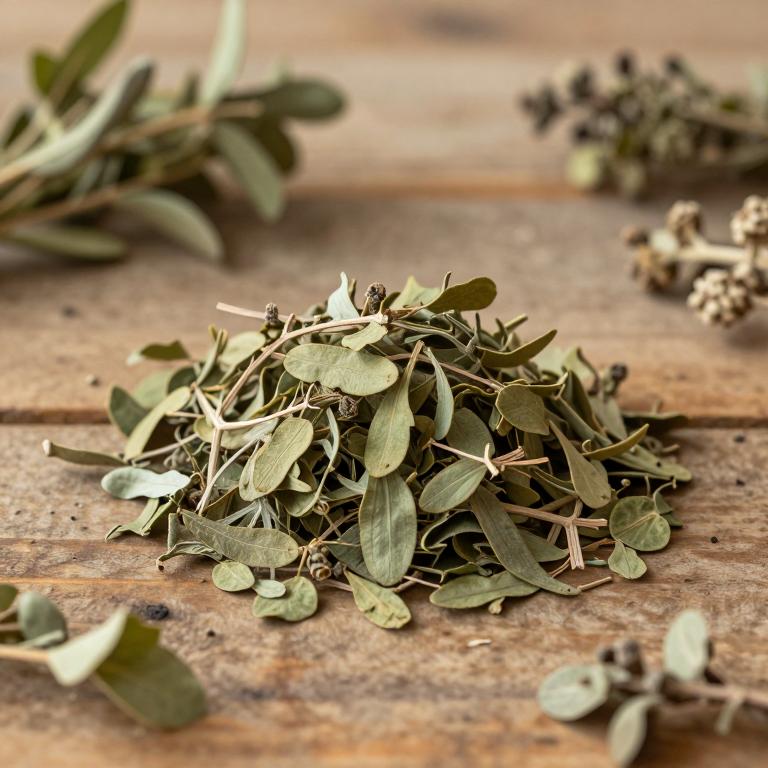
Names and Synonyms
Scientific Names
Accepted name
Phyllanthus obliquus var. obliquusSynonyms
- Glochidion nitidum
- Glochidion zeylanicum var. nitidum
- Phyllanthus nitidus
- Diasperus brunneus
- Glochidion pedunculatum
- Phyllanthus gaertneri
- Phyllanthus canaranus
- Glochidion hongkongense
- Phyllanthus hongkongensis
- Bradleia timoriensis
- Phyllanthus ferdinandi var. supra-axillaris
- Glochidion ferdinandi var. supra-axillare
- Bradleia nitida
- Glochidion glaberrimum
- Diasperus zeylanicus
- Bradleia zeylanica
- Diasperus nitidus
- Glochidion liukiuense
- Diasperus perakensis
- Glochidion lanceolatum var. liukiuense
- Diasperus hongkongensis
- Glochidion canaranum
- Glochidion brunneum
- Glochidion brunneum subsp. andamanicum
- Glochidion perakense
- Glochidion perakense var. supra-axillare
- Glochidion supra-axillare
- Glochidion sumatranum
- Glochidion zeylanicum var. malayanum
- Glochidion zeylanicum
Taxonomical Classification
This plant belongs to the kingdom Plantae within the phylum Streptophyta and the class Equisetopsida. It is further classified under the subclass Magnoliidae, the order Malpighiales, and the family Phyllanthaceae. Finally, it is identified by the genus Phyllanthus as the specific variety Phyllanthus obliquus var. obliquus.
| Rank | Classification |
|---|---|
| Kingdom | Plantae |
| Phylum | Streptophyta |
| Class | Equisetopsida |
| Subclass | Magnoliidae |
| Order | Malpighiales |
| Family | Phyllanthaceae |
| Genus | Phyllanthus |
Sources: The World Checklist of Vascular Plants (WCVP)
Distribution
This plant exhibits a widespread presence across various regions of East Asia. Within China, its distribution extends through the South-Central and Southeast territories. Its range further expands into Japan, specifically including the Nansei-shotto islands. Additionally, the species is documented to grow natively in Taiwan. Together, these locations define the specific geographical footprint of Phyllanthus obliquus var. obliquus.
| Region | Area |
|---|---|
| China | China South-Central |
| China | China Southeast |
| Eastern Asia | Japan |
| Eastern Asia | Nansei-shoto |
| Eastern Asia | Taiwan |
| Indian Subcontinent | Assam |
| Indian Subcontinent | Bangladesh |
| Indian Subcontinent | India |
| Indian Subcontinent | Sri Lanka |
| Indo-China | Andaman Is. |
Sources: The World Checklist of Vascular Plants (WCVP)
Plant Parts
Phyllanthus obliquus var. obliquus has 2 reported plant parts identified across 2 scientific publications and several other databases that are studied for medicinal purposes. The most consistently reported plant part include leaf, stem.
| Plant part | Supporting sources | Consensus |
|---|---|---|
| Leaf | 1 supporting sources | ★☆☆☆☆ |
| Stem | 1 supporting sources | ★☆☆☆☆ |
Leaf
- Phytomedicine : international journal of phytotherapy and phytopharmacology
Stem
- Planta medica
Chemicals
Phyllanthus obliquus var. obliquus has 7 reported phytochemicals identified across 2 scientific publications and several other databases. The most consistently reported chemicals include Flavonoids, Isoorientin, Vitexin, glochidiol, glochidone.
| Chemical | Supporting sources | Consensus |
|---|---|---|
| Flavonoids | 1 supporting sources | ★☆☆☆☆ |
| Isoorientin | 1 supporting sources | ★☆☆☆☆ |
| Vitexin | 1 supporting sources | ★☆☆☆☆ |
| glochidiol | 1 supporting sources | ★☆☆☆☆ |
| glochidone | 1 supporting sources | ★☆☆☆☆ |
| glochidonol | 1 supporting sources | ★☆☆☆☆ |
| lup-20(29)-ene-1beta,3beta-diol | 1 supporting sources | ★☆☆☆☆ |
Flavonoids
- Phytomedicine : international journal of phytotherapy and phytopharmacology
Isoorientin
- Chemical & pharmaceutical bulletin
Vitexin
- Chemical & pharmaceutical bulletin
glochidiol
- Planta medica
glochidone
- Planta medica
glochidonol
- Planta medica
lup-20(29)-ene-1beta,3beta-diol
- Planta medica
Preparations
Phyllanthus obliquus var. obliquus has 2 reported preparations identified across 2 scientific publications and several other databases. The most consistently reported preparations include leaf extracts, stem bark.
| Preparation | Supporting sources | Consensus |
|---|---|---|
| Leaf extracts | 1 supporting sources | ★☆☆☆☆ |
| Stem bark | 1 supporting sources | ★☆☆☆☆ |
Leaf extracts
- Phytomedicine : international journal of phytotherapy and phytopharmacology
Stem bark
- Planta medica