Phyllanthus nummulariifolius
Phyllanthus nummulariifolius · Accepted scientific name
Scientific literature: Very Sparse (5 studies) · ★☆☆☆☆
, scientifically known as Phyllanthus nummulariifolius, is a versatile medicinal shrub valued in traditional herbalism. Renowned for its unique leaf structure, this plant contains bioactive compounds used to treat various ailments. It plays a significant role in holistic wellness, offering potential therapeutic benefits for skin health and systemic detoxification.
- Family
- Phyllanthaceae
- Native range
- Africa
- Parts used
- Not available
- Common names
- Not available
- Scientific synonyms
- Menarda Nummulariifolia · Moeroris Nummulariifolia · 1 more
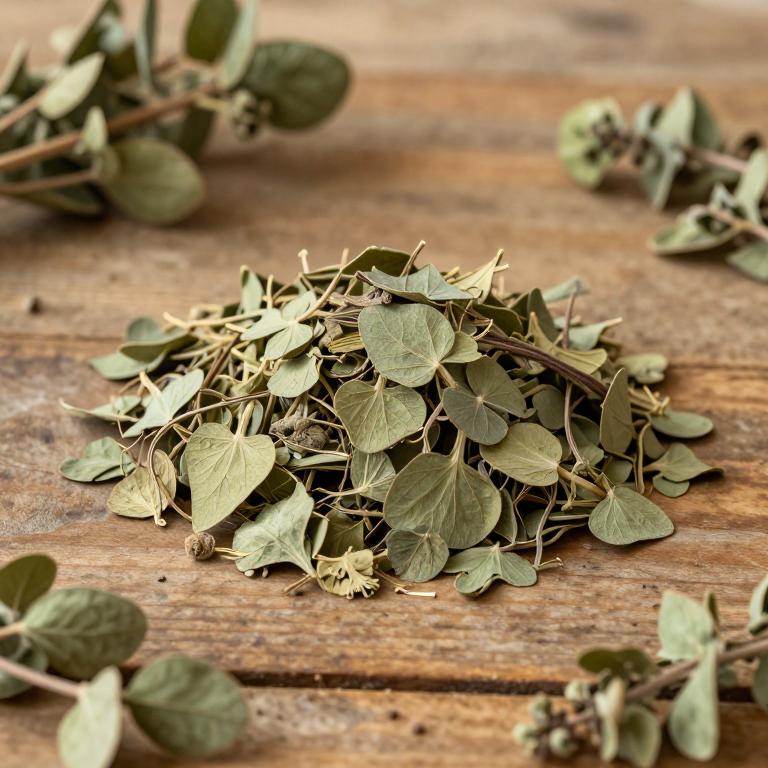
Names and Synonyms
Scientific Names
Accepted name
Phyllanthus nummulariifoliusSynonyms
- Menarda nummulariifolia
- Moeroris nummulariifolia
- Diasperus nummulariifolius
Sources: Wikidata
Taxonomical Classification
This plant belongs to the kingdom Plantae and the phylum Streptophyta, falling under the class Equisetopsida and subclass Magnoliidae. It is further classified within the order Malpighiales and the family Phyllanthaceae. Finally, its taxonomic identity is established under the genus Phyllanthus.
| Rank | Classification |
|---|---|
| Kingdom | Plantae |
| Phylum | Streptophyta |
| Class | Equisetopsida |
| Subclass | Magnoliidae |
| Order | Malpighiales |
| Family | Phyllanthaceae |
| Genus | Phyllanthus |
Sources: The World Checklist of Vascular Plants (WCVP)
Distribution
This plant is primarily distributed across the West Tropical Africa region. Specifically, its presence has been documented in the nation of Gambia. It can also be found growing within the borders of Ghana. Furthermore, the species is known to inhabit parts of Guinea and Liberia. Finally, its geographical range extends into Nigeria, marking its importance throughout this part of the continent.
| Region | Area |
|---|---|
| West Tropical Africa | Gambia |
| West Tropical Africa | Ghana |
| West Tropical Africa | Guinea |
| West Tropical Africa | Liberia |
| West Tropical Africa | Nigeria |
| West Tropical Africa | Sierra Leone |
| West Tropical Africa | Togo |
| West-Central Tropical Africa | Burundi |
| West-Central Tropical Africa | Central African Republic |
| West-Central Tropical Africa | Cameroon |
Sources: The World Checklist of Vascular Plants (WCVP)
Botanical Identification
Ecology
The ecology of Phyllanthus nummulariifolius is characterized by its ability to inhabit diverse topographical gradients, demonstrating significant adaptability across various altitudinal zones. This species is primarily found within a broad vertical distribution, thriving at elevations starting from as low as 70 m AMSL and extending up to a maximum of 1555 m AMSL. This wide elevational range suggests that the plant can persist in both lowland tropical environments and more temperate, mid-altitude montane habitats, allowing it to occupy a variety of ecological niches depending on the specific moisture and temperature regimes present within these altitudinal shifts.
- Elevational range max:
- 1555 m AMSL
- Elevational range min:
- 70 m AMSL
Life history
The life history of Phyllanthus nummulariifolius is characterized by a complex adaptive strategy that allows it to persist across varying environmental conditions. As a perennial species, it maintains a long-term presence in its habitat, avoiding the complete seasonal die-back seen in annuals. Its growth habit is versatile, exhibiting life forms that include both chamaephyte and therophyte characteristics. In its chamaephyte stage, the plant maintains its low-growing buds near or just above the soil surface, providing resilience against grazing or environmental disturbances. Conversely, its capacity to act as a therophyte allows it to complete its life cycle through ephemeral seasonal growth, relying on hardy seeds to survive unfavorable periods. This dualistic life strategy ensures that the plant can effectively colonize spaces and endure fluctuating moisture and temperature levels within its ecosystem.
- Life form :
- chamaephyte
- Life form :
- therophyte
- Lifecycle :
- perennial
Morphology
The morphology of Phyllanthus nummulariifolius is characterized by a growth form that ranges from a herbaceous structure to a shrubby habit. It is a self-supporting plant, meaning it does not require external structures for climbing, and it functions as an independent organism without parasitic tendencies. In terms of stature, the plant exhibits significant height variability, with individual specimens measuring as little as 0.1 m, reaching a mean height of approximately 1.4 m, and extending to a maximum of 2 m. Its woodiness is categorized as variable, and it maintains a terrestrial existence, neither being aquatic nor an epiphyte.
- Aquatic :
- terrestrial
- Climber :
- self-supporting
- Epiphyte :
- terrestrial
- Growth form :
- herb
- Growth form :
- shrub
- Parasite :
- independent
- Plant height max:
- 2 m
- Plant height mean:
- 1.4 m
- Plant height min:
- 0.1 m
- Woodiness :
- variable
Physiology
The physiology of Phyllanthus nummulariifolius is characterized by specialized metabolic processes and nutrient acquisition strategies typical of its genus, though it lacks the biological capacity for symbiotic nitrogen fixation. Specifically, this plant is not a nitrogen fixer, meaning it does not possess the specialized root nodules or symbiotic relationships with diazotrophic bacteria required to convert atmospheric nitrogen into ammonia. Instead, its physiological dependence relies on the uptake of nitrates and ammonium ions directly from the soil through its root system. Its metabolic pathways focus on efficient photosynthesis and the synthesis of secondary metabolites, which are often utilized for defense and environmental adaptation. The plant's water regulation and nutrient transport mechanisms are optimized to support its growth patterns within its specific ecological niche, relying entirely on available soil nitrogen levels to sustain its protein synthesis and overall cellular development.
- Nitrogen fixer :
- no
Sources: Global Inventory of Floras and Traits (GIFT)
Chemicals
Phyllanthus nummulariifolius has 3 reported phytochemicals identified across 0 scientific publications and several other databases. The most consistently reported chemicals include Saponins, Steroids, Terpenoids.
| Chemical | Supporting sources | Consensus |
|---|---|---|
| Saponins | 1 supporting sources | ★☆☆☆☆ |
| Steroids | 1 supporting sources | ★☆☆☆☆ |
| Terpenoids | 1 supporting sources | ★☆☆☆☆ |
Saponins
- Pharmacological research
Steroids
- Pharmacological research
Terpenoids
- Pharmacological research
Conditions
Phyllanthus nummulariifolius has 2 reported investigations on conditions identified across 0 scientific publications and several other databases. The most consistently reported conditions include fascioliasis, malaria.
| Condition | Supporting sources | Consensus |
|---|---|---|
| Fascioliasis | 1 supporting sources | ★☆☆☆☆ |
| Malaria | 1 supporting sources | ★☆☆☆☆ |
Fascioliasis
- Pharmacological research
Malaria
- Journal of advanced pharmaceutical technology & research
Preparations
Phyllanthus nummulariifolius has 1 reported preparations identified across 0 scientific publications and several other databases. The most consistently reported preparations include Aqueous and ethanolic extracts.
| Preparation | Supporting sources | Consensus |
|---|---|---|
| Aqueous and ethanolic extracts | 1 supporting sources | ★☆☆☆☆ |
Aqueous and ethanolic extracts
- Pharmacological research