Phyllanthus nivosus
Phyllanthus nivosus · Accepted scientific name
Scientific literature: Very Sparse (11 studies) · ★☆☆☆☆
, scientifically known as Phyllanthus nivosus, is a medicinal shrub revered in traditional healing practices. Native to various tropical regions, this plant is prized for its diverse therapeutic properties. It is frequently utilized to treat skin ailments, digestive issues, and inflammatory conditions, offering significant potential in modern ethnopharmacology.
- Family
- Phyllanthaceae
- Native range
- Africa
- Parts used
- Leaf
- Common names
- Not available
- Scientific synonyms
- Breynia Disticha Var. Neocaledonica · Breynia Disticha F. Nivosa · 10 more
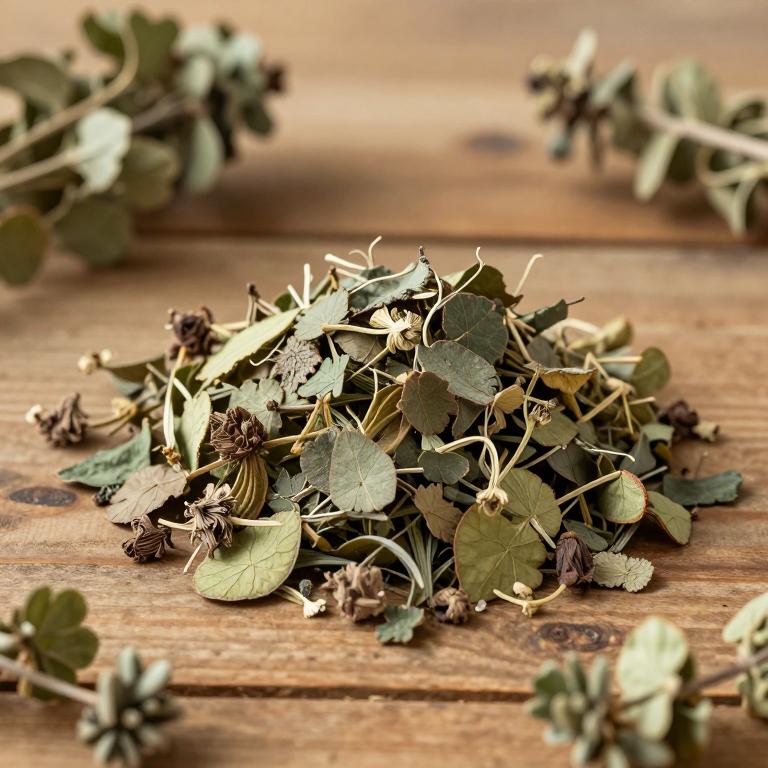
Names and Synonyms
Scientific Names
Accepted name
Phyllanthus nivosusSynonyms
- Breynia disticha var. neocaledonica
- Breynia disticha f. nivosa
- Breynia nivosa
- Phyllanthus roseopictus
- Breynia axillaris
- Breynia disticha
- Breynia nivosa var. roseopicta
- Phyllanthus nivosus roseopictus
- Phyllanthus sandwicensis var. hypoglaucus
- Phyllanthus atropurpureus
- Melanthesa neocaledonica
- Melanthesa neocaledonica var. forsteri
Sources: Wikidata
Taxonomical Classification
This plant, known scientifically as Phyllanthus nivosus, belongs to the kingdom Plantae and the phylum Streptophyta. Within the class Equisetopsida and subclass Magnoliidae, it is categorized under the order Malpighiales and the family Phyllanthaceae. Finally, it is classified under the genus Phyllanthus.
| Rank | Classification |
|---|---|
| Kingdom | Plantae |
| Phylum | Streptophyta |
| Class | Equisetopsida |
| Subclass | Magnoliidae |
| Order | Malpighiales |
| Family | Phyllanthaceae |
| Genus | Phyllanthus |
Sources: The World Checklist of Vascular Plants (WCVP)
Distribution
This plant exhibits a diverse geographical distribution spanning across several tropical regions. In West Tropical Africa, it can be found within the borders of Gambia and Guinea. Its presence extends into West-Central Tropical Africa, specifically around the Gulf of Guinea Islands. Furthermore, the species is located in the Western Indian Ocean, inhabiting the Chagos Archipelago. Finally, its range includes the tropical islands of the Seychelles.
| Region | Area |
|---|---|
| West Tropical Africa | Gambia |
| West Tropical Africa | Guinea |
| West-Central Tropical Africa | Gulf of Guinea Is. |
| Western Indian Ocean | Chagos Archipelago |
| Western Indian Ocean | Seychelles |
| Eastern Asia | Ogasawara-shoto |
| Australia | Norfolk Is. |
| Southwestern Pacific | Fiji |
| Southwestern Pacific | Niue |
| Southwestern Pacific | New Caledonia |
Sources: The World Checklist of Vascular Plants (WCVP)
Plant Parts
Phyllanthus nivosus has 1 reported plant parts identified across 2 scientific publications and several other databases that are studied for medicinal purposes. The most consistently reported plant part include leaf.
| Plant part | Supporting sources | Consensus |
|---|---|---|
| Leaf | 2 supporting sources | ★☆☆☆☆ |
Leaf
- Fitoterapia
- Journal of biomolecular structure & dynamics
Chemicals
Phyllanthus nivosus has 5 reported phytochemicals identified across 2 scientific publications and several other databases. The most consistently reported chemicals include (+)-alpha-phellandrene, (-)-alpha-Cadinol, Cristatin A, Polyphenol, Spathulenol.
| Chemical | Supporting sources | Consensus |
|---|---|---|
| (+)-alpha-phellandrene | 1 supporting sources | ★☆☆☆☆ |
| (-)-alpha-Cadinol | 1 supporting sources | ★☆☆☆☆ |
| Cristatin A | 1 supporting sources | ★☆☆☆☆ |
| Polyphenol | 1 supporting sources | ★☆☆☆☆ |
| Spathulenol | 1 supporting sources | ★☆☆☆☆ |
(+)-alpha-phellandrene
- Journal of biomolecular structure & dynamics
(-)-alpha-Cadinol
- Journal of biomolecular structure & dynamics
Cristatin A
- Fitoterapia
Polyphenol
- TheScientificWorldJournal
Spathulenol
- Journal of biomolecular structure & dynamics
Activities
Phyllanthus nivosus has 3 reported activities identified across 2 scientific publications and several other databases. The most consistently reported activities include Antimicrobial, Antioxidant, Cytotoxic.
| Activity | Supporting sources | Consensus |
|---|---|---|
| Antimicrobial | 1 supporting sources | ★☆☆☆☆ |
| Antioxidant | 1 supporting sources | ★☆☆☆☆ |
| Cytotoxic | 1 supporting sources | ★☆☆☆☆ |
Antimicrobial
- Fitoterapia
Antioxidant
- ACS omega
Cytotoxic
- Fitoterapia
Conditions
Phyllanthus nivosus has 1 reported investigations on conditions identified across 2 scientific publications and several other databases. The most consistently reported conditions include malaria.
| Condition | Supporting sources | Consensus |
|---|---|---|
| Malaria | 1 supporting sources | ★☆☆☆☆ |
Malaria
- Journal of biomolecular structure & dynamics
Preparations
Phyllanthus nivosus has 4 reported preparations identified across 2 scientific publications and several other databases. The most consistently reported preparations include aerial parts extract, extracts, root extract, yellowish powder.
| Preparation | Supporting sources | Consensus |
|---|---|---|
| Aerial parts extract | 1 supporting sources | ★☆☆☆☆ |
| Extracts | 1 supporting sources | ★☆☆☆☆ |
| Root extract | 1 supporting sources | ★☆☆☆☆ |
| Yellowish powder | 1 supporting sources | ★☆☆☆☆ |
Aerial parts extract
- Zeitschrift fur Naturforschung. C, Journal of biosciences
Extracts
- TheScientificWorldJournal
Root extract
- Zeitschrift fur Naturforschung. C, Journal of biosciences
Yellowish powder
- ACS omega