Phyllanthus fraternus
Phyllanthus fraternus · Accepted scientific name
Scientific literature: Very Sparse (40 studies) · ★☆☆☆☆
Phyllanthus fraternus, scientifically known as Phyllanthus fraternus, is a versatile medicinal shrub native to tropical regions. Renowned for its diverse therapeutic properties, this plant is frequently utilized in traditional medicine to treat inflammatory conditions and digestive ailments, offering a natural approach to supporting holistic health and wellness.
- Family
- Phyllanthaceae
- Native range
- Africa
- Parts used
- Leaf · Root
- Common names
- Not available
- Scientific synonyms
- Moeroris Fraterna · Phyllanthus Fraternus Subsp. Togoensis
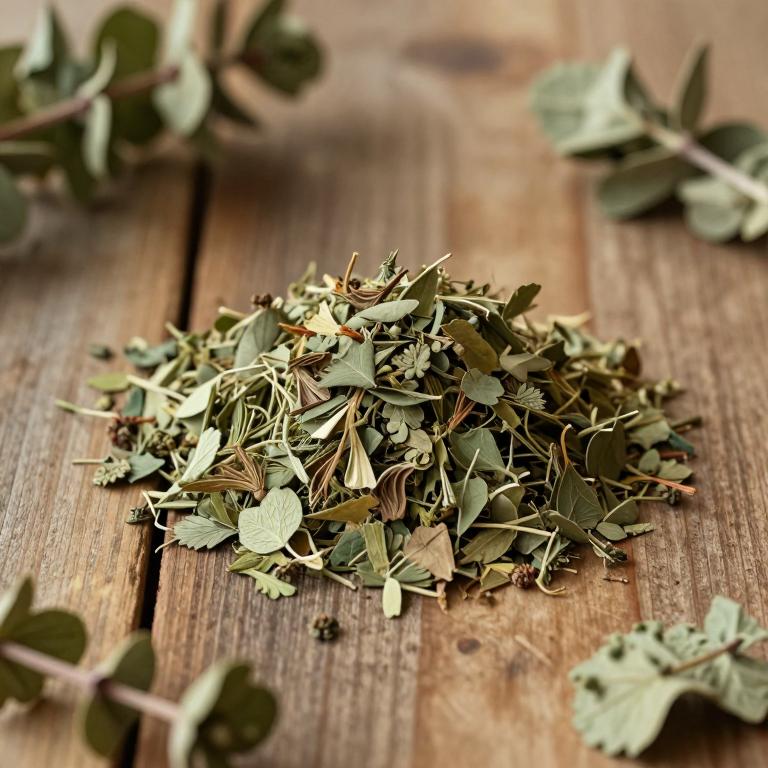
Names and Synonyms
Scientific Names
Accepted name
Phyllanthus fraternusSynonyms
- Moeroris fraterna
- Phyllanthus fraternus subsp. togoensis
Sources: Wikidata
Taxonomical Classification
This plant belongs to the kingdom Plantae and is classified under the phylum Streptophyta and class Equisetopsida. Within the subclass Magnoliidae, it is positioned in the order Malpighiales and the family Phyllanthaceae. Finally, it is identified by the genus Phyllanthus.
| Rank | Classification |
|---|---|
| Kingdom | Plantae |
| Phylum | Streptophyta |
| Class | Equisetopsida |
| Subclass | Magnoliidae |
| Order | Malpighiales |
| Family | Phyllanthaceae |
| Genus | Phyllanthus |
Sources: The World Checklist of Vascular Plants (WCVP)
Distribution
This plant exhibits a specific geographical range that spans across both Atlantic islands and the African mainland. Within the Macaronesian region, its presence is documented in Cape Verde. Moving to West Tropical Africa, the species can be found in the nation of Benin. Its distribution also extends to the landlocked territory of Burkina. Finally, the plant is recorded in the West African countries of Gambia and Ghana.
| Region | Area |
|---|---|
| Macaronesia | Cape Verde |
| West Tropical Africa | Benin |
| West Tropical Africa | Burkina |
| West Tropical Africa | Gambia |
| West Tropical Africa | Ghana |
| West Tropical Africa | Guinea-Bissau |
| West Tropical Africa | Guinea |
| West Tropical Africa | Ivory Coast |
| West Tropical Africa | Mali |
| West Tropical Africa | Mauritania |
Sources: The World Checklist of Vascular Plants (WCVP)
Botanical Identification
Ecology
The ecology of Phyllanthus fraternus is characterized by a broad altitudinal distribution, allowing it to inhabit a diverse range of environmental conditions. The species is capable of thriving from sea level up to a maximum elevation of 1830 m AMSL. This expansive elevational range, spanning from 0 to 1830 m AMSL, suggests that the plant possesses significant ecological plasticity, enabling it to adapt to varying temperature gradients, atmospheric pressures, and moisture regimes found across different montane and lowland habitats.
- Elevational range max:
- 1830 m AMSL
- Elevational range min:
- 0 m AMSL
Life history
The life history of Phyllanthus fraternus is characterized by an annual lifecycle, completing its entire biological process from germination to seed production within a single growing season. As a therophyte, the plant follows a strategy where the majority of its life is spent in a seed stage, with the vegetative structure existing only temporarily during the favorable period of the year. This life form indicates that it lacks persistent above-ground stems or specialized underground storage organs, instead relying on the rapid development and eventual senescence of its annual growth to ensure the continuation of the species through seed dispersal.
- Life form :
- therophyte
- Lifecycle :
- annual
Morphology
The morphology of Phyllanthus fraternus is characterized by its growth form as a non-woody herb and forb. It is a terrestrial plant that functions as an independent organism, showing no parasitic or epiphytic tendencies. In terms of stature, it is a relatively small species, with a plant height ranging from a minimum of 0.1 m to a maximum of 0.44 m, maintaining an average height of approximately 0.4 m. Structurally, the plant is self-supporting rather than acting as a liana or a climbing vine.
- Aquatic :
- terrestrial
- Climber :
- self-supporting
- Epiphyte :
- terrestrial
- Growth form :
- herb
- Growth form :
- forb
- Parasite :
- independent
- Plant height max:
- 0.44 m
- Plant height mean:
- 0.4 m
- Plant height min:
- 0.1 m
- Woodiness :
- non-woody
Physiology
The physiology of Phyllanthus fraternus is characterized by its metabolic processes and nutrient acquisition strategies typical of many shrubs within the Phyllanthaceae family. In terms of its nitrogen economy, the plant does not function as a nitrogen fixer, meaning it lacks the specialized symbiotic relationships with diazotrophic bacteria, such as Rhizobium, required to convert atmospheric nitrogen into bioavailable forms; instead, it relies entirely on the uptake of nitrates and ammonium from the soil through its root system. Its photosynthetic activity and energy production are driven by standard C3 metabolic pathways, facilitating the synthesis of organic compounds from carbon dioxide and water. The plant's physiological resilience is further defined by its ability to manage transpiration rates and maintain osmotic balance to survive in its specific ecological niche, utilizing specialized cellular mechanisms to regulate water potential and nutrient transport throughout its vascular tissues.
- Nitrogen fixer :
- no
Sources: Global Inventory of Floras and Traits (GIFT)
Plant Parts
Phyllanthus fraternus has 2 reported plant parts identified across 2 scientific publications and several other databases that are studied for medicinal purposes. The most consistently reported plant part include leaf, root.
| Plant part | Supporting sources | Consensus |
|---|---|---|
| Leaf | 1 supporting sources | ★☆☆☆☆ |
| Root | 1 supporting sources | ★☆☆☆☆ |
Leaf
- Archives of Razi Institute
Root
- TheScientificWorldJournal
Chemicals
Phyllanthus fraternus has 19 reported phytochemicals identified across 2 scientific publications and several other databases. The most consistently reported chemicals include Saponins, Tannins, Terpenoids, BETA-SITOSTEROL, E,E,Z-1,3,12-Nonadecatriene-5,14-diol.
| Chemical | Supporting sources | Consensus |
|---|---|---|
| Saponins | 2 supporting sources | ★☆☆☆☆ |
| Tannins | 2 supporting sources | ★☆☆☆☆ |
| Terpenoids | 2 supporting sources | ★☆☆☆☆ |
| BETA-SITOSTEROL | 1 supporting sources | ★☆☆☆☆ |
| E,E,Z-1,3,12-Nonadecatriene-5,14-diol | 1 supporting sources | ★☆☆☆☆ |
| Fatty acids | 1 supporting sources | ★☆☆☆☆ |
| Flavonoids | 1 supporting sources | ★☆☆☆☆ |
| IBA | 1 supporting sources | ★☆☆☆☆ |
| Lignans | 1 supporting sources | ★☆☆☆☆ |
| Steroids | 1 supporting sources | ★☆☆☆☆ |
Saponins
- Journal of biomolecular structure & dynamics
- Archives of Razi Institute
Tannins
- Journal of biomolecular structure & dynamics
- Archives of Razi Institute
Terpenoids
- Journal of biomolecular structure & dynamics
- Archives of Razi Institute
BETA-SITOSTEROL
- Die Pharmazie
E,E,Z-1,3,12-Nonadecatriene-5,14-diol
- Journal of biomolecular structure & dynamics
Fatty acids
- Journal of biomolecular structure & dynamics
Flavonoids
- Journal of biomolecular structure & dynamics
IBA
- Applied biochemistry and biotechnology
Lignans
- Journal of biomolecular structure & dynamics
Steroids
- Journal of biomolecular structure & dynamics
Activities
Phyllanthus fraternus has 4 reported activities identified across 2 scientific publications and several other databases. The most consistently reported activities include Antinociceptive, Antioxidant, Antiviral, Hepatoprotective.
| Activity | Supporting sources | Consensus |
|---|---|---|
| Antinociceptive | 1 supporting sources | ★☆☆☆☆ |
| Antioxidant | 1 supporting sources | ★☆☆☆☆ |
| Antiviral | 1 supporting sources | ★☆☆☆☆ |
| Hepatoprotective | 1 supporting sources | ★☆☆☆☆ |
Antinociceptive
- Journal of ethnopharmacology
Antioxidant
- Applied biochemistry and biotechnology
Antiviral
- Applied biochemistry and biotechnology
Hepatoprotective
- Applied biochemistry and biotechnology
Conditions
Phyllanthus fraternus has 5 reported investigations on conditions identified across 2 scientific publications and several other databases. The most consistently reported conditions include malaria, antiviral, mitochondrial dysfunction, obesity, oxidative stress.
| Condition | Supporting sources | Consensus |
|---|---|---|
| Malaria | 2 supporting sources | ★☆☆☆☆ |
| Antiviral | 1 supporting sources | ★☆☆☆☆ |
| Mitochondrial dysfunction | 1 supporting sources | ★☆☆☆☆ |
| Obesity | 1 supporting sources | ★☆☆☆☆ |
| Oxidative stress | 1 supporting sources | ★☆☆☆☆ |
Malaria
- Planta medica
- Parasitology research
Antiviral
- Applied biochemistry and biotechnology
Mitochondrial dysfunction
- Journal of bioenergetics and biomembranes
Obesity
- Archives of Razi Institute
Oxidative stress
- Applied biochemistry and biotechnology
Preparations
Phyllanthus fraternus has 5 reported preparations identified across 2 scientific publications and several other databases. The most consistently reported preparations include aqueous extract, aqueous extracts, ayurvedic formulations, hydroalcoholic extract (HE), medicinal plant extract.
| Preparation | Supporting sources | Consensus |
|---|---|---|
| Aqueous extract | 3 supporting sources | ★★☆☆☆ |
| Aqueous extracts | 1 supporting sources | ★☆☆☆☆ |
| Ayurvedic formulations | 1 supporting sources | ★☆☆☆☆ |
| Hydroalcoholic extract (he) | 1 supporting sources | ★☆☆☆☆ |
| Medicinal plant extract | 1 supporting sources | ★☆☆☆☆ |
Aqueous extract
- Applied biochemistry and biotechnology
- Alcohol (Fayetteville, N.Y.)
- Life sciences
Aqueous extracts
- Parasitology research
Ayurvedic formulations
- Journal of biomolecular structure & dynamics
Hydroalcoholic extract (he)
- Journal of ethnopharmacology
Medicinal plant extract
- Journal of bioenergetics and biomembranes