Phyllanthus caroliniensis
Phyllanthus caroliniensis · Accepted scientific name
Scientific literature: Very Sparse (1 studies) · ★☆☆☆☆
scientifically known as Phyllanthus carolinensis, is a distinctive medicinal shrub native to various tropical regions. Renowned for its small, delicate leaves and specialized pharmacological properties, this plant is traditionally utilized in herbal medicine to address diverse ailments, offering significant potential for therapeutic research and holistic wellness applications.
- Family
- Not available
- Native range
- Asia-Tropical
- Parts used
- Leaf
- Common names
- Not available
- Scientific synonyms
- Not available
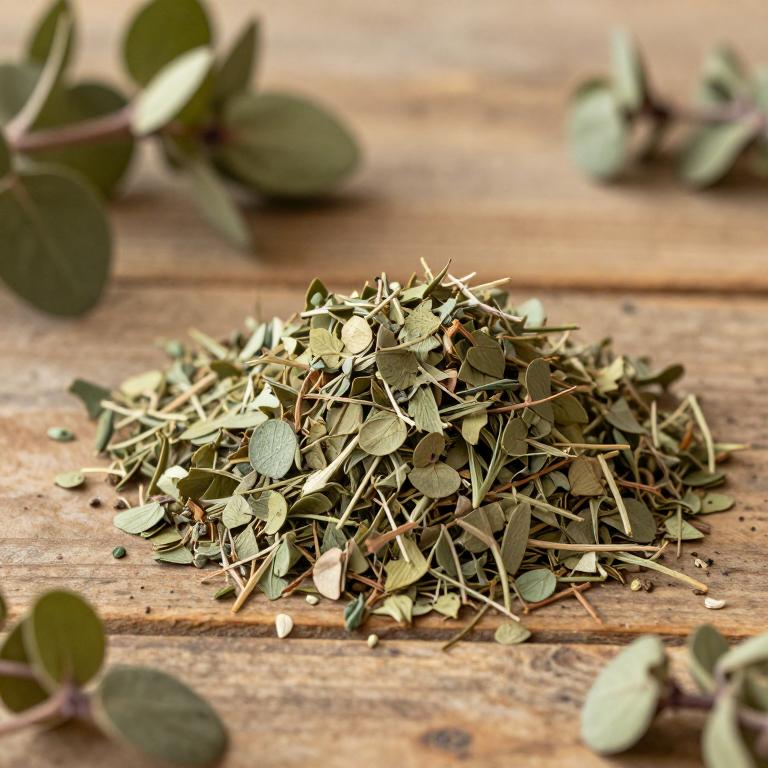
Names and Synonyms
Scientific Names
Accepted name
Phyllanthus caroliniensisDistribution
This plant exhibits a diverse geographical distribution spanning across different continents. In the Indo-China region, its presence has been specifically documented in Thailand. Moving to North-Central U.S.A., the species can be found growing in the state of Illinois. It also inhabits the plains of Kansas and Missouri within the same American region. Finally, its range extends further south into the territory of Oklahoma.
| Region | Area |
|---|---|
| Indo-China | Thailand |
| North-Central U.S.A. | Illinois |
| North-Central U.S.A. | Kansas |
| North-Central U.S.A. | Missouri |
| North-Central U.S.A. | Oklahoma |
| Northeastern U.S.A. | Indiana |
| Northeastern U.S.A. | New Jersey |
| Northeastern U.S.A. | Ohio |
| Northeastern U.S.A. | Pennsylvania |
| Northeastern U.S.A. | West Virginia |
Sources: The World Checklist of Vascular Plants (WCVP)
Botanical Identification
Ecology
The ecology of Phyllanthus carolinianis is characterized by its ability to thrive across a diverse range of Brazilian biomes, including the Caatinga (stricto sensu), Cerrado (lato sensu), Floresta Ciliar or Galeria, and the Floresta Ombrófila (also known as Floresta Pluvial). This wide distribution indicates a high level of ecological plasticity, allowing the species to inhabit both semi-arid scrublands and humid, tropical rainforest environments. Its vertical distribution is found from sea level up to an elevation of 1000 m AMSL, demonstrating a broad altitudinal tolerance that spans from lowland coastal or riverine areas to higher-altitude inland terrains.
- Elevational range max:
- 1000 m AMSL
- Elevational range min:
- 0 m AMSL
- Habitat :
- Caatinga (stricto sensu), Cerrado (lato sensu), Floresta Ciliar ou Galeria, Floresta Ombrófila (= Floresta Pluvial)
Life history
The life history of Phyllanthus carolinianis is characterized by its classification as an annual species, meaning it completes its entire developmental cycle from germination to seed production within a single growing season. In terms of its ecological strategy and growth habit, the plant is categorized as a therophyte, a life form defined by its reliance on ephemeral structures to survive unfavorable periods. This botanical profile indicates that the plant typically survives through highly resistant seeds that remain dormant in the soil until environmental conditions become favorable for rapid growth and reproduction.
- Life form :
- therophyte
- Lifecycle :
- annual
Morphology
The morphology of Phyllanthus caroliniensis is characterized by a growth form primarily classified as a non-woody herb or forb, exhibiting a self-supporting structure rather than acting as a liana, vine, or obligatory climber. As a terrestrial plant, it does not function as an epiphyte—whether holoepiphyte, hemiepiphyte, or facultative—nor does it occupy aquatic or semiaquatic habitats, maintaining a strictly land-based existence. Furthermore, the species is an independent organism, showing no parasitic tendencies, and its physical development is defined by its non-woody nature, lacking the rigid lignified tissues found in shrubs or trees.
- Aquatic :
- terrestrial
- Climber :
- self-supporting
- Epiphyte :
- terrestrial
- Growth form :
- herb
- Growth form :
- forb
- Parasite :
- independent
- Woodiness :
- non-woody
Sources: Global Inventory of Floras and Traits (GIFT)
Plant Parts
Phyllanthus caroliniensis has 1 reported plant parts identified across 1 scientific publications and several other databases that are studied for medicinal purposes. The most consistently reported plant part include leaf.
| Plant part | Supporting sources | Consensus |
|---|---|---|
| Leaf | 1 supporting sources | ★☆☆☆☆ |
Leaf
- The Journal of pharmacy and pharmacology
Preparations
Phyllanthus caroliniensis has 1 reported preparations identified across 1 scientific publications and several other databases. The most consistently reported preparations include hydroalcoholic extract (HE).
| Preparation | Supporting sources | Consensus |
|---|---|---|
| Hydroalcoholic extract (he) | 1 supporting sources | ★☆☆☆☆ |
Hydroalcoholic extract (he)
- The Journal of pharmacy and pharmacology