Phyllanthus angkorensis
Phyllanthus angkorensis · Accepted scientific name
Scientific literature: Very Sparse (1 studies) · ★☆☆☆☆
scientifically known as Phyllanthus angkorensis, is a medicinal plant species indigenous to Southeast Asia. Belonging to the much-studied Phyllanthus genus, this plant is recognized for its unique phytochemical profile. It holds significant potential in traditional medicine and pharmacological research, particularly regarding its bioactive compounds and therapeutic properties.
- Family
- Not available
- Native range
- Asia-Tropical
- Parts used
- Leaf
- Common names
- Not available
- Scientific synonyms
- Not available
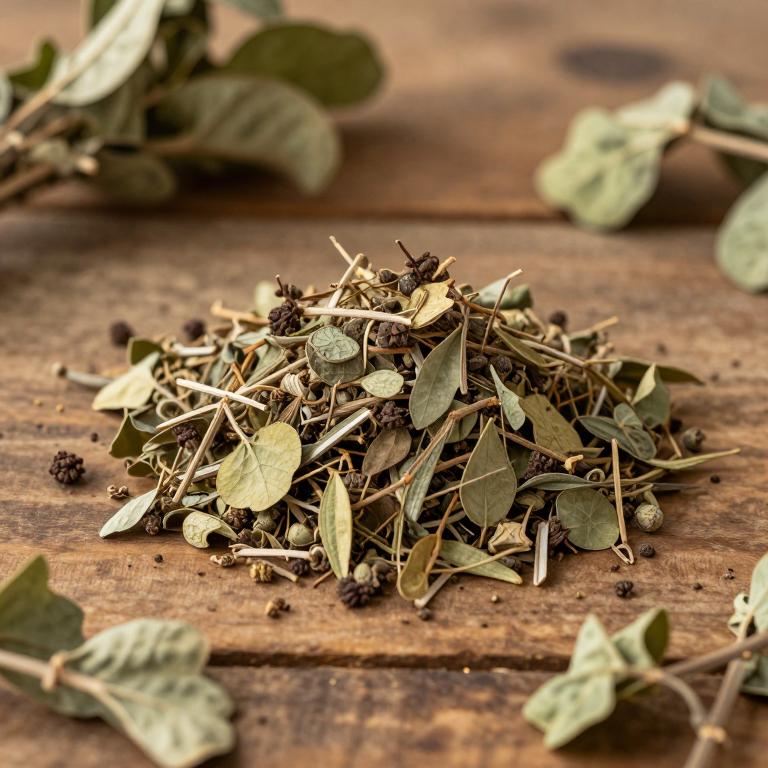
Names and Synonyms
Scientific Names
Accepted name
Phyllanthus angkorensisDistribution
This plant is a medicinal species specifically found within the Indo-China region. Its geographical distribution is primarily concentrated in the countries of Cambodia and Thailand. Within these Southeast Asian nations, it inhabits specific local environments suitable for its growth. The presence of this species in both territories highlights its regional importance to the Indo-China flora. Consequently, researchers focusing on its medicinal properties target these two specific countries for collection.
| Region | Area |
|---|---|
| Indo-China | Cambodia |
| Indo-China | Thailand |
Sources: The World Checklist of Vascular Plants (WCVP)
Botanical Identification
Life history
The life history of Phyllanthus angkorensis is characterized by its distinct growth strategies and structural classifications within its ecosystem. Based on its morphological development and survival mechanisms, this species exhibits a dual classification of life forms, functioning as both a phanerophyte and a nanophanerophyte. As a phanerophyte, the plant maintains its perennating buds at a significant height above the ground, typically on woody stems, which allows it to endure seasonal environmental shifts and maintain a perennial presence. Concurrently, its classification as a nanophanerophyte indicates that its reproductive and survival structures are held relatively close to the ground, often within a low-canopy or shrub-like stature. This combination of life forms suggests a robust evolutionary adaptation, allowing the plant to utilize vertical space for light competition while maintaining a compact, resilient architecture that facilitates stability within its specific habitat.
- Life form :
- nanophanerophyte
- Life form :
- phanerophyte
Morphology
The morphology of Phyllanthus angkorensis is characterized by its growth habit as a self-supporting climber, utilizing its structure to ascend without the need for a host. It functions as an independent organism, showing no parasitic tendencies, and is classified as a terrestrial plant rather than an epiphyte. In terms of its structural composition, the plant exhibits a woody nature, providing the necessary rigidity for its climbing form.
- Climber :
- self-supporting
- Epiphyte :
- terrestrial
- Parasite :
- independent
- Woodiness :
- woody
Sources: Global Inventory of Floras and Traits (GIFT)
Plant Parts
Phyllanthus angkorensis has 1 reported plant parts identified across 1 scientific publications and several other databases that are studied for medicinal purposes. The most consistently reported plant part include leaf.
| Plant part | Supporting sources | Consensus |
|---|---|---|
| Leaf | 1 supporting sources | ★☆☆☆☆ |
Leaf
- Journal of natural products
Preparations
Phyllanthus angkorensis has 1 reported preparations identified across 1 scientific publications and several other databases. The most consistently reported preparations include dichloromethane extract.
| Preparation | Supporting sources | Consensus |
|---|---|---|
| Dichloromethane extract | 1 supporting sources | ★☆☆☆☆ |
Dichloromethane extract
- Journal of natural products