Phyllanthus airy-shawii
Phyllanthus airy-shawii · Accepted scientific name
Scientific literature: Very Sparse (26 studies) · ★☆☆☆☆
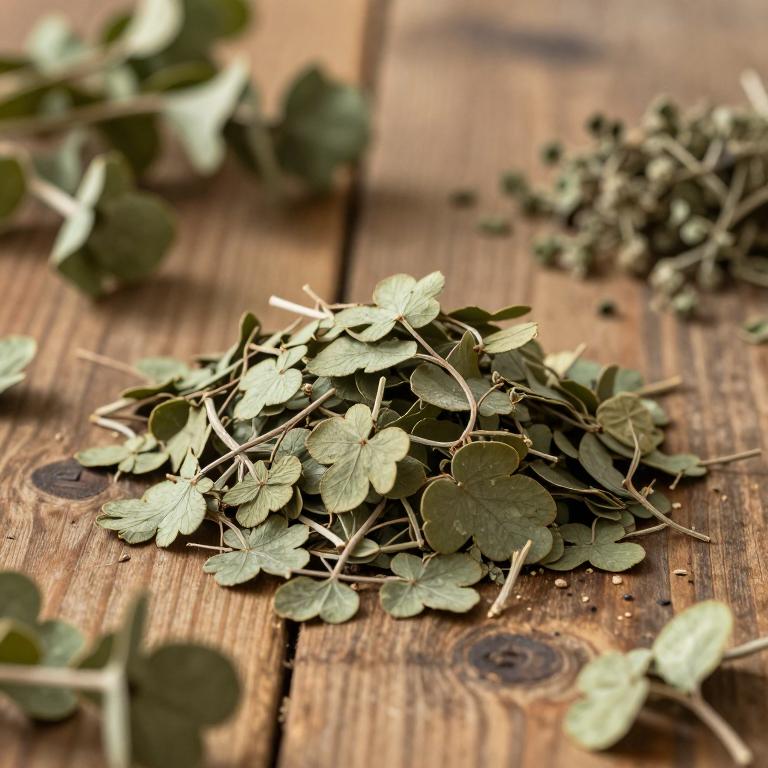
, scientifically known as Phyllanthus airy-shawii, is a remarkable medicinal plant indigenous to specific tropical regions. Renowned for its diverse pharmacological properties, this species is traditionally utilized in folk medicine to treat various ailments. Its unique chemical constituents offer significant potential for developing new therapeutic agents in modern healthcare.
- Family
- Phyllanthaceae
- Native range
- Asia-Tropical
- Parts used
- Root
- Common names
- Not available
- Scientific synonyms
- Moeroris Airy-Shawii
Names and Synonyms
Scientific Names
Accepted name
Phyllanthus airy-shawiiSynonyms
- Moeroris airy-shawii
Sources: Wikidata
Taxonomical Classification
This plant, Phyllanthus airy-shawii, belongs to the kingdom Plantae and the phylum Streptophyta. It is classified within the class Equisetopsida and the subclass Magnoliidae, falling under the order Malpighiales. Ultimately, it is a member of the family Phyllanthaceae within the genus Phyllanthus.
| Rank | Classification |
|---|---|
| Kingdom | Plantae |
| Phylum | Streptophyta |
| Class | Equisetopsida |
| Subclass | Magnoliidae |
| Order | Malpighiales |
| Family | Phyllanthaceae |
| Genus | Phyllanthus |
Sources: The World Checklist of Vascular Plants (WCVP)
Distribution
This plant is widely distributed across several regions within the Indian Subcontinent. It can be found growing in the diverse landscapes of India and its neighbor, Bangladesh. Its presence is also documented throughout the various terrains of Nepal. Specifically, the species thrives in the lush environments of Assam. Additionally, it is known to inhabit the elevated areas of the West Himalaya.
| Region | Area |
|---|---|
| Indian Subcontinent | Assam |
| Indian Subcontinent | Bangladesh |
| Indian Subcontinent | India |
| Indian Subcontinent | Nepal |
| Indian Subcontinent | West Himalaya |
| Indo-China | Myanmar |
| Indo-China | Thailand |
Sources: The World Checklist of Vascular Plants (WCVP)
Plant Parts
Phyllanthus airy-shawii has 1 reported plant parts identified across 1 scientific publications and several other databases that are studied for medicinal purposes. The most consistently reported plant part include root.
| Plant part | Supporting sources | Consensus |
|---|---|---|
| Root | 1 supporting sources | ★☆☆☆☆ |
Root
- BMC complementary and alternative medicine
Chemicals
Phyllanthus airy-shawii has 12 reported phytochemicals identified across 1 scientific publications and several other databases. The most consistently reported chemicals include Hypophyllanthin, Phyllanthin, CALCIUM, COPPER, Flavonoids.
| Chemical | Supporting sources | Consensus |
|---|---|---|
| Hypophyllanthin | 2 supporting sources | ★☆☆☆☆ |
| Phyllanthin | 2 supporting sources | ★☆☆☆☆ |
| CALCIUM | 1 supporting sources | ★☆☆☆☆ |
| COPPER | 1 supporting sources | ★☆☆☆☆ |
| Flavonoids | 1 supporting sources | ★☆☆☆☆ |
| IRON | 1 supporting sources | ★☆☆☆☆ |
| MAGNESIUM | 1 supporting sources | ★☆☆☆☆ |
| MANGANESE | 1 supporting sources | ★☆☆☆☆ |
| Polyphenol | 1 supporting sources | ★☆☆☆☆ |
| Proanthocyanidin | 1 supporting sources | ★☆☆☆☆ |
Hypophyllanthin
- Planta medica
- Pharmaceutical biology
Phyllanthin
- Planta medica
- Pharmaceutical biology
CALCIUM
- Tropical biomedicine
COPPER
- Tropical biomedicine
Flavonoids
- BMC complementary and alternative medicine
IRON
- Tropical biomedicine
MAGNESIUM
- Tropical biomedicine
MANGANESE
- Tropical biomedicine
Polyphenol
- BMC complementary and alternative medicine
Proanthocyanidin
- BMC complementary and alternative medicine
Activities
Phyllanthus airy-shawii has 1 reported activities identified across 1 scientific publications and several other databases. The most consistently reported activities include Antioxidant.
| Activity | Supporting sources | Consensus |
|---|---|---|
| Antioxidant | 2 supporting sources | ★☆☆☆☆ |
Antioxidant
- Planta medica
- BMC complementary and alternative medicine
Preparations
Phyllanthus airy-shawii has 4 reported preparations identified across 1 scientific publications and several other databases. The most consistently reported preparations include ethanolic extracts, methanolic crude from the soxhlet extraction, water extracts of aerial parts (AP), water extracts of roots (RP).
| Preparation | Supporting sources | Consensus |
|---|---|---|
| Ethanolic extracts | 1 supporting sources | ★☆☆☆☆ |
| Methanolic crude from the soxhlet extraction | 1 supporting sources | ★☆☆☆☆ |
| Water extracts of aerial parts (ap) | 1 supporting sources | ★☆☆☆☆ |
| Water extracts of roots (rp) | 1 supporting sources | ★☆☆☆☆ |
Ethanolic extracts
- Planta medica
Methanolic crude from the soxhlet extraction
- Tropical biomedicine
Water extracts of aerial parts (ap)
- BMC complementary and alternative medicine
Water extracts of roots (rp)
- BMC complementary and alternative medicine