Jamaican gooseberry tree
Phyllanthus acuminatus · Accepted scientific name
Scientific literature: Very Sparse (2 studies) · ★☆☆☆☆
Jamaican gooseberry tree, scientifically known as Phyllanthus acuminatus, is a versatile medicinal plant native to tropical regions. Renowned for its small, edible fruits, it holds significant value in traditional medicine. This shrub is frequently utilized for its potential antioxidant, anti-inflammatory, and antimicrobial properties in treating various ailments.
- Family
- Phyllanthaceae
- Native range
- Northern America
- Parts used
- Not available
- Common names
- Jamaican Gooseberry Tree
- Scientific synonyms
- Phyllanthus Lycioides · Phyllanthus Foetidus · 7 more
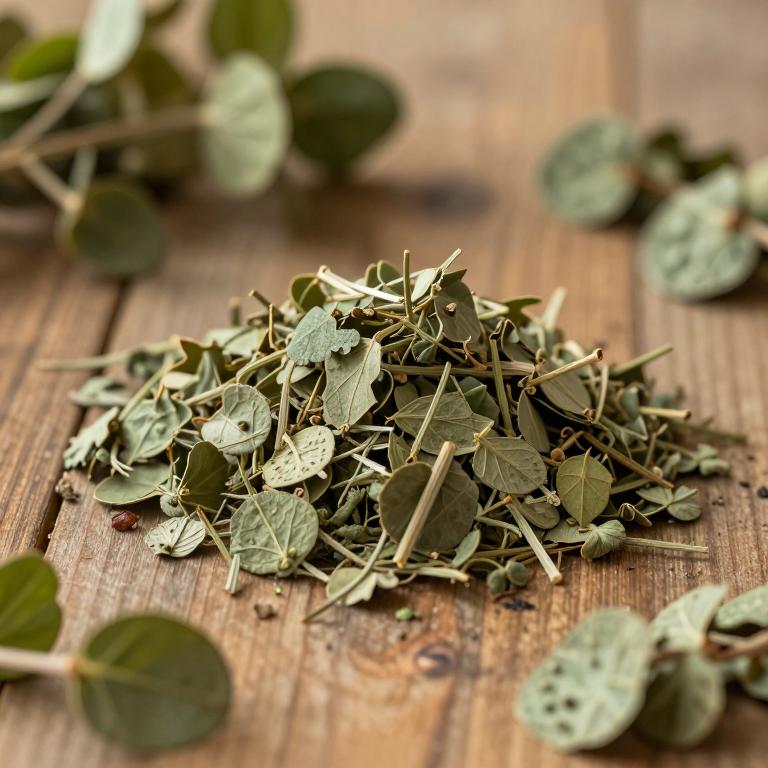
Names and Synonyms
Common Names
- Jamaican gooseberry tree
Scientific Names
Accepted name
Phyllanthus acuminatusSynonyms
- Phyllanthus lycioides
- Phyllanthus foetidus
- Phyllanthus averrhoifolius
- Phyllanthus acuminatus var. paraguariensis
- Phyllanthus cumanensis
- Phyllanthus mucronatus
- Phyllanthus sessei
- Phyllanthus ruscoides
- Diasperus acuminatus
Regional and Traditional Names
Spanish:
- Grosella de Jamaica
- Jobillo
- Diasperus acuminatus
- Phyllanthus lycioides
- Phyllanthus mucronatus
- Phyllanthus ruscoides
- Phyllanthus averrhoifolius
- Phyllanthus cumanensis
- Phyllanthus foetidus
- Phyllanthus sessei
Sources: Wikidata, Catalogue of Life
Taxonomical Classification
This plant belongs to the kingdom Plantae and is classified under the phylum Streptophyta and class Equisetopsida. Within the subclass Magnoliidae, it falls under the order Malpighiales and the family Phyllanthaceae. Finally, it is categorized under the genus Phyllanthus.
| Rank | Classification |
|---|---|
| Kingdom | Plantae |
| Phylum | Streptophyta |
| Class | Equisetopsida |
| Subclass | Magnoliidae |
| Order | Malpighiales |
| Family | Phyllanthaceae |
| Genus | Phyllanthus |
Sources: The World Checklist of Vascular Plants (WCVP)
Distribution
This plant exhibits a broad and diverse distribution across the various regions of Mexico. It can be found growing throughout the Northeast part of the country. Additionally, its presence is noted within the Mexico Gulf region. The species also extends into the Northwest and Southwest areas of the nation. Finally, the geographical range of this medicinal plant is completed by its occurrence in Mexico Southeast.
| Region | Area |
|---|---|
| Mexico | Mexico Northeast |
| Mexico | Mexico Gulf |
| Mexico | Mexico Northwest |
| Mexico | Mexico Southwest |
| Mexico | Mexico Southeast |
| Central America | Belize |
| Central America | Costa Rica |
| Central America | El Salvador |
| Central America | Guatemala |
| Central America | Honduras |
Sources: The World Checklist of Vascular Plants (WCVP)
Botanical Identification
Ecology
The ecology of Phyllanthus acuminatus is characterized by its ability to inhabit diverse and complex biomes, specifically thriving within the Cerrado (latu sensu), Ciliar Forests or Gallery Forests, and Ombrophilous Forests (also known as Pluvial Forests). This species exhibits a broad altitudinal distribution, allowing it to adapt to varying topographical conditions. It can be found at elevations starting as low as 50 m AMSL, with a mean elevation of approximately 600 m AMSL, and reaching a maximum altitude of up to 1750 m AMSL.
- Elevational range max:
- 1750 m AMSL
- Elevational range mean:
- 600 m AMSL
- Elevational range min:
- 50 m AMSL
- Habitat :
- Cerrado (lato sensu), Floresta Ciliar ou Galeria, Floresta Ombrófila (= Floresta Pluvial)
Life history
The life history of Phyllanthus acuminatus is characterized by its classification as a perennial plant, ensuring its presence in the ecosystem over multiple growing seasons. Regarding its structural development and growth habit, it exhibits characteristics consistent with both phanerophyte and nanophanerophyte life forms, indicating a growth strategy where its buds are located on aerial branches that may vary in height depending on environmental conditions and available resources.
- Life form :
- nanophanerophyte
- Life form :
- phanerophyte
- Lifecycle :
- perennial
Morphology
The morphology of Phyllanthus acuminatus is characterized by a woody growth form that manifests as both a shrub and a tree, reaching a significant plant height ranging from a minimum of 2 meters to a maximum of 8 meters. It is a terrestrial species, functioning as an independent organism rather than a parasite, and it lacks epiphytic tendencies, remaining strictly terrestrial in its habitat. Although its ecological range can encompass aquatic or semiaquatic environments, its primary structural classification remains terrestrial. The plant exhibits a self-supporting growth habit, lacking the climbing or vining characteristics of lianas, and maintains a robust, woody architecture throughout its development.
- Aquatic :
- terrestrial
- Climber :
- self-supporting
- Epiphyte :
- terrestrial
- Growth form :
- tree
- Growth form :
- shrub
- Parasite :
- independent
- Plant height max:
- 8 m
- Plant height min:
- 2 m
- Woodiness :
- woody
Sources: Global Inventory of Floras and Traits (GIFT)
Activities
Phyllanthus acuminatus has 2 reported activities identified across 0 scientific publications and several other databases. The most consistently reported activities include Antibacterial, Antifungal.
| Activity | Supporting sources | Consensus |
|---|---|---|
| Antibacterial | 1 supporting sources | ★☆☆☆☆ |
| Antifungal | 1 supporting sources | ★☆☆☆☆ |
Antibacterial
- Fitoterapia
Antifungal
- Fitoterapia
Preparations
Phyllanthus acuminatus has 1 reported preparations identified across 0 scientific publications and several other databases. The most consistently reported preparations include Methylene chloride and methanol extracts.
| Preparation | Supporting sources | Consensus |
|---|---|---|
| Methylene chloride and methanol extracts | 1 supporting sources | ★☆☆☆☆ |
Methylene chloride and methanol extracts
- Fitoterapia