Phragmanthera capitata
Phragmanthera capitata · Accepted scientific name
Scientific literature: Very Sparse (17 studies) · ★☆☆☆☆
, scientifically known as Phragmanthera capitata, is a remarkable medicinal plant prized in traditional healing practices. Renowned for its potent bioactive compounds, it is frequently utilized to address various ailments, ranging from inflammatory conditions to digestive issues. Exploring its phytochemical properties offers promising insights into modern pharmacological advancements and natural therapies.
- Family
- Loranthaceae
- Native range
- Africa
- Parts used
- Leaf
- Common names
- Not available
- Scientific synonyms
- Cinchona Capitata · Tapinanthus Capitatus · 26 more
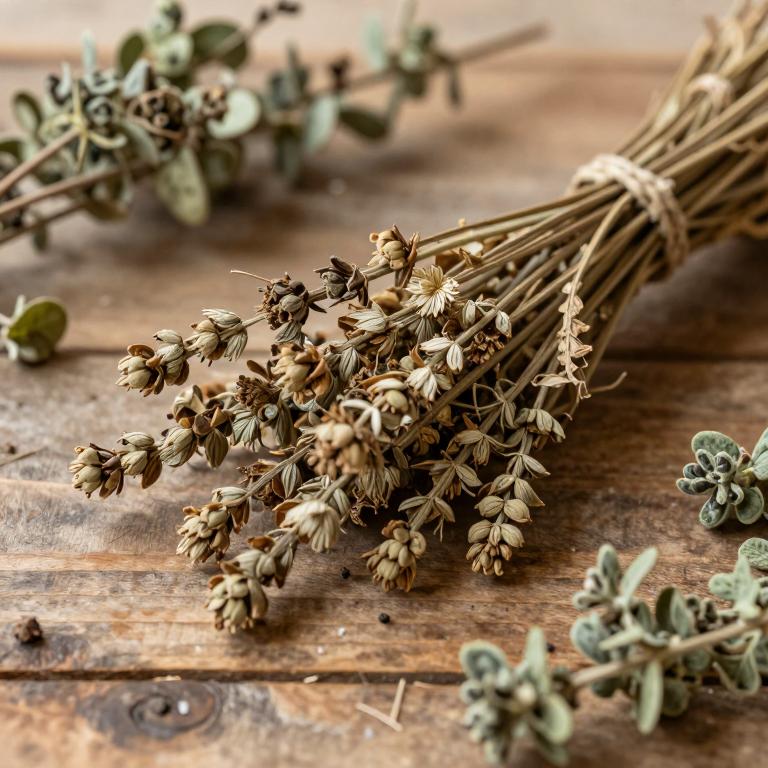
Names and Synonyms
Scientific Names
Accepted name
Phragmanthera capitataSynonyms
- Cinchona capitata
- Tapinanthus capitatus
- Loranthus celtidifolius
- Phragmanthera lapathifolia
- Loranthus incanus var. gossweileri
- Loranthus incanus var. sessilis
- Loranthus incanus var. albus
- Scurrula thonningii
- Tapinanthus hexasepalus
- Tapinanthus lapathifolius
- Tapinanthus thollonii
- Thelecarpus soyauxii
- Phragmanthera incana
- Loranthus capitatus var. latifolius
- Thelecarpus hexasepalus
- Thelecarpus thollonii
- Loranthus thollonii
- Loranthus leptolobus
- Loranthus lapathifolius
- Loranthus luteoflorus
- Loranthus soyauxii
- Loranthus incanus
- Loranthus gossweileri
- Loranthus angustitepalus
- Loranthus hexasepalus
- Loranthus capitatus
- Loranthus pallidifolius
- Exostema capitatum
Sources: Wikidata
Taxonomical Classification
This plant belongs to the kingdom Plantae and is classified under the phylum Streptophyta and the class Equisetopsida. Within the subclass Magnoliidae, it is ordered as Santalales and falls under the family Loranthaceae. Finally, it is identified by the genus Phragmanthera and the species Phragmanthera capitata.
| Rank | Classification |
|---|---|
| Kingdom | Plantae |
| Phylum | Streptophyta |
| Class | Equisetopsida |
| Subclass | Magnoliidae |
| Order | Santalales |
| Family | Loranthaceae |
| Genus | Phragmanthera |
Sources: The World Checklist of Vascular Plants (WCVP)
Distribution
This plant, Phragmanthera capitaata, is distributed across several specific regions within West Tropical Africa. Its presence is documented in the country of Benin, where it plays a role in the local ecosystem. It can also be found throughout the territory of Guinea, contributing to the region's botanical diversity. Furthermore, the species inhabits parts of the Ivory Coast and Liberia. Finally, its geographical range extends into Nigeria, completing its distribution within this tropical belt.
| Region | Area |
|---|---|
| West Tropical Africa | Benin |
| West Tropical Africa | Guinea |
| West Tropical Africa | Ivory Coast |
| West Tropical Africa | Liberia |
| West Tropical Africa | Nigeria |
| West Tropical Africa | Togo |
| West-Central Tropical Africa | Central African Republic |
| West-Central Tropical Africa | Cameroon |
| West-Central Tropical Africa | Congo |
| West-Central Tropical Africa | Equatorial Guinea |
Sources: The World Checklist of Vascular Plants (WCVP)
Botanical Identification
Ecology
The ecology of Phragmantea capitata is defined by its specialized adaptation to coastal vegetation, where it thrives within the complex dynamics of maritime ecosystems. It typically occupies sandy or rocky littoral zones, playing a functional role in stabilizing soil and contributing to the structural complexity of coastal plant communities. Within these high-energy environments, the species must contend with significant abiotic stressors, including salt spray, fluctuating salinity levels, and high wind exposure. Its presence is often indicative of specific successional stages within coastal scrub or maritime forest habitats, where it interacts with a unique assemblage of halophytic and wind-tolerant flora. By occupying these niche coastal habitats, Phragmantea capitata contributes to the overall biodiversity and ecological resilience of the shoreline interface.
- Habitat :
- coastal vegetation
Morphology
The morphology of Phragmantea capitate is characterized by its woody structure and a growth form classified as a shrub. It is a terrestrial plant, lacking aquatic or semiaquatic tendencies, and it functions as a self-supporting organism rather than a climber or an epiphyte. Furthermore, the plant is independent in its nutritional requirements, meaning it does not exhibit obligatory parasitic behavior, and it maintains a stable, woody constitution throughout its development.
- Aquatic :
- terrestrial
- Climber :
- self-supporting
- Epiphyte :
- terrestrial
- Growth form :
- shrub
- Parasite :
- obligatory
- Woodiness :
- woody
Reproduction
The reproduction of Phragmanthera capitata is characterized by a specific flowering cycle that dictates its seasonal reproductive activity. The plant's flowering period is highly variable, as it can occur across a broad spectrum of the year, including January, February, March, April, May, June, July, August, September, October, November, and December. According to the observed reproductive data, the flowering process can reach its peak or specific milestones around October, though the onset and conclusion of the blooming stage are subject to significant seasonal fluctuations. This variability in flowering time suggests that the plant's reproductive success is closely tied to changing environmental conditions, allowing for a flexible phenology that spans most of the calendar year.
- Flowering time :
- Oct
Sources: Global Inventory of Floras and Traits (GIFT)
Plant Parts
Phragmanthera capitata has 1 reported plant parts identified across 3 scientific publications and several other databases that are studied for medicinal purposes. The most consistently reported plant part include leaf.
| Plant part | Supporting sources | Consensus |
|---|---|---|
| Leaf | 3 supporting sources | ★★☆☆☆ |
Leaf
- BMC complementary and alternative medicine
- Frontiers in microbiology
- Pharmacognosy research
Chemicals
Phragmanthera capitata has 7 reported phytochemicals identified across 3 scientific publications and several other databases. The most consistently reported chemicals include 2-Methoxythiazole, Flavonoids, L-cysteine, Phenols, Proanthocyanidin.
| Chemical | Supporting sources | Consensus |
|---|---|---|
| 2-Methoxythiazole | 1 supporting sources | ★☆☆☆☆ |
| Flavonoids | 1 supporting sources | ★☆☆☆☆ |
| L-cysteine | 1 supporting sources | ★☆☆☆☆ |
| Phenols | 1 supporting sources | ★☆☆☆☆ |
| Proanthocyanidin | 1 supporting sources | ★☆☆☆☆ |
| S-Methyl-L-cysteine | 1 supporting sources | ★☆☆☆☆ |
| nicotinic acid | 1 supporting sources | ★☆☆☆☆ |
2-Methoxythiazole
- Biomedicine & pharmacotherapy = Biomedecine & pharmacotherapie
Flavonoids
- Pharmacognosy research
L-cysteine
- Biomedicine & pharmacotherapy = Biomedecine & pharmacotherapie
Phenols
- Pharmacognosy research
Proanthocyanidin
- Pharmacognosy research
S-Methyl-L-cysteine
- Biomedicine & pharmacotherapy = Biomedecine & pharmacotherapie
nicotinic acid
- Biomedicine & pharmacotherapy = Biomedecine & pharmacotherapie
Activities
Phragmanthera capitata has 5 reported activities identified across 3 scientific publications and several other databases. The most consistently reported activities include Antioxidant, Antibacterial, Antidiabetic, Antifungal, Antimicrobial.
| Activity | Supporting sources | Consensus |
|---|---|---|
| Antioxidant | 2 supporting sources | ★☆☆☆☆ |
| Antibacterial | 1 supporting sources | ★☆☆☆☆ |
| Antidiabetic | 1 supporting sources | ★☆☆☆☆ |
| Antifungal | 1 supporting sources | ★☆☆☆☆ |
| Antimicrobial | 1 supporting sources | ★☆☆☆☆ |
Antioxidant
- Evidence-based complementary and alternative medicine : eCAM
- Pharmacognosy research
Antibacterial
- TheScientificWorldJournal
Antidiabetic
- Evidence-based complementary and alternative medicine : eCAM
Antifungal
- TheScientificWorldJournal
Antimicrobial
- TheScientificWorldJournal
Preparations
Phragmanthera capitata has 7 reported preparations identified across 3 scientific publications and several other databases. The most consistently reported preparations include acetone extract, aqueous extract, ethanol extract, methanol extract, Concentrated hot water-infusion.
| Preparation | Supporting sources | Consensus |
|---|---|---|
| Acetone extract | 2 supporting sources | ★☆☆☆☆ |
| Aqueous extract | 2 supporting sources | ★☆☆☆☆ |
| Ethanol extract | 2 supporting sources | ★☆☆☆☆ |
| Methanol extract | 2 supporting sources | ★☆☆☆☆ |
| Concentrated hot water-infusion | 1 supporting sources | ★☆☆☆☆ |
| Ethyl acetate extract | 1 supporting sources | ★☆☆☆☆ |
| Methanol extracts from leaves | 1 supporting sources | ★☆☆☆☆ |
Acetone extract
- TheScientificWorldJournal
- Pharmacognosy research
Aqueous extract
- TheScientificWorldJournal
- Pharmacognosy research
Ethanol extract
- TheScientificWorldJournal
- Pharmacognosy research
Methanol extract
- TheScientificWorldJournal
- Pharmacognosy research
Concentrated hot water-infusion
- Biomedicine & pharmacotherapy = Biomedecine & pharmacotherapie
Ethyl acetate extract
- Evidence-based complementary and alternative medicine : eCAM
Methanol extracts from leaves
- Frontiers in microbiology