mistletoe
Phoradendron · Accepted scientific name
Scientific literature: Very Sparse (4 studies) · ★☆☆☆☆
Mistletoe, scientifically known as Phoradendron, is a fascinating hemiparasitic plant found primarily in the Americas. Known for its unique ability to derive nutrients from host trees, it holds significant ethnobotanical importance. Researchers continue to explore its bioactive compounds for potential medicinal applications in treating various inflammatory and cellular conditions.
- Family
- Santalaceae
- Native range
- Northern America
- Parts used
- Not available
- Common names
- Mistletoe · Leafy Mistletoes
- Scientific synonyms
- Castrea · Spiciviscum · 2 more
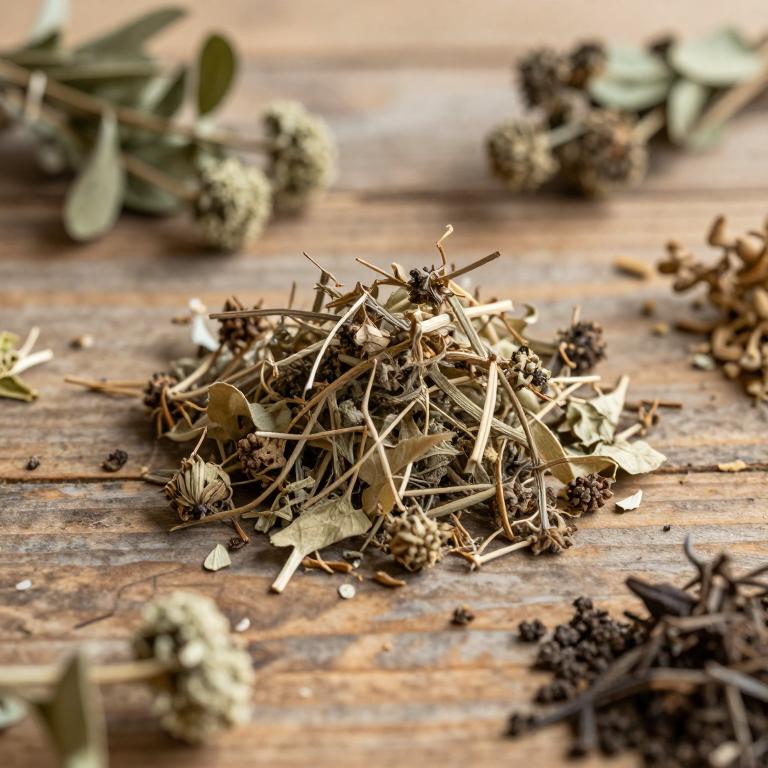
Names and Synonyms
Common Names
- mistletoe
- leafy mistletoes
Scientific Names
Accepted name
PhoradendronSynonyms
- Castrea
- Spiciviscum
- Allobium
- Baratostachys
Regional and Traditional Names
Spanish:
- Spiciviscum
- Allobium
- Muérdagos americanos
Sources: Wikidata, Catalogue of Life
Taxonomical Classification
This plant belongs to the kingdom Plantae and is classified under the phylum Streptophyta within the class Equisetopsida. It is further categorized under the subclass Magnoliidae and the order Santalales, falling into the family Santalaceae. Specifically, it is identified by the genus Phordeendron.
| Rank | Classification |
|---|---|
| Kingdom | Plantae |
| Phylum | Streptophyta |
| Class | Equisetopsida |
| Subclass | Magnoliidae |
| Order | Santalales |
| Family | Santalaceae |
| Genus | Phoradendron |
Sources: The World Checklist of Vascular Plants (WCVP)
Distribution
This plant exhibits a diverse range of habitats across the United States. In the Northwestern U.S.A., its presence is documented in the states of Colorado, Idaho, and Oregon. Moving toward the central part of the country, its range extends into the North-Central U.S.A. region. Specifically, it can be found growing within the borders of Illinois. Finally, its geographical distribution also includes the state of Kansas.
| Region | Area |
|---|---|
| Northwestern U.S.A. | Colorado |
| Northwestern U.S.A. | Idaho |
| Northwestern U.S.A. | Oregon |
| North-Central U.S.A. | Illinois |
| North-Central U.S.A. | Kansas |
| North-Central U.S.A. | Missouri |
| North-Central U.S.A. | Oklahoma |
| Northeastern U.S.A. | Indiana |
| Northeastern U.S.A. | New Jersey |
| Northeastern U.S.A. | New York |
Sources: The World Checklist of Vascular Plants (WCVP)
Chemicals
Phoradendron has 1 reported phytochemicals identified across 0 scientific publications and several other databases. The most consistently reported chemicals include Terpenes.
| Chemical | Supporting sources | Consensus |
|---|---|---|
| Terpenes | 1 supporting sources | ★☆☆☆☆ |
Terpenes
- Combinatorial chemistry & high throughput screening
Activities
Phoradendron has 3 reported activities identified across 0 scientific publications and several other databases. The most consistently reported activities include Antimicrobial, Antioxidant, Antiproliferative.
| Activity | Supporting sources | Consensus |
|---|---|---|
| Antimicrobial | 1 supporting sources | ★☆☆☆☆ |
| Antioxidant | 1 supporting sources | ★☆☆☆☆ |
| Antiproliferative | 1 supporting sources | ★☆☆☆☆ |
Antimicrobial
- Combinatorial chemistry & high throughput screening
Antioxidant
- Combinatorial chemistry & high throughput screening
Antiproliferative
- Combinatorial chemistry & high throughput screening