Phonus lanatus
Phonus lanatus · Accepted scientific name
Scientific literature: Very Sparse (16 studies) · ★☆☆☆☆
, scientifically known as Phonus lanatus, is a remarkable medicinal plant cherished for its diverse therapeutic properties. Renowned for its potent bioactive compounds, it is frequently utilized in traditional healing practices to address various ailments. Understanding its unique botanical characteristics and healing potential offers valuable insights into natural pharmacology.
- Family
- Asteraceae
- Native range
- Europe
- Parts used
- Not available
- Common names
- Not available
- Scientific synonyms
- Centaurea Lanata · Carduncellus Lanatus · 5 more
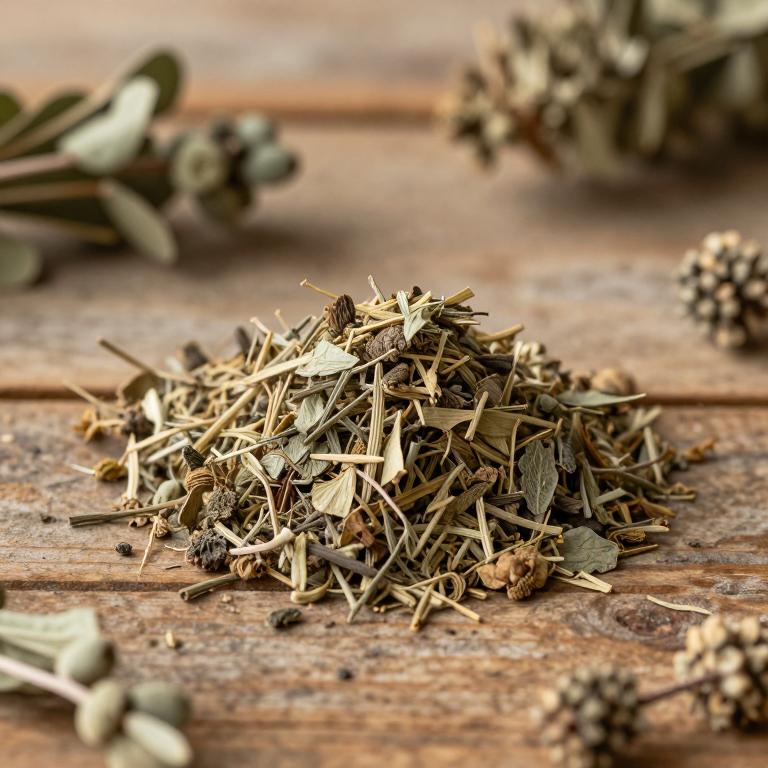
Names and Synonyms
Scientific Names
Accepted name
Phonus lanatusSynonyms
- Centaurea lanata
- Carduncellus lanatus
- Atractylis lanata
- Heracantha lanata
- Onobroma lanata
- Carthamus lanatus
- Kentrophyllum lanatum
Sources: Wikidata
Taxonomical Classification
This plant belongs to the kingdom Plantae and is classified within the phylum Streptophyta and the class Equisetopsida. It is further organized under the subclass Magnoliidae and the order Asterales, eventually placing it in the family Asteraceae. Within this botanical hierarchy, the medicinal specimen is identified by the genus Phonus.
| Rank | Classification |
|---|---|
| Kingdom | Plantae |
| Phylum | Streptophyta |
| Class | Equisetopsida |
| Subclass | Magnoliidae |
| Order | Asterales |
| Family | Asteraceae |
| Genus | Phonus |
Sources: The World Checklist of Vascular Plants (WCVP)
Distribution
This plant exhibits a wide presence across several key regions of the European continent. In Northern Europe, its range extends from the islands of Great Britain to the coastal areas of Norway. Moving into Middle Europe, the species can be found throughout the landscapes of Belgium. It also maintains a significant distribution within the territories of Czechia-Slovakia. Finally, the plant is commonly documented across the diverse habitats of Germany.
| Region | Area |
|---|---|
| Northern Europe | Great Britain |
| Northern Europe | Norway |
| Middle Europe | Belgium |
| Middle Europe | Czechia-Slovakia |
| Middle Europe | Germany |
| Middle Europe | Hungary |
| Middle Europe | Poland |
| Middle Europe | Switzerland |
| Southwestern Europe | Baleares |
| Southwestern Europe | Corse |
Sources: The World Checklist of Vascular Plants (WCVP)
Chemicals
Phonus lanatus has 14 reported phytochemicals identified across 0 scientific publications and several other databases. The most consistently reported chemicals include Astragalin, CHLOROGENIC ACID, Isorhamnetin-3-O-beta-D-Glucoside, Kaempferol 3-O-beta-D-sophoroside, Luteolin 7-O-beta-D-glucoside.
| Chemical | Supporting sources | Consensus |
|---|---|---|
| Astragalin | 1 supporting sources | ★☆☆☆☆ |
| CHLOROGENIC ACID | 1 supporting sources | ★☆☆☆☆ |
| Isorhamnetin-3-O-beta-D-Glucoside | 1 supporting sources | ★☆☆☆☆ |
| Kaempferol 3-O-beta-D-sophoroside | 1 supporting sources | ★☆☆☆☆ |
| Luteolin 7-O-beta-D-glucoside | 1 supporting sources | ★☆☆☆☆ |
| Quercimeritrin | 1 supporting sources | ★☆☆☆☆ |
| STIGMASTEROL | 1 supporting sources | ★☆☆☆☆ |
| Sitosterol | 1 supporting sources | ★☆☆☆☆ |
| Sterols | 1 supporting sources | ★☆☆☆☆ |
| Syringin | 1 supporting sources | ★☆☆☆☆ |
Astragalin
- Zeitschrift fur Naturforschung. C, Journal of biosciences
CHLOROGENIC ACID
- Zeitschrift fur Naturforschung. C, Journal of biosciences
Isorhamnetin-3-O-beta-D-Glucoside
- Zeitschrift fur Naturforschung. C, Journal of biosciences
Kaempferol 3-O-beta-D-sophoroside
- Zeitschrift fur Naturforschung. C, Journal of biosciences
Luteolin 7-O-beta-D-glucoside
- Zeitschrift fur Naturforschung. C, Journal of biosciences
Quercimeritrin
- Zeitschrift fur Naturforschung. C, Journal of biosciences
STIGMASTEROL
- Zeitschrift fur Naturforschung. C, Journal of biosciences
Sitosterol
- Zeitschrift fur Naturforschung. C, Journal of biosciences
Sterols
- Zeitschrift fur Naturforschung. C, Journal of biosciences
Syringin
- Zeitschrift fur Naturforschung. C, Journal of biosciences