Purple Mountain Torchwort
Phlomoides bracteosa · Accepted scientific name
Scientific literature: Very Sparse (5 studies) · ★☆☆☆☆
Purple Mountain Torchwort, scientifically known as Phlomoides bracteosa, is a striking perennial renowned for its vibrant, upright floral spikes. Native to mountainous regions, this resilient herb offers significant ethnobotanical value. Its unique bioactive compounds make it a subject of interest for traditional healing practices and modern pharmacological research.
- Family
- Lamiaceae
- Native range
- Asia-Temperate
- Parts used
- Not available
- Common names
- Purple Mountain Torchwort
- Scientific synonyms
- Phlomis Bracteosa Var. Longifolia · Phlomis Bracteosa · 3 more
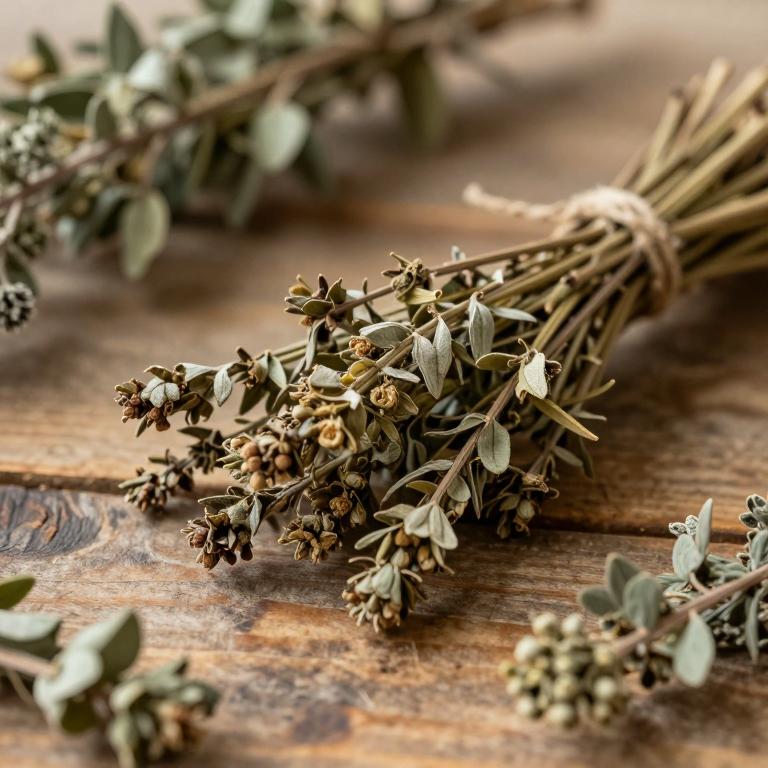
Names and Synonyms
Common Names
- Purple Mountain Torchwort
Scientific Names
Accepted name
Phlomoides bracteosaSynonyms
- Phlomis bracteosa var. longifolia
- Phlomis bracteosa
- Phlomis lamiifolia
- Phlomoides lamiifolia
- Phlomis simplex
Sources: Wikidata, Catalogue of Life
Taxonomical Classification
This plant belongs to the kingdom Plantae and the phylum Streptophyta, falling under the class Equisetopsida and subclass Magnoliidae. It is further classified within the order Lamiales and the family Lamiaceae. Finally, it is categorized under the genus Phlomoides.
| Rank | Classification |
|---|---|
| Kingdom | Plantae |
| Phylum | Streptophyta |
| Class | Equisetopsida |
| Subclass | Magnoliidae |
| Order | Lamiales |
| Family | Lamiaceae |
| Genus | Phlomoides |
Sources: The World Checklist of Vascular Plants (WCVP)
Distribution
This plant exhibits a wide geographical distribution across several key regions in Asia. In Western Asia, its presence is documented within the borders of Afghanistan. The species also thrives across the Indian Subcontinent, specifically within the East Himalaya region. Furthermore, it can be found growing in the mountainous terrains of Nepal and the West Himalaya. Finally, its range extends into the neighboring territory of Pakistan.
| Region | Area |
|---|---|
| Western Asia | Afghanistan |
| Indian Subcontinent | East Himalaya |
| Indian Subcontinent | Nepal |
| Indian Subcontinent | Pakistan |
| Indian Subcontinent | West Himalaya |
Sources: The World Checklist of Vascular Plants (WCVP)
Botanical Identification
Ecology
The ecology of Phlomoides bracteosza is defined by its specialized adaptation to high-altitude montane environments, where it thrives within a specific vertical distribution. This species is primarily found in alpine or subalpine zones, occupying an elevational range that begins at a minimum of 2800 m AMSL and extends up to a maximum of 3500 m AMSL. Within this altitudinal belt, the plant is subject to the unique environmental stressors characteristic of high-elevation ecosystems, including intense solar radiation, fluctuating temperature gradients, and potentially thin, rocky soils. Its presence within this narrow 700-meter elevational band suggests a high degree of ecological specialization, likely tied to specific microclimatic conditions and soil compositions found only at these heights.
- Elevational range max:
- 3500 m AMSL
- Elevational range min:
- 2800 m AMSL
Life history
The life history of Phlomoides bracteosas is characterized by its status as a perennial plant, allowing it to persist through multiple growing seasons rather than completing its cycle within a single year. In terms of its growth habit and structural organization, it is classified as a chamaephyte, a life form where the permanent buds are located close to the soil surface, typically just above it, which helps the plant survive varying environmental conditions. This chamaephyte designation is consistent across its morphological classification, defining its strategy for seasonal regrowth and survival within its specific ecological niche.
- Life form :
- chamaephyte
- Lifecycle :
- perennial
Morphology
The morphology of Phlomoides bracteosa is characterized by its growth form as a herb, exhibiting a non-woody structure throughout its vegetative body. As a terrestrial species, it grows directly in the soil rather than occupying epiphytic or parasitic niches, functioning as an independent organism without reliance on a host. Regarding its climbing habits, the plant is categorized as self-supporting, meaning it maintains its own structural integrity without the need for external climbing mechanisms.
- Climber :
- self-supporting
- Epiphyte :
- terrestrial
- Growth form :
- herb
- Parasite :
- independent
- Woodiness :
- non-woody
Reproduction
The reproduction of Phlomoides bracteosa is characterized by a specific seasonal flowering window that facilitates its pollination and seed production processes. The flowering period for this species typically begins in September and continues through October, though the timing can be variable depending on environmental conditions. This seasonal cycle ensures that the plant undergoes its reproductive phase during these specific months, contributing to its overall life cycle and the propagation of the species within its habitat.
- Flowering time :
- Sep
- Flowering time :
- Oct
Sources: Global Inventory of Floras and Traits (GIFT)
Chemicals
Phlomoides bracteosa has 5 reported phytochemicals identified across 0 scientific publications and several other databases. The most consistently reported chemicals include Flavonoids, Marrubiin, RA, RB, polyphenols.
| Chemical | Supporting sources | Consensus |
|---|---|---|
| Flavonoids | 1 supporting sources | ★☆☆☆☆ |
| Marrubiin | 1 supporting sources | ★☆☆☆☆ |
| RA | 1 supporting sources | ★☆☆☆☆ |
| RB | 1 supporting sources | ★☆☆☆☆ |
| polyphenols | 1 supporting sources | ★☆☆☆☆ |
Flavonoids
- International journal of nanomedicine
Marrubiin
- Clinical and experimental hypertension (New York, N.Y. : 1993)
RA
- Clinical and experimental hypertension (New York, N.Y. : 1993)
RB
- Clinical and experimental hypertension (New York, N.Y. : 1993)
polyphenols
- International journal of nanomedicine