Jerusalem Sages
Phlomis · Accepted scientific name
Scientific literature: Very Sparse (16 studies) · ★☆☆☆☆
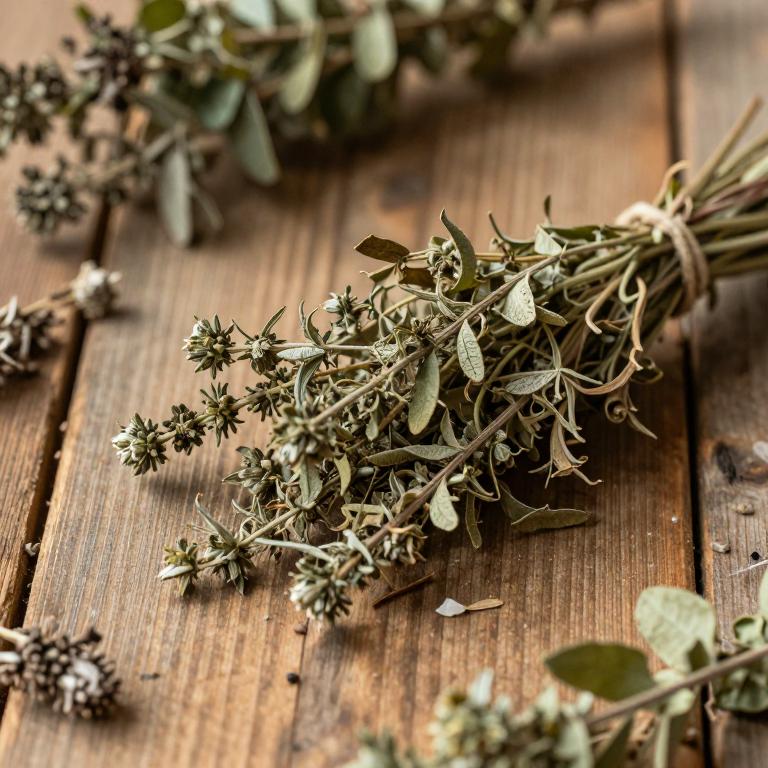
Jerusalem Sages, scientifically known as Phlomis, is a versatile genus of perennial herbs celebrated for their architectural beauty and medicinal properties. Renowned for their velvety, textured foliage and striking tubular flowers, these resilient plants offer therapeutic benefits, traditionally used to support respiratory health and soothe various inflammatory conditions.
Names and Synonyms
Common Names
- Jerusalem Sages
- Lampwick Plants
- Lampwicks
Scientific Names
Accepted name
PhlomisSynonyms
- Hersilia
- Beloakon
- Anemitis
- Blephiloma
Regional and Traditional Names
Spanish:
- Phlomoides
- Trambis
- Beloakon
- Blephiloma
- Lamiophlomis
- Anemitis
- Phlomitis
- Phlomidopsis
- Orlowia
German:
- Brandkräuter
- Brandkraut
- Brandkräuter
Sources: Wikidata, Catalogue of Life
Taxonomical Classification
This plant belongs to the kingdom Plantae and the phylum Streptophyta, falling under the class Equisetopsida and subclass Magnoliidae. It is further classified within the order Lamiales and the family Lamiaceae. Finally, the specific medicinal genus to which it belongs is Phlomis.
| Rank | Classification |
|---|---|
| Kingdom | Plantae |
| Phylum | Streptophyta |
| Class | Equisetopsida |
| Subclass | Magnoliidae |
| Order | Lamiales |
| Family | Lamiaceae |
| Genus | Phlomis |
Sources: The World Checklist of Vascular Plants (WCVP)
Distribution
This plant exhibits a diverse geographical distribution across various regions of Europe. In Northern Europe, its presence can be found within the territories of Great Britain and Ireland. Moving toward the central part of the continent, the species is also established in Middle Europe. Specifically, it inhabits the landscapes of Austria and the Czech-Slovakia region. Finally, its range extends through Germany, solidifying its footprint across these European nations.
| Region | Area |
|---|---|
| Northern Europe | Great Britain |
| Northern Europe | Ireland |
| Middle Europe | Austria |
| Middle Europe | Czechia-Slovakia |
| Middle Europe | Germany |
| Southwestern Europe | Baleares |
| Southwestern Europe | France |
| Southwestern Europe | Portugal |
| Southwestern Europe | Sardegna |
| Southwestern Europe | Spain |
Sources: The World Checklist of Vascular Plants (WCVP)
Chemicals
Phlomis has 6 reported phytochemicals identified across 0 scientific publications and several other databases. The most consistently reported chemicals include Flavonoids, Iridoids, Lamiide, Verbascoside, acetoside.
| Chemical | Supporting sources | Consensus |
|---|---|---|
| Flavonoids | 1 supporting sources | ★☆☆☆☆ |
| Iridoids | 1 supporting sources | ★☆☆☆☆ |
| Lamiide | 1 supporting sources | ★☆☆☆☆ |
| Verbascoside | 1 supporting sources | ★☆☆☆☆ |
| acetoside | 1 supporting sources | ★☆☆☆☆ |
| auroside | 1 supporting sources | ★☆☆☆☆ |
Flavonoids
- Natural product research
Iridoids
- Natural product research
Lamiide
- Daru : journal of Faculty of Pharmacy, Tehran University of Medical Sciences
Verbascoside
- Daru : journal of Faculty of Pharmacy, Tehran University of Medical Sciences
acetoside
- Daru : journal of Faculty of Pharmacy, Tehran University of Medical Sciences
auroside
- Daru : journal of Faculty of Pharmacy, Tehran University of Medical Sciences
Conditions
Phlomis has 9 reported investigations on conditions identified across 0 scientific publications and several other databases. The most consistently reported conditions include inflammation, bronchitis, cancer, dermatitis, gastric ulcers.
| Condition | Supporting sources | Consensus |
|---|---|---|
| Inflammation | 2 supporting sources | ★☆☆☆☆ |
| Bronchitis | 1 supporting sources | ★☆☆☆☆ |
| Cancer | 1 supporting sources | ★☆☆☆☆ |
| Dermatitis | 1 supporting sources | ★☆☆☆☆ |
| Gastric ulcers | 1 supporting sources | ★☆☆☆☆ |
| Gastritis | 1 supporting sources | ★☆☆☆☆ |
| Hemorrhoids | 1 supporting sources | ★☆☆☆☆ |
| Infections | 1 supporting sources | ★☆☆☆☆ |
| Wounds | 1 supporting sources | ★☆☆☆☆ |
Inflammation
- Medicines (Basel, Switzerland)
- Gels (Basel, Switzerland)
Bronchitis
- Medicines (Basel, Switzerland)
Cancer
- Natural product research
Dermatitis
- Medicines (Basel, Switzerland)
Gastric ulcers
- Gels (Basel, Switzerland)
Gastritis
- Medicines (Basel, Switzerland)
Hemorrhoids
- Gels (Basel, Switzerland)
Infections
- Medicines (Basel, Switzerland)
Wounds
- Medicines (Basel, Switzerland)
Preparations
Phlomis has 1 reported preparations identified across 0 scientific publications and several other databases. The most consistently reported preparations include Turkish sage "Çalba or Şalba".
| Preparation | Supporting sources | Consensus |
|---|---|---|
| Turkish sage "çalba or şalba" | 1 supporting sources | ★☆☆☆☆ |
Turkish sage "çalba or şalba"
- Planta medica