Pashtun Lampwick
Phlomis stewartii · Accepted scientific name
Scientific literature: Very Sparse (4 studies) · ★☆☆☆☆
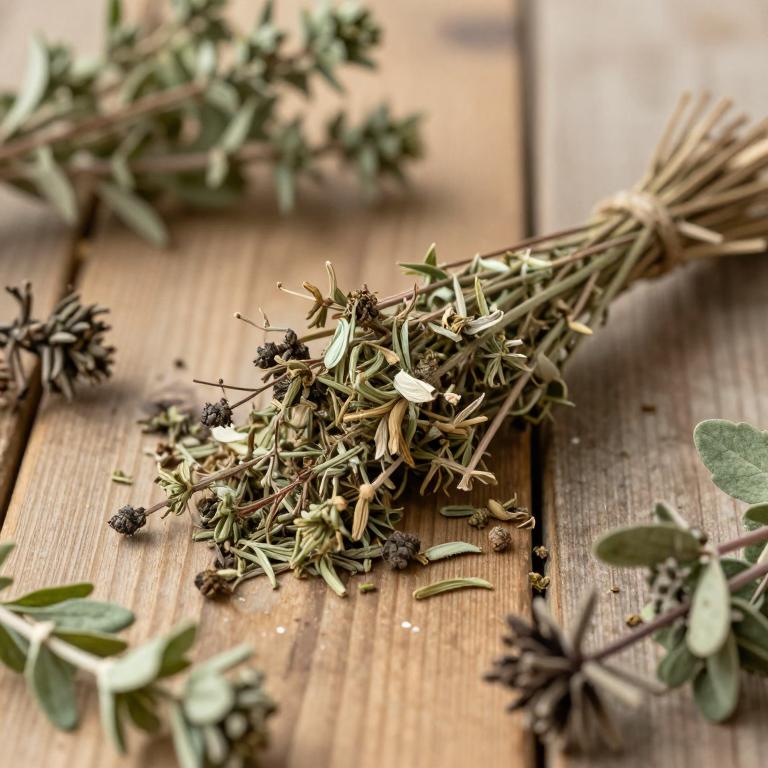
Pashtun Lampwick, scientifically known as Phlomis stewartii, is a remarkable medicinal herb cherished in traditional folk medicine. Native to rugged terrains, this plant is renowned for its diverse therapeutic properties. It is frequently utilized to treat various ailments, offering natural healing benefits through its potent, bioactive chemical compounds.
- Family
- Lamiaceae
- Native range
- Asia-Temperate
- Parts used
- Not available
- Common names
- Pashtun Lampwick
- Scientific synonyms
- Not available
Names and Synonyms
Common Names
- Pashtun Lampwick
Scientific Names
Accepted name
Phlomis stewartiiSources: Wikidata, Catalogue of Life
Taxonomical Classification
This plant belongs to the kingdom Plantae and is classified under the phylum Streptophyta and the class Equisetopsida. Within the subclass Magnoliidae, it is further organized into the order Lamiales and the family Lamiaceae. Finally, its taxonomic identity is completed by its placement in the genus Phlomis.
| Rank | Classification |
|---|---|
| Kingdom | Plantae |
| Phylum | Streptophyta |
| Class | Equisetopsida |
| Subclass | Magnoliidae |
| Order | Lamiales |
| Family | Lamiaceae |
| Genus | Phlomis |
Sources: The World Checklist of Vascular Plants (WCVP)
Distribution
This plant, known scientifically as Phlomis stewartii, exhibits a specific range across certain regions of Asia. Its geographical distribution is primarily concentrated within the western and southern stretches of the continent. In Western Asia, it can be found growing in the country of Afghanistan. Furthermore, the species extends into the Indian Subcontinent, specifically inhabiting the territory of Pakistan. Together, these locations define the natural habitat where this medicinal species thrives.
| Region | Area |
|---|---|
| Western Asia | Afghanistan |
| Indian Subcontinent | Pakistan |
Sources: The World Checklist of Vascular Plants (WCVP)
Botanical Identification
Ecology
The ecology of Phlomis stewartii is characterized by its adaptation to specific montane environments, where it thrives within a distinct altitudinal gradient. This species is typically found inhabiting mid-to-high altitude zones, occupying an elevational range that extends from a minimum of 900 m AMSL to a maximum of 1900 m AMSL. Within this vertical distribution, the plant occupies ecological niches that likely provide the necessary thermic and hydrological conditions required for its growth and medicinal potency. Its presence across this nearly thousand-meter span suggests a degree of resilience to varying atmospheric pressures and temperature fluctuations common in mountainous terrains.
- Elevational range max:
- 1900 m AMSL
- Elevational range min:
- 900 m AMSL
Life history
The life history of Phlomis stewartii is characterized by its classification as a chamaephyte, a life form that dictates its survival strategy in its native habitat. Within the specific categorization of its growth habit, it is identified as a chamaephyte (Life_form_1), meaning its perennating buds are located near the soil surface, often just above it, allowing it to withstand varying environmental pressures. This life form is further detailed through its ecological positioning as a chamaephyte (Life_form_2), distinguishing it from other growth types such as phanerophytes, hemicryptophytes, or therophytes. This low-growing architecture enables the plant to endure seasonal shifts by protecting its vital regenerative tissues close to the ground, ensuring its persistence through its perennial life cycle.
- Life form :
- chamaephyte
Morphology
The morphology of Phlomis stewartii is characterized by its growth habit as a self-supporting plant, meaning it possesses a sturdy structural integrity that allows it to remain upright without the need for external support, functioning as a self-supporting organism rather than a climber. It does not exhibit any climbing tendencies, whether obligatory or facultative. Furthermore, the species is entirely independent in its nutritional processes, functioning as an independent organism that does not rely on a host, thus lacking any parasitic qualities. In terms of its ecological niche and substrate preference, the plant is strictly terrestrial, growing in soil rather than functioning as an epiphyte.
- Climber :
- self-supporting
- Epiphyte :
- terrestrial
- Parasite :
- independent
Sources: Global Inventory of Floras and Traits (GIFT)
Activities
Phlomis stewartii has 3 reported activities identified across 0 scientific publications and several other databases. The most consistently reported activities include Antibacterial, Antifungal, Antioxidant.
| Activity | Supporting sources | Consensus |
|---|---|---|
| Antibacterial | 1 supporting sources | ★☆☆☆☆ |
| Antifungal | 1 supporting sources | ★☆☆☆☆ |
| Antioxidant | 1 supporting sources | ★☆☆☆☆ |
Antibacterial
- Chemistry & biodiversity
Antifungal
- Chemistry & biodiversity
Antioxidant
- Chemistry & biodiversity
Conditions
Phlomis stewartii has 1 reported investigations on conditions identified across 0 scientific publications and several other databases. The most consistently reported conditions include E. coli.
| Condition | Supporting sources | Consensus |
|---|---|---|
| E. coli | 1 supporting sources | ★☆☆☆☆ |
E. coli
- Chemistry & biodiversity
Preparations
Phlomis stewartii has 1 reported preparations identified across 0 scientific publications and several other databases. The most consistently reported preparations include ethyl acetate fraction.
| Preparation | Supporting sources | Consensus |
|---|---|---|
| Ethyl acetate fraction | 1 supporting sources | ★☆☆☆☆ |
Ethyl acetate fraction
- Chemistry & biodiversity