Phlomis orientalis
Phlomis orientalis · Accepted scientific name
Scientific literature: Very Sparse (9 studies) · ★☆☆☆☆
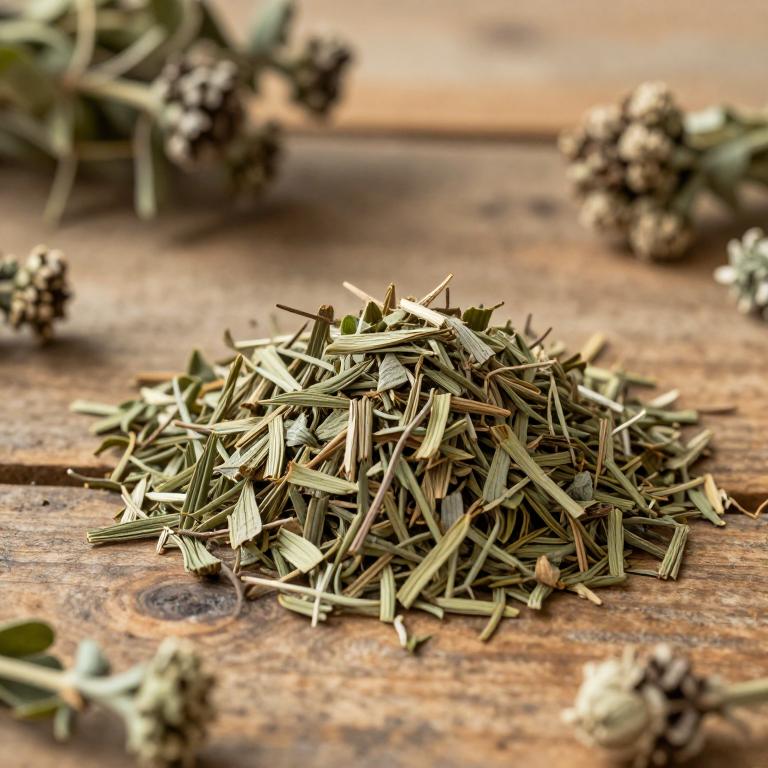
Phlomis orientalis, scientifically known as Phlomis orientalis, is a striking perennial herb native to the Mediterranean. Renowned for its velvety, sage-like foliage and architectural whorls of yellow flowers, this hardy plant is valued in traditional medicine for its anti-inflammatory and antimicrobial properties, offering both beauty and therapeutic potential.
- Family
- Lamiaceae
- Native range
- Asia-Temperate
- Parts used
- Not available
- Common names
- Not available
- Scientific synonyms
- Phlomis Orientalis Subsp. Caucasica · Phlomis Caucasica
Names and Synonyms
Scientific Names
Accepted name
Phlomis orientalisSynonyms
- Phlomis orientalis subsp. caucasica
- Phlomis caucasica
Sources: Wikidata
Taxonomical Classification
This plant belongs to the kingdom Plantae within the phylum Streptophyta and the class Equisetopsida. It is further classified under the subclass Magnoliidae, the order Lamiales, and the family Lamiaceae. Finally, it is situated within the genus Phlomis.
| Rank | Classification |
|---|---|
| Kingdom | Plantae |
| Phylum | Streptophyta |
| Class | Equisetopsida |
| Subclass | Magnoliidae |
| Order | Lamiales |
| Family | Lamiaceae |
| Genus | Phlomis |
Sources: The World Checklist of Vascular Plants (WCVP)
Distribution
This plant exhibits a specific geographical distribution concentrated within certain mountainous and arid regions. It can be found growing naturally across the Caucasus, particularly within the Transcaucasia area. Furthermore, its range extends into Western Asia, where it is native to parts of Iran. These locations provide the ideal environmental conditions necessary for its survival and growth. Consequently, its presence is primarily limited to these specific territories in the Middle East and surrounding regions.
| Region | Area |
|---|---|
| Caucasus | Transcaucasus |
| Western Asia | Iran |
Sources: The World Checklist of Vascular Plants (WCVP)
Botanical Identification
Ecology
The ecology of Phlomis orientalis is characterized by its adaptation to rugged and well-drained landscapes, specifically thriving in stoney places. It typically occupies open, sunny environments such as rocky slopes, garrigue, and scrublands where it can withstand high light intensity and periodic drought. Because it settles in stoney habitats, the plant is well-equipped to manage the rapid drainage of moisture, often developing a robust root system to anchor itself within the crevices of rocky substrates. This preference for lithic or gravelly soils influences its competitive strategy, allowing it to colonize niches that are too harsh or nutrient-poor for more moisture-dependent vegetation.
- Habitat :
- stony places
Life history
The life history of Phlomis orientalis is characterized by its status as a perennial plant, ensuring its long-term survival through multiple growing seasons. In terms of its structural growth strategy and ecological positioning, it is classified as a chamaephyte, a life form where the permanent buds are located close to the ground level, often protected by leaf litter or soil. This specific life form, identified through both its chamaephyte and chamaephyte classifications, allows the species to withstand varying environmental conditions while maintaining its reproductive potential over its extended lifespan.
- Life form :
- chamaephyte
- Lifecycle :
- perennial
Morphology
The morphology of Phlomis orientalis is characterized by its growth form as a non-woody herb that functions as a self-supporting, independent plant. It is a terrestrial species, growing directly in the soil rather than as an epiphyte or parasite. In terms of stature, the plant exhibits a relatively compact size, with a height ranging from a minimum of 0.2 m to a maximum of 0.63 m.
- Climber :
- self-supporting
- Epiphyte :
- terrestrial
- Growth form :
- herb
- Parasite :
- independent
- Plant height max:
- 0.63 m
- Plant height min:
- 0.2 m
- Woodiness :
- non-woody
Reproduction
The reproduction of Phlomis orientalis is characterized by a specific seasonal flowering window that facilitates its pollination and seed production. The flowering period typically begins in June and concludes in July, marking the peak of its reproductive activity. During this interval, the plant produces its characteristic floral structures to attract pollinators, ensuring the continuation of its life cycle through the development of seeds.
- Flowering time :
- Jun
- Flowering time :
- Jul
Sources: Global Inventory of Floras and Traits (GIFT)
Chemicals
Phlomis orientalis has 7 reported phytochemicals identified across 0 scientific publications and several other databases. The most consistently reported chemicals include Acteoside, Chrysoeriol 7-O-glucoside, Forsythoside B, Kaempferol 3-O-glucoside, RUTIN.
| Chemical | Supporting sources | Consensus |
|---|---|---|
| Acteoside | 1 supporting sources | ★☆☆☆☆ |
| Chrysoeriol 7-O-glucoside | 1 supporting sources | ★☆☆☆☆ |
| Forsythoside B | 1 supporting sources | ★☆☆☆☆ |
| Kaempferol 3-O-glucoside | 1 supporting sources | ★☆☆☆☆ |
| RUTIN | 1 supporting sources | ★☆☆☆☆ |
| chrysoeriol-7-O-rutinoside | 1 supporting sources | ★☆☆☆☆ |
| naringenin | 1 supporting sources | ★☆☆☆☆ |
Acteoside
- Journal of natural medicines
Chrysoeriol 7-O-glucoside
- Journal of natural medicines
Forsythoside B
- Journal of natural medicines
Kaempferol 3-O-glucoside
- Journal of natural medicines
RUTIN
- Journal of natural medicines
chrysoeriol-7-O-rutinoside
- Journal of natural medicines
naringenin
- Journal of natural medicines
Activities
Phlomis orientalis has 1 reported activities identified across 0 scientific publications and several other databases. The most consistently reported activities include Free-Radical Scavenging.
| Activity | Supporting sources | Consensus |
|---|---|---|
| Free-Radical Scavenging | 1 supporting sources | ★☆☆☆☆ |
Free-Radical Scavenging
- Journal of natural medicines
Preparations
Phlomis orientalis has 1 reported preparations identified across 0 scientific publications and several other databases. The most consistently reported preparations include methanol extract of the aerial parts.
| Preparation | Supporting sources | Consensus |
|---|---|---|
| Methanol extract of the aerial parts | 1 supporting sources | ★☆☆☆☆ |
Methanol extract of the aerial parts
- Journal of natural medicines