Phlomis olivieri
Phlomis olivieri · Accepted scientific name
Scientific literature: Very Sparse (15 studies) · ★☆☆☆☆
Phlomis olivieri, scientifically known as Phlomis olivieri, is a resilient perennial shrub native to the Mediterranean region. Characterized by its velvety, grayish-green foliage and striking yellow flowers, this medicinal plant is traditionally valued in folk medicine for its potential anti-inflammatory, antioxidant, and healing properties within various herbal remedies.
- Family
- Lamiaceae
- Native range
- Asia-Temperate
- Parts used
- Not available
- Common names
- Not available
- Scientific synonyms
- Not available
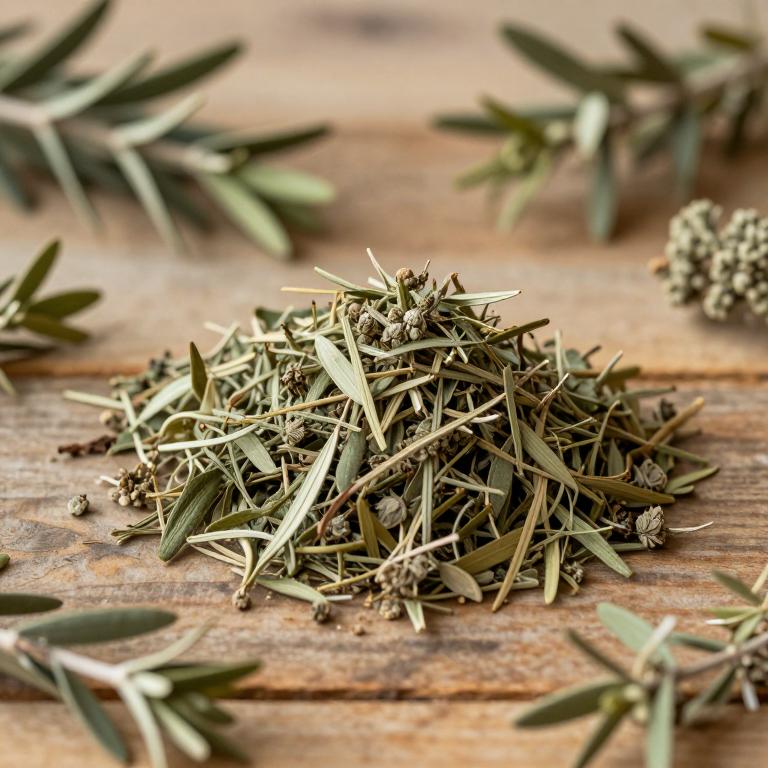
Names and Synonyms
Scientific Names
Accepted name
Phlomis olivieriSources: Wikidata
Taxonomical Classification
This plant belongs to the kingdom Plantae and the phylum Streptophyta, falling under the class Equisetopsida and subclass Magnoliidae. Within the order Lamiales and the family Lamiaceae, it is classified under the genus Phlomis.
| Rank | Classification |
|---|---|
| Kingdom | Plantae |
| Phylum | Streptophyta |
| Class | Equisetopsida |
| Subclass | Magnoliidae |
| Order | Lamiales |
| Family | Lamiaceae |
| Genus | Phlomis |
Sources: The World Checklist of Vascular Plants (WCVP)
Distribution
This plant, known scientifically as Phlomis olivieri, exhibits a specific range within the Middle East. Its natural occurrence is documented within the region of Western Asia. Specifically, it can be found growing in the country of Iran. Additionally, the species extends its geographical reach into Iraq. These two nations represent the primary areas where this medicinal plant is distributed.
| Region | Area |
|---|---|
| Western Asia | Iran |
| Western Asia | Iraq |
Sources: The World Checklist of Vascular Plants (WCVP)
Botanical Identification
Life history
The life history of Phlomis olivieri is characterized by its existence as a chamaephyte, a life form where the majority of the plant's photosynthetic organs are located close to the soil surface, often protected by the ground or organic debris during unfavorable periods. This growth habit allows the species to thrive in its specific ecological niches, where it manages seasonal environmental stresses through its low-lying structure. As a perennial herb, its developmental cycle involves establishing a robust root system that supports its survival through varying climatic conditions, facilitating regrowth in successive growing seasons. The plant transitions through vegetative growth phases before allocating energy toward reproductive efforts, typically culminating in the production of inflorescences that facilitate seed dispersal. This lifecycle strategy, rooted in its chamaephyte nature, ensures resilience against herbivory and temperature fluctuations by keeping its vital tissues near the protective layer of the earth.
- Life form :
- chamaephyte
Morphology
The morphology of Phlomis olivieri is characterized by its growth form as a subshrub, exhibiting a non-woody structure throughout its development. As a terrestrial species, it grows independently of any host, functioning as an independent organism rather than a parasite or an epiphyte. In terms of its physical support system, the plant is self-supporting, requiring no external structures or climbing mechanisms to maintain its upright posture.
- Climber :
- self-supporting
- Epiphyte :
- terrestrial
- Growth form :
- subshrub
- Parasite :
- independent
- Woodiness :
- non-woody
Reproduction
The reproduction of Phlomis olivieri is centered around the production of specialized seeds that facilitate its dispersal and establishment in its natural habitat. The reproductive efficiency of the species is closely tied to the specific physical properties of its progeny, which exhibit a highly consistent seed mass across the population. Quantitative analysis shows that the seed mass is uniform, with a mean value of 4e-05 g. This precision is reflected in the lack of variance within the species' reproductive output, as both the maximum and minimum recorded seed mass values are identical at 4e-05 g. Such a standardized seed size suggests a highly evolved reproductive strategy optimized for specific environmental conditions, ensuring that each seed carries a consistent amount of resources for germination.
- Seed mass mean:
- 4e-05 g
Sources: Global Inventory of Floras and Traits (GIFT)
Chemicals
Phlomis olivieri has 12 reported phytochemicals identified across 0 scientific publications and several other databases. The most consistently reported chemicals include Bicyclogermacrene, Caryophyllene, Chrysoeriol, ERIODICTYOL, Germacrene D.
| Chemical | Supporting sources | Consensus |
|---|---|---|
| Bicyclogermacrene | 1 supporting sources | ★☆☆☆☆ |
| Caryophyllene | 1 supporting sources | ★☆☆☆☆ |
| Chrysoeriol | 1 supporting sources | ★☆☆☆☆ |
| ERIODICTYOL | 1 supporting sources | ★☆☆☆☆ |
| Germacrene D | 1 supporting sources | ★☆☆☆☆ |
| Rhamnetin | 1 supporting sources | ★☆☆☆☆ |
| Verbascoside | 1 supporting sources | ★☆☆☆☆ |
| apigenin | 1 supporting sources | ★☆☆☆☆ |
| dimethoxyflavanone | 1 supporting sources | ★☆☆☆☆ |
| kaempferol | 1 supporting sources | ★☆☆☆☆ |
Bicyclogermacrene
- Chemistry & biodiversity
Caryophyllene
- Natural product research
Chrysoeriol
- Phytochemical analysis : PCA
ERIODICTYOL
- Phytochemical analysis : PCA
Germacrene D
- Chemistry & biodiversity
Rhamnetin
- Phytochemical analysis : PCA
Verbascoside
- Daru : journal of Faculty of Pharmacy, Tehran University of Medical Sciences
apigenin
- Phytochemical analysis : PCA
dimethoxyflavanone
- Phytochemical analysis : PCA
kaempferol
- Phytochemical analysis : PCA
Conditions
Phlomis olivieri has 2 reported investigations on conditions identified across 0 scientific publications and several other databases. The most consistently reported conditions include Bacillus subtilis, Candida albicans.
| Condition | Supporting sources | Consensus |
|---|---|---|
| Bacillus subtilis | 1 supporting sources | ★☆☆☆☆ |
| Candida albicans | 1 supporting sources | ★☆☆☆☆ |
Bacillus subtilis
- Chemistry & biodiversity
Candida albicans
- Chinese journal of integrative medicine
Preparations
Phlomis olivieri has 3 reported preparations identified across 0 scientific publications and several other databases. The most consistently reported preparations include extracts, hydrodistillated essential oil, sub-fractions.
| Preparation | Supporting sources | Consensus |
|---|---|---|
| Extracts | 1 supporting sources | ★☆☆☆☆ |
| Hydrodistillated essential oil | 1 supporting sources | ★☆☆☆☆ |
| Sub-fractions | 1 supporting sources | ★☆☆☆☆ |
Extracts
- Chinese journal of integrative medicine
Hydrodistillated essential oil
- Chemistry & biodiversity
Sub-fractions
- Chinese journal of integrative medicine