Lamb's Ear Lampwick
Phlomis nissolii · Accepted scientific name
Scientific literature: Very Sparse (8 studies) · ★☆☆☆☆
Lamb's Ear Lampwick, scientifically known as Phlomis nissolii, is a striking perennial prized for its velvety, silver-green foliage and architectural presence. Native to specialized habitats, this resilient plant offers unique ornamental value and potential medicinal properties, making it a fascinating subject for both botanical enthusiasts and herbal researchers alike.
- Family
- Lamiaceae
- Native range
- Asia-Temperate
- Parts used
- Not available
- Common names
- Lamb'S Ear Lampwick
- Scientific synonyms
- Phlomis Tarsensis
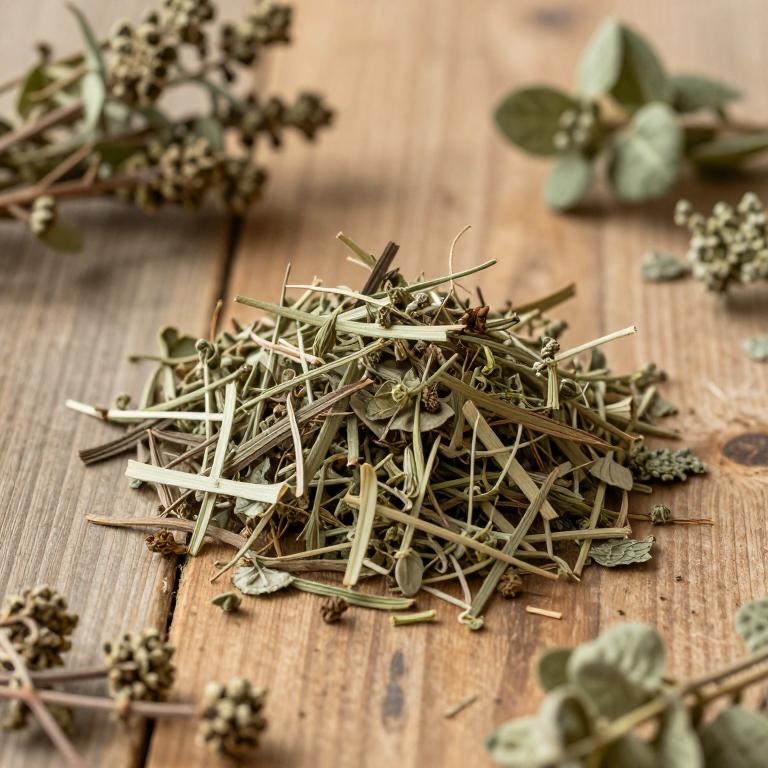
Names and Synonyms
Common Names
- Lamb's Ear Lampwick
Scientific Names
Accepted name
Phlomis nissoliiSynonyms
- Phlomis tarsensis
Sources: Wikidata, Catalogue of Life
Taxonomical Classification
This plant, Phlomis nissolii, belongs to the kingdom Plantae and the phylum Streptophyta. Within the class Equisetopsida and subclass Magnoliidae, it is classified under the order Lamiales and the family Lamiaceae. Finally, it is situated within the genus Phlomis.
| Rank | Classification |
|---|---|
| Kingdom | Plantae |
| Phylum | Streptophyta |
| Class | Equisetopsida |
| Subclass | Magnoliidae |
| Order | Lamiales |
| Family | Lamiaceae |
| Genus | Phlomis |
Sources: The World Checklist of Vascular Plants (WCVP)
Distribution
This plant, known scientifically as Phlomis nissolii, possesses a very specific and limited geographical range. It is native to the region of Western Asia. Within this broad territory, its presence is documented exclusively in Türkiye. This localized distribution suggests that the species may be endemic to certain parts of the Turkish landscape. Consequently, understanding its specific habitat within this country is essential for its conservation.
| Region | Area |
|---|---|
| Western Asia | Türkiye |
Sources: The World Checklist of Vascular Plants (WCVP)
Botanical Identification
Life history
The life history of Phlomis nissolii is characterized by its classification as a chamaephyte, a life form where the majority of the plant's regenerative buds are located close to or just above the soil surface, allowing it to withstand environmental stressors. As a perennial species, it undergoes seasonal cycles of growth and dormancy, utilizing its low-growing structure to navigate its specific ecological niche. The plant's development involves a period of active vegetative growth fueled by stored energy, followed by a reproductive phase where it produces flowering structures to facilitate sexual reproduction via seeds. This life cycle is closely tied to its ability to survive unfavorable seasons by protecting its vital meristematic tissues near the ground level, ensuring its persistence within its habitat across successive growing seasons.
- Life form :
- chamaephyte
Morphology
The morphology of Phlomis nissolii is characterized by its growth habit as a self-supporting plant, meaning it does not rely on external structures for elevation and functions as a self-supporting climber rather than an obligate or facultative one. It is an independent organism that does not exhibit parasitic behavior, functioning as an independent species without dependence on a host. Furthermore, its ecological positioning is strictly terrestrial, as it lacks the characteristics of an epiphyte and grows directly within the soil rather than on other plants.
- Climber :
- self-supporting
- Epiphyte :
- terrestrial
- Parasite :
- independent
Sources: Global Inventory of Floras and Traits (GIFT)
Chemicals
Phlomis nissolii has 4 reported phytochemicals identified across 0 scientific publications and several other databases. The most consistently reported chemicals include Germacrene D, Hexahydrofarnesyl acetone, Linalool, n-Hexadecanoic acid.
| Chemical | Supporting sources | Consensus |
|---|---|---|
| Germacrene D | 1 supporting sources | ★☆☆☆☆ |
| Hexahydrofarnesyl acetone | 1 supporting sources | ★☆☆☆☆ |
| Linalool | 1 supporting sources | ★☆☆☆☆ |
| n-Hexadecanoic acid | 1 supporting sources | ★☆☆☆☆ |
Germacrene D
- Food science and biotechnology
Hexahydrofarnesyl acetone
- Food science and biotechnology
Linalool
- Food science and biotechnology
n-Hexadecanoic acid
- Food science and biotechnology
Activities
Phlomis nissolii has 2 reported activities identified across 0 scientific publications and several other databases. The most consistently reported activities include Analgesic, Antipyretic.
| Activity | Supporting sources | Consensus |
|---|---|---|
| Analgesic | 1 supporting sources | ★☆☆☆☆ |
| Antipyretic | 1 supporting sources | ★☆☆☆☆ |
Analgesic
- Parasitology research
Antipyretic
- Parasitology research
Conditions
Phlomis nissolii has 2 reported investigations on conditions identified across 0 scientific publications and several other databases. The most consistently reported conditions include analgesic, antipyretic.
| Condition | Supporting sources | Consensus |
|---|---|---|
| Analgesic | 1 supporting sources | ★☆☆☆☆ |
| Antipyretic | 1 supporting sources | ★☆☆☆☆ |
Analgesic
- Parasitology research
Antipyretic
- Parasitology research