lampwickplant
Phlomis lychnitis · Accepted scientific name
Scientific literature: Very Sparse (1 studies) · ★☆☆☆☆
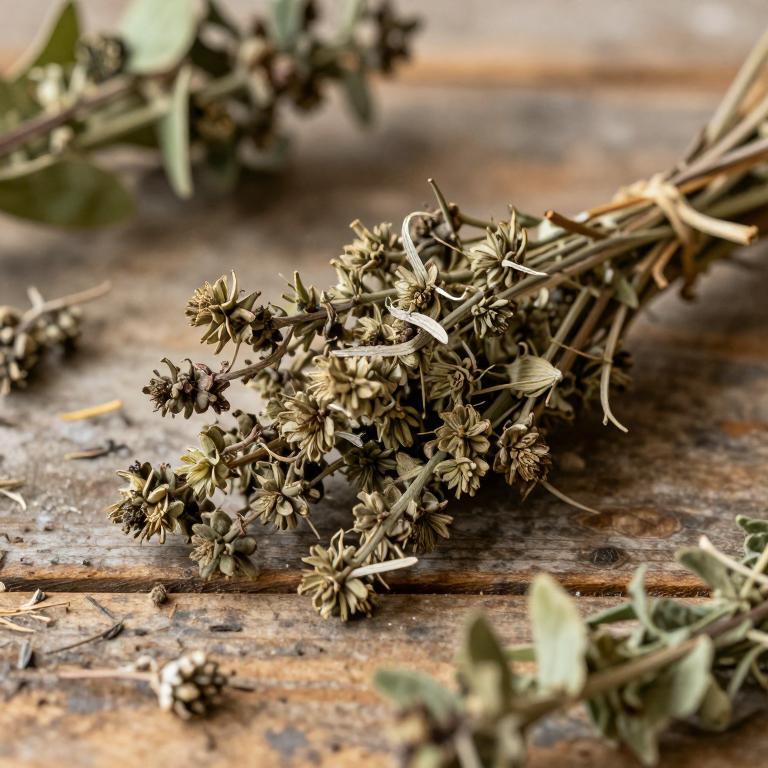
lampwickplant, scientifically known as Phlomis lychnitis, is a striking perennial herb native to the Mediterranean. Renowned for its velvety, silver-green foliage and architectural yellow blooms, this plant holds significant ethnobotanical value. Historically utilized in traditional medicine, it offers fascinating potential for modern pharmacological research and holistic wellness practices.
- Family
- Lamiaceae
- Native range
- Europe
- Parts used
- Not available
- Common names
- Lampwickplant · Iberian Lampwick · 1 more
- Scientific synonyms
- Phlomis Clusii
Names and Synonyms
Common Names
- lampwickplant
- Iberian Lampwick
- Lamwick plant
Scientific Names
Accepted name
Phlomis lychnitisSynonyms
- Phlomis clusii
Regional and Traditional Names
Spanish:
- Orejita de liebre
- Yerba del cólico
- Matatorcía
- Anica
- Merchera
- Sanjuanes amarillos
- Torcias
- Quebrantahueso
- Hojicas de liebre
- Matablanca
- Hierba del cólico
- Te de lastra
- Lychnitis
- Té de pastor
- Matatorcia
- Yerba del colico
- Hierba del colico
- Te de pastor
- Candilera
- Oreja de liebre
French:
- Phlomis lychnite
- Lychnite
- Phlomis lychnite
Sources: Wikidata, Catalogue of Life
Taxonomical Classification
This plant belongs to the kingdom Plantae within the phylum Streptophyta and the class Equisetopsida. It is further classified under the subclass Magnoliidae and the order Lamiales, falling into the family Lamiaceae. Finally, its taxonomic designation is completed within the genus Phlomis.
| Rank | Classification |
|---|---|
| Kingdom | Plantae |
| Phylum | Streptophyta |
| Class | Equisetopsida |
| Subclass | Magnoliidae |
| Order | Lamiales |
| Family | Lamiaceae |
| Genus | Phlomis |
Sources: The World Checklist of Vascular Plants (WCVP)
Distribution
This plant exhibits a diverse distribution across several distinct regions of the Mediterranean basin and beyond. In Middle Europe, its presence can be identified within the borders of Germany. Its range extends significantly into Southwestern Europe, where it is found in France, Portugal, and Spain. Furthermore, the species reaches into Northern Africa, specifically inhabiting the territory of Morocco. Consequently, the geographical spread of Phlomis lychnitis connects various European and African landscapes.
| Region | Area |
|---|---|
| Middle Europe | Germany |
| Southwestern Europe | France |
| Southwestern Europe | Portugal |
| Southwestern Europe | Spain |
| Northern Africa | Morocco |
Sources: The World Checklist of Vascular Plants (WCVP)
Botanical Identification
Life history
The life history of Phlomis lychnitis is characterized by a perennial growth pattern where it functions primarily as a chamaephyte, maintaining its regenerative buds close to or just at the soil surface to survive seasonal fluctuations. This life strategy allows the plant to persist in its Mediterranean habitats, often navigating rocky or disturbed terrains by utilizing its woody base to support upright, leafy stems during the active growing season. As it transitions through its biological stages, the plant focuses on establishing a robust root system that facilitates long-term survival and nutrient uptake. During the flowering period, it directs significant energy toward reproductive success, producing distinctive inflorescences that attract pollinators, eventually leading to seed dispersal. This cycle of seasonal dormancy and vigorous regrowth is a fundamental aspect of its survival, enabling it to endure periods of drought and temperature extremes while maintaining its structural integrity within its ecological niche.
- Life form :
- chamaephyte
Morphology
The morphology of Phlomis lychnitis is characterized by its growth form as a subshrub, exhibiting a distinct woody structure that provides physical stability. It functions as a self-supporting plant, meaning it does not require external structures for climbing and maintains its own upright posture. As an independent organism, it does not exhibit any parasitic behavior, nor does it act as an epiphyte; instead, it maintains a strictly terrestrial existence, growing directly in the soil.
- Climber :
- self-supporting
- Epiphyte :
- terrestrial
- Growth form :
- subshrub
- Parasite :
- independent
- Woodiness :
- woody
Reproduction
Reproduction in Phlomis lychnitis is primarily achieved through the production of seeds contained within specialized structures. The plant produces fruit that is characterized by its dry nature, specifically developing as dry, non-fleshy mericarps that are released from the calyx upon maturity. These dry fruits are typically dispersed by mechanical means or wind, ensuring the seeds are spread away from the parent plant to colonize new areas. In addition to sexual reproduction via these dry fruits, the species may also utilize vegetative propagation methods to expand its presence in suitable habitats, though the formation of dry seeds remains the primary mechanism for genetic diversity and long-distance dispersal.
- Fruit dryness :
- dry
Sources: Global Inventory of Floras and Traits (GIFT)
Activities
Phlomis lychnitis has 1 reported activities identified across 0 scientific publications and several other databases. The most consistently reported activities include Antifungal.
| Activity | Supporting sources | Consensus |
|---|---|---|
| Antifungal | 1 supporting sources | ★☆☆☆☆ |
Antifungal
- Plant foods for human nutrition (Dordrecht, Netherlands)