Phlomis leucophracta
Phlomis leucophracta · Accepted scientific name
Scientific literature: Very Sparse (8 studies) · ★☆☆☆☆
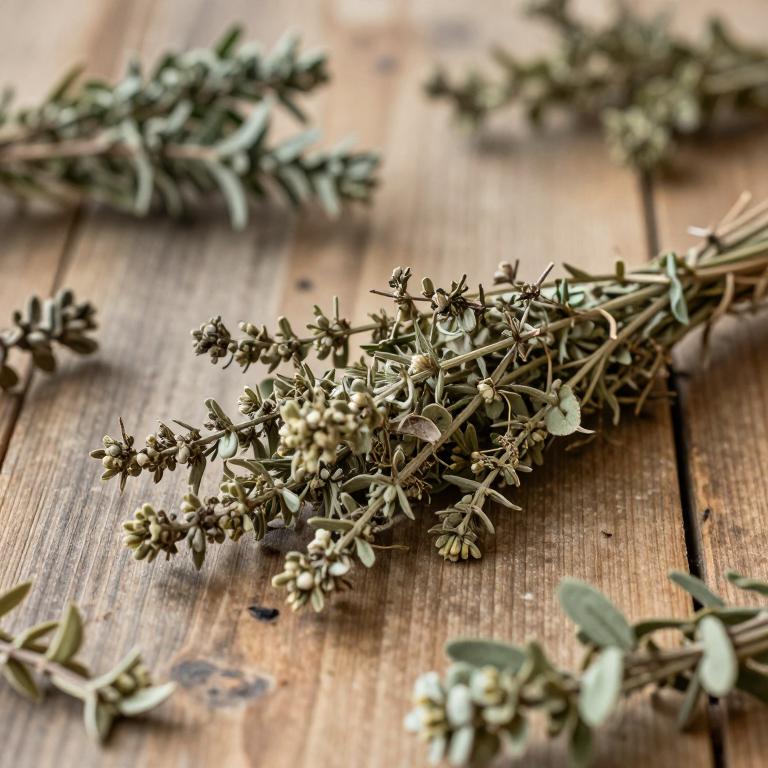
, scientifically known as Phlomis leucophracta, is a resilient perennial shrub native to the Mediterranean region. Renowned for its striking architectural foliage and yellow blooms, this plant holds significant ethnobotanical value. It is traditionally utilized in folk medicine for its purported anti-inflammatory and antioxidant properties to support overall wellness.
- Family
- Lamiaceae
- Native range
- Asia-Temperate
- Parts used
- Not available
- Common names
- Not available
- Scientific synonyms
- Not available
Names and Synonyms
Scientific Names
Accepted name
Phlomis leucophractaSources: Wikidata
Taxonomical Classification
This plant belongs to the kingdom Plantae and the phylum Streptophyta, falling under the class Equisetopsida and subclass Magnoliidae. It is further classified within the order Lamiales and the family Lamiaceae. Specifically, it is identified by the genus Phlomis, with its species name being leucophracta.
| Rank | Classification |
|---|---|
| Kingdom | Plantae |
| Phylum | Streptophyta |
| Class | Equisetopsida |
| Subclass | Magnoliidae |
| Order | Lamiales |
| Family | Lamiaceae |
| Genus | Phlomis |
Sources: The World Checklist of Vascular Plants (WCVP)
Distribution
This plant is specifically native to the western portion of the Asian continent. Within this broad region, its natural habitat is located primarily in Türkiye. It thrives in the unique ecological conditions found throughout this specific country. Because of this limited range, it is considered an endemic species to the Turkish landscape. Therefore, its geographical distribution is strictly confined to this single nation in Western Asia.
| Region | Area |
|---|---|
| Western Asia | Türkiye |
Sources: The World Checklist of Vascular Plants (WCVP)
Botanical Identification
Life history
The life history of Phlomis leucophracta is characterized by its specialized growth strategies and structural classification within its ecosystem. This species exhibits a complex life form profile, functioning primarily as a phanerophyte, which allows it to maintain its stem tissue above the ground level, providing stability and structural resilience. Additionally, its developmental patterns and survival mechanisms under varying environmental stresses align with the characteristics of a nanophanerophyte, indicating that its shoots remain relatively short while still being elevated above the soil surface. This dual classification reflects its ability to navigate seasonal shifts, utilizing its perennial structure to endure through different life stages, from initial germination and vegetative growth to its reproductive phase, ensuring long-term persistence in its natural habitat.
- Life form :
- nanophanerophyte
- Life form :
- phanerophyte
Morphology
The morphology of Phlomis leucophracta is characterized by a robust growth habit, functioning as a self-supporting plant that does not rely on external structures for verticality, categorized as a self-supporting climber in terms of its structural independence. It is an independent organism, showing no parasitic tendencies toward other plants. As a terrestrial species, it grows directly in the soil rather than as an epiphyte. Furthermore, the plant exhibits significant woodiness, possessing a woody structure that provides the necessary rigidity and permanence for its development.
- Climber :
- self-supporting
- Epiphyte :
- terrestrial
- Parasite :
- independent
- Woodiness :
- woody
Sources: Global Inventory of Floras and Traits (GIFT)
Chemicals
Phlomis leucophracta has 3 reported phytochemicals identified across 0 scientific publications and several other databases. The most consistently reported chemicals include Caryophyllene oxide, Linalool, Spathulenol.
| Chemical | Supporting sources | Consensus |
|---|---|---|
| Caryophyllene oxide | 1 supporting sources | ★☆☆☆☆ |
| Linalool | 1 supporting sources | ★☆☆☆☆ |
| Spathulenol | 1 supporting sources | ★☆☆☆☆ |
Caryophyllene oxide
- Natural product research
Linalool
- Natural product research
Spathulenol
- Natural product research
Activities
Phlomis leucophracta has 2 reported activities identified across 0 scientific publications and several other databases. The most consistently reported activities include Analgesic, Antipyretic.
| Activity | Supporting sources | Consensus |
|---|---|---|
| Analgesic | 1 supporting sources | ★☆☆☆☆ |
| Antipyretic | 1 supporting sources | ★☆☆☆☆ |
Analgesic
- Parasitology research
Antipyretic
- Parasitology research
Conditions
Phlomis leucophracta has 2 reported investigations on conditions identified across 0 scientific publications and several other databases. The most consistently reported conditions include analgesic, antipyretic.
| Condition | Supporting sources | Consensus |
|---|---|---|
| Analgesic | 1 supporting sources | ★☆☆☆☆ |
| Antipyretic | 1 supporting sources | ★☆☆☆☆ |
Analgesic
- Parasitology research
Antipyretic
- Parasitology research
Preparations
Phlomis leucophracta has 1 reported preparations identified across 0 scientific publications and several other databases. The most consistently reported preparations include essential oils.
| Preparation | Supporting sources | Consensus |
|---|---|---|
| Essential oils | 1 supporting sources | ★☆☆☆☆ |
Essential oils
- Natural product research