Phlomis crinita
Phlomis crinita · Accepted scientific name
Scientific literature: Very Sparse (3 studies) · ★☆☆☆☆
Phlomis crinita, scientifically known as Phlomis crinita, is a striking perennial herb native to the Mediterranean. Distinguished by its woolly, silver-green foliage and vibrant yellow flower spikes, this plant is prized in traditional herbalism for its soothing properties and its ability to support respiratory and skin health naturally.
- Family
- Lamiaceae
- Native range
- Europe
- Parts used
- Not available
- Common names
- Not available
- Scientific synonyms
- Not available
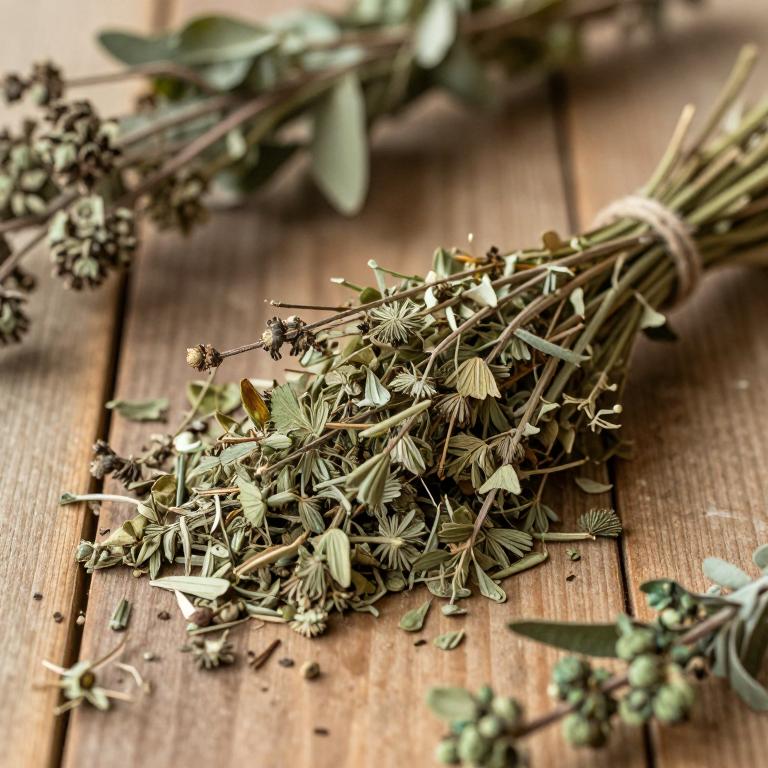
Names and Synonyms
Scientific Names
Accepted name
Phlomis crinitaRegional and Traditional Names
Spanish:
- Barbas de macho
Sources: Wikidata, Catalogue of Life
Taxonomical Classification
This plant belongs to the kingdom Plantae and is classified under the phylum Streptophyta within the class Equisetopsida. As a member of the subclass Magnoliidae, it follows the order Lamiales and is a representative of the family Lamiaceae. Specifically, it is categorized under the genus Phlomis.
| Rank | Classification |
|---|---|
| Kingdom | Plantae |
| Phylum | Streptophyta |
| Class | Equisetopsida |
| Subclass | Magnoliidae |
| Order | Lamiales |
| Family | Lamiaceae |
| Genus | Phlomis |
Sources: The World Checklist of Vascular Plants (WCVP)
Distribution
This plant exhibits a widespread geographical distribution across several distinct regions of Europe and Africa. In Middle Europe, its presence can be documented within the borders of Germany. Moving toward the Mediterranean, it is also found throughout Southwestern Europe, specifically in Spain. The species extends significantly into Northern Africa, where it inhabits the landscapes of Algeria. Furthermore, its range continues through the North African territories of Morocco and Tunisia.
| Region | Area |
|---|---|
| Middle Europe | Germany |
| Southwestern Europe | Spain |
| Northern Africa | Algeria |
| Northern Africa | Morocco |
| Northern Africa | Tunisia |
Sources: The World Checklist of Vascular Plants (WCVP)
Botanical Identification
Life history
The life history of Phlomis crinita is characterized by its classification as a chamaephyte, a growth form where the perennating buds are located close to the soil surface, often just above it. Within the specialized frameworks of plant life strategies, it is specifically identified as a chamaephyte under both the broader botanical classification of life forms and the more granular ecological categorizations used to describe its survival mechanisms. This life history strategy allows the plant to endure varying environmental pressures by maintaining its regenerative structures near the ground, facilitating resilience against seasonal shifts and potential surface disturbances.
- Life form :
- chamaephyte
Morphology
The morphology of Phlomis crinita is characterized by its growth form as a subshrub, exhibiting a woody structure that provides physical stability. Unlike climbing species, this plant is strictly self-supporting and does not possess any climbing tendencies, whether obligatory or facultative. It functions as an independent organism, showing no parasitic behavior, and maintains a terrestrial life habit rather than being epiphytic.
- Climber :
- self-supporting
- Epiphyte :
- terrestrial
- Growth form :
- subshrub
- Parasite :
- independent
- Woodiness :
- woody
Reproduction
Reproduction in Phlomis crinita is characterized by the production of seeds that exhibit a highly uniform physical profile. The reproductive output is defined by a consistent seed mass, with the mean mass recorded at 0.011 g. This uniformity is absolute across the sampled population, as both the maximum and minimum seed mass values are also measured at exactly 0.011 g. This lack of variance in seed mass suggests a highly stabilized reproductive strategy regarding the energetic investment per individual propagule.
- Seed mass mean:
- 0.011 g
Sources: Global Inventory of Floras and Traits (GIFT)
Activities
Phlomis crinita has 2 reported activities identified across 0 scientific publications and several other databases. The most consistently reported activities include Antidiabetic, Antioxidant.
| Activity | Supporting sources | Consensus |
|---|---|---|
| Antidiabetic | 1 supporting sources | ★☆☆☆☆ |
| Antioxidant | 1 supporting sources | ★☆☆☆☆ |
Antidiabetic
- Natural product research
Antioxidant
- Natural product research
Conditions
Phlomis crinita has 1 reported investigations on conditions identified across 0 scientific publications and several other databases. The most consistently reported conditions include antioxidant activity.
| Condition | Supporting sources | Consensus |
|---|---|---|
| Antioxidant activity | 1 supporting sources | ★☆☆☆☆ |
Antioxidant activity
- Natural product research
Preparations
Phlomis crinita has 1 reported preparations identified across 0 scientific publications and several other databases. The most consistently reported preparations include aqueous extracts.
| Preparation | Supporting sources | Consensus |
|---|---|---|
| Aqueous extracts | 1 supporting sources | ★☆☆☆☆ |
Aqueous extracts
- Natural product research