Phlomis cashmeriana
Phlomis cashmeriana · Accepted scientific name
Scientific literature: Very Sparse (14 studies) · ★☆☆☆☆
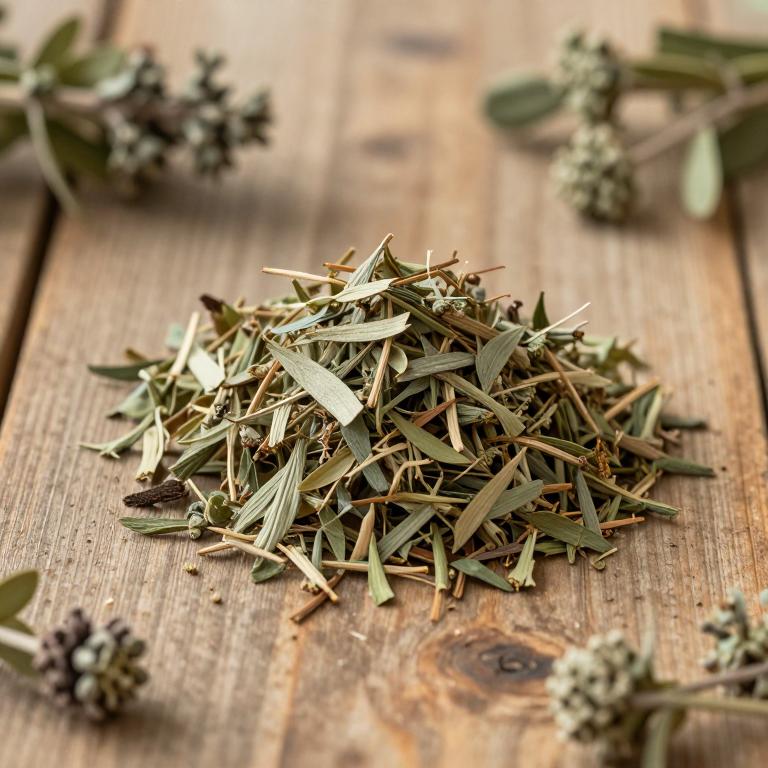
Phlomis cashmeriana, scientifically known as Phlomis cashmeriana, is a resilient perennial herb native to the Himalayan regions. Renowned for its velvety foliage and yellow blooms, this medicinal plant is deeply embedded in traditional healing practices, valued primarily for its potent anti-inflammatory, antimicrobial, and antioxidant properties in herbal medicine.
- Family
- Lamiaceae
- Native range
- Europe
- Parts used
- Not available
- Common names
- Not available
- Scientific synonyms
- Phlomis Dichroa
Names and Synonyms
Scientific Names
Accepted name
Phlomis cashmerianaSynonyms
- Phlomis dichroa
Regional and Traditional Names
German:
- Kaschmir-Brandkraut
- Kaschmir-Brandkraut
Sources: Wikidata, Catalogue of Life
Taxonomical Classification
This plant, known scientifically as Phlomis cashmeriana, belongs to the kingdom Plantae and the phylum Streptophyta. Within the class Equisetopsida and subclass Magnoliidae, it is classified under the order Lamiales and the family Lamiaceae. Ultimately, its taxonomic identity is defined by its membership in the genus Phlomis.
| Rank | Classification |
|---|---|
| Kingdom | Plantae |
| Phylum | Streptophyta |
| Class | Equisetopsida |
| Subclass | Magnoliidae |
| Order | Lamiales |
| Family | Lamiaceae |
| Genus | Phlomis |
Sources: The World Checklist of Vascular Plants (WCVP)
Distribution
This plant exhibits a wide-ranging distribution that spans several distinct geographic regions. In Middle Europe, its presence can be documented in Germany. Moving eastward, it is found across Central Asia within the borders of Tajikistan. Its range extends into Western Asia, specifically throughout the country of Afghanistan. Finally, the species is well-established in the Indian Subcontinent, appearing in both Pakistan and the West Himalaya.
| Region | Area |
|---|---|
| Middle Europe | Germany |
| Central Asia | Tadzhikistan |
| Western Asia | Afghanistan |
| Indian Subcontinent | Pakistan |
| Indian Subcontinent | West Himalaya |
Sources: The World Checklist of Vascular Plants (WCVP)
Botanical Identification
Ecology
The ecology of Phlomis cashmeriana is characterized by its specialized adaptation to high-altitude montane environments, where it occupies a distinct vertical niche within its habitat. This species thrives across a substantial altitudinal gradient, establishing itself in diverse terrain ranging from lower montane zones to high-elevation alpine reaches. Specifically, its distribution spans an elevational range from a minimum of 1300 m AMSL to a maximum of 3000 m AMSL. Within this range, the plant is adapted to the specific climatic pressures of the Himalayan or sub-Himalayan regions, including varying levels of solar radiation, temperature fluctuations, and seasonal moisture availability typical of these mid-to-high altitude ecosystems.
- Elevational range max:
- 3000 m AMSL
- Elevational range min:
- 1300 m AMSL
Life history
The life history of Phlomis cashmeriana is characterized by its classification as a chamaephyte, a life form where the majority of the plant's regenerative buds are located close to or just above the soil surface, allowing it to survive environmental stressors through low-growing structural adaptations. This growth habit enables the species to thrive in its specific ecological niche by minimizing exposure to harsh climatic conditions while maintaining a perennial presence. As a member of the Lamiaceae family, its developmental cycle involves establishing a robust perennial structure that can withstand seasonal fluctuations, utilizing its protected buds to re-emerge during favorable growing periods. The plant's life cycle is closely tied to its ability to navigate its habitat through these specialized vegetative strategies, ensuring long-term survival and reproductive success within its native range.
- Life form :
- chamaephyte
Morphology
The morphology of Phlomis cashmeriaana is characterized by its growth habit as a self-supporting plant, as it functions as a self-supporting climber rather than relying on external structures for vertical ascent. It is an independent organism that does not exhibit parasitic behavior, functioning as an independent species without any nutritional dependence on a host. Furthermore, the plant is strictly terrestrial in its ecological niche, lacking any epiphytic tendencies and instead establishing itself firmly within the soil substrate.
- Climber :
- self-supporting
- Epiphyte :
- terrestrial
- Parasite :
- independent
Sources: Global Inventory of Floras and Traits (GIFT)
Chemicals
Phlomis cashmeriana has 8 reported phytochemicals identified across 0 scientific publications and several other databases. The most consistently reported chemicals include Acutilobin, CATECHIN, Esters, TFC, TPC.
| Chemical | Supporting sources | Consensus |
|---|---|---|
| Acutilobin | 1 supporting sources | ★☆☆☆☆ |
| CATECHIN | 1 supporting sources | ★☆☆☆☆ |
| Esters | 1 supporting sources | ★☆☆☆☆ |
| TFC | 1 supporting sources | ★☆☆☆☆ |
| TPC | 1 supporting sources | ★☆☆☆☆ |
| Terpenoids | 1 supporting sources | ★☆☆☆☆ |
| alcohol | 1 supporting sources | ★☆☆☆☆ |
| kaempferol | 1 supporting sources | ★☆☆☆☆ |
Acutilobin
- Environmental monitoring and assessment
CATECHIN
- Environmental monitoring and assessment
Esters
- Heliyon
TFC
- Heliyon
TPC
- Heliyon
Terpenoids
- Heliyon
alcohol
- Heliyon
kaempferol
- Environmental monitoring and assessment
Activities
Phlomis cashmeriana has 1 reported activities identified across 0 scientific publications and several other databases. The most consistently reported activities include Antibacterial.
| Activity | Supporting sources | Consensus |
|---|---|---|
| Antibacterial | 1 supporting sources | ★☆☆☆☆ |
Antibacterial
- Heliyon
Conditions
Phlomis cashmeriana has 3 reported investigations on conditions identified across 0 scientific publications and several other databases. The most consistently reported conditions include E. coli, free radicals, oxidative stress.
| Condition | Supporting sources | Consensus |
|---|---|---|
| E. coli | 1 supporting sources | ★☆☆☆☆ |
| Free radicals | 1 supporting sources | ★☆☆☆☆ |
| Oxidative stress | 1 supporting sources | ★☆☆☆☆ |
E. coli
- Heliyon
Free radicals
- Environmental monitoring and assessment
Oxidative stress
- Environmental monitoring and assessment