Crystal Lampwick
Phlomis bruguieri · Accepted scientific name
Scientific literature: Very Sparse (9 studies) · ★☆☆☆☆
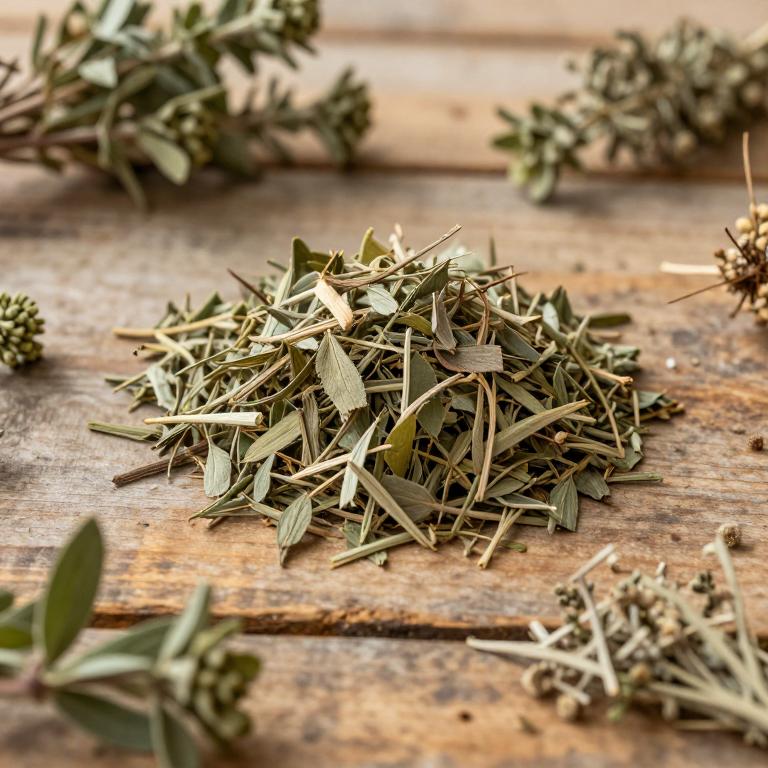
Crystal Lampwick, scientifically known as Phlomis bruguieri, is a resilient Mediterranean shrub celebrated for its striking architectural form and medicinal potential. Characterized by velvety, silver-green foliage and vibrant yellow blooms, this hardy perennial offers therapeutic properties, making it a valuable subject in ethnobotanical studies and traditional herbal practices.
- Family
- Lamiaceae
- Native range
- Asia-Temperate
- Parts used
- Not available
- Common names
- Crystal Lampwick
- Scientific synonyms
- Not available
Names and Synonyms
Common Names
- Crystal Lampwick
Scientific Names
Accepted name
Phlomis bruguieriSources: Wikidata, Catalogue of Life
Taxonomical Classification
This plant belongs to the kingdom Plantae and the phylum Streptophyta, falling under the class Equisetopsida and subclass Magnoliidae. It is further classified within the order Lamiales and the family Lamiaceae. Finally, it is identified by the genus Phlomis.
| Rank | Classification |
|---|---|
| Kingdom | Plantae |
| Phylum | Streptophyta |
| Class | Equisetopsida |
| Subclass | Magnoliidae |
| Order | Lamiales |
| Family | Lamiaceae |
| Genus | Phlomis |
Sources: The World Checklist of Vascular Plants (WCVP)
Distribution
This plant is primarily distributed across the diverse landscapes of Western Asia. Its natural range encompasses several key countries within this specific geographic region. Specifically, it can be found growing in the territories of Iran and Iraq. Furthermore, the species is widely distributed throughout the Lebanon-Syria border region. Finally, its presence is well-documented across the various terrains of Türkiye.
| Region | Area |
|---|---|
| Western Asia | Iran |
| Western Asia | Iraq |
| Western Asia | Lebanon-Syria |
| Western Asia | Türkiye |
Sources: The World Checklist of Vascular Plants (WCVP)
Botanical Identification
Life history
The life history of Phlomis bruguieri is characterized by its classification as a chamaephyte, a growth form that allows it to thrive in harsh, open Mediterranean environments. Specifically, its life strategy aligns with the chamaephyte category within both the nanophanerophyte/phanerophyte/chamaephyte/hemicryptophyte/geophyte/hydrophyte/helophyte/therophyte/lithophyte spectrum and the phanerophyte/chamaephyte/hemicryptophyte/cryptophyte/therophyte classification system. As a chamaephyte, the plant maintains its perennating buds close to the soil surface, often protected by low-growing woody or herbaceous structures. This life history enables it to withstand seasonal temperature fluctuations and varying moisture availability, utilizing its compact stature to minimize exposure to desiccating winds while effectively managing its reproductive cycle and resource allocation within its ecological niche.
- Life form :
- chamaephyte
Morphology
The morphology of Phlomis bruguieri is characterized by its robust, upright growth habit, functioning as a self-supporting plant that does not rely on external structures for verticality. As an independent organism, it lacks any parasitic tendencies, maintaining its own physiological processes without host dependency. Furthermore, it is strictly terrestrial in its ecological niche, growing directly in the soil rather than functioning as an epiphyte.
- Climber :
- self-supporting
- Epiphyte :
- terrestrial
- Parasite :
- independent
Sources: Global Inventory of Floras and Traits (GIFT)
Chemicals
Phlomis bruguieri has 9 reported phytochemicals identified across 0 scientific publications and several other databases. The most consistently reported chemicals include Chrysoeriol, ERIODICTYOL, Rhamnetin, Verbascoside, apigenin.
| Chemical | Supporting sources | Consensus |
|---|---|---|
| Chrysoeriol | 1 supporting sources | ★☆☆☆☆ |
| ERIODICTYOL | 1 supporting sources | ★☆☆☆☆ |
| Rhamnetin | 1 supporting sources | ★☆☆☆☆ |
| Verbascoside | 1 supporting sources | ★☆☆☆☆ |
| apigenin | 1 supporting sources | ★☆☆☆☆ |
| dimethoxyflavanone | 1 supporting sources | ★☆☆☆☆ |
| kaempferol | 1 supporting sources | ★☆☆☆☆ |
| luteolin | 1 supporting sources | ★☆☆☆☆ |
| naringenin | 1 supporting sources | ★☆☆☆☆ |
Chrysoeriol
- Phytochemical analysis : PCA
ERIODICTYOL
- Phytochemical analysis : PCA
Rhamnetin
- Phytochemical analysis : PCA
Verbascoside
- Daru : journal of Faculty of Pharmacy, Tehran University of Medical Sciences
apigenin
- Phytochemical analysis : PCA
dimethoxyflavanone
- Phytochemical analysis : PCA
kaempferol
- Phytochemical analysis : PCA
luteolin
- Phytochemical analysis : PCA
naringenin
- Phytochemical analysis : PCA