Phlomis brachyodon
Phlomis brachyodon · Accepted scientific name
Scientific literature: Very Sparse (1 studies) · ★☆☆☆☆
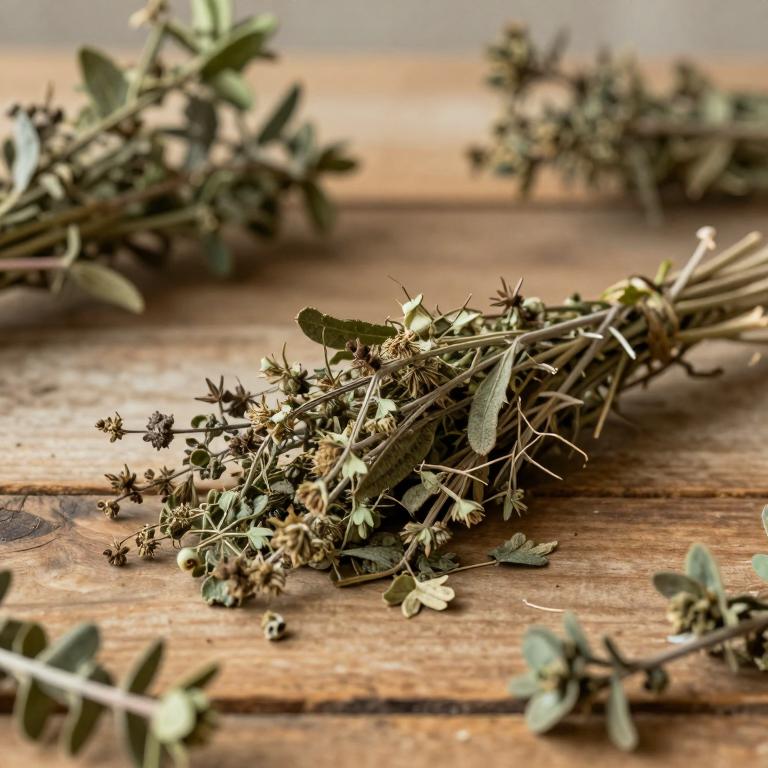
Scientifically known as Phlomis brachyodon, is a resilient perennial herb belonging to the Lamiaceae family. Native to arid Mediterranean landscapes, this aromatic plant is distinguished by its unique, densely flowering spikes. Traditionally valued in folk medicine, it holds significant potential for pharmacological research due to its diverse bioactive compounds.
- Family
- Not available
- Native range
- Asia-Temperate
- Parts used
- Leaf
- Common names
- Not available
- Scientific synonyms
- Not available
Names and Synonyms
Scientific Names
Accepted name
Phlomis brachyodonDistribution
This plant is primarily distributed across specific regions of Western Asia and the Arabian Peninsula. Within Western Asia, it can be found growing in the territories of Lebanon and Syria. Its presence also extends into the region of Palestine. Furthermore, the species reaches into the Arabian Peninsula, specifically within Saudi Arabia. These locations define the known natural range of this medicinal species.
| Region | Area |
|---|---|
| Western Asia | Lebanon-Syria |
| Western Asia | Palestine |
| Arabian Peninsula | Saudi Arabia |
Sources: The World Checklist of Vascular Plants (WCVP)
Botanical Identification
Life history
The life history of Phlomis brachyodon is characterized by its classification as a chamaephyte, a growth form that dictates its survival strategy and physical structure within its ecosystem. Specifically, it functions as a chamaephyte in both its primary life form designation (Life_form_1) and its secondary ecological classification (Life_form_2). This indicates that its perennating buds are located close to the soil surface, often just above it, allowing the plant to endure environmental stressors such as temperature fluctuations or grazing by remaining low to the ground. By maintaining its regenerative organs at this level, the plant can effectively exploit available resources while minimizing exposure to harsh external conditions, ensuring its persistence through various seasonal cycles.
- Life form :
- chamaephyte
Morphology
The morphology of Phlomis brachyodon is characterized by a growth form that primarily functions as a shrub or subshrub, exhibiting a woody structure that provides stability. It is a terrestrial plant, lacking aquatic or semiaquatic tendencies, and it functions as an independent organism rather than a parasite or an epiphyte. In terms of its physical habit, the plant is self-supporting and does not possess climbing mechanisms, maintaining a sturdy, upright presence in its natural habitat.
- Aquatic :
- terrestrial
- Climber :
- self-supporting
- Epiphyte :
- terrestrial
- Growth form :
- shrub
- Growth form :
- subshrub
- Parasite :
- independent
- Woodiness :
- woody
Reproduction
Reproduction in Phlomis brachyodon is facilitated through the production of seeds that exhibit highly specific morphological characteristics regarding their weight. The reproductive success of the species is closely tied to these seed metrics, which show very little variation across individuals. The seed mass follows a narrow distribution, with a recorded mean value of 0.013715 g. This consistency is further evidenced by the minimal range between the smallest and largest seeds, where the minimum seed mass is measured at 0.01323 g and the maximum seed mass reaches 0.0142 g. This uniformity in seed mass suggests a highly stabilized reproductive strategy within the species.
- Seed mass max:
- 0.0142 g
- Seed mass mean:
- 0.013715 g
- Seed mass min:
- 0.01323 g
Sources: Global Inventory of Floras and Traits (GIFT)
Plant Parts
Phlomis brachyodon has 1 reported plant parts identified across 1 scientific publications and several other databases that are studied for medicinal purposes. The most consistently reported plant part include leaf.
| Plant part | Supporting sources | Consensus |
|---|---|---|
| Leaf | 1 supporting sources | ★☆☆☆☆ |
Leaf
- BMC complementary and alternative medicine
Preparations
Phlomis brachyodon has 1 reported preparations identified across 1 scientific publications and several other databases. The most consistently reported preparations include leaves.
| Preparation | Supporting sources | Consensus |
|---|---|---|
| Leaves | 1 supporting sources | ★☆☆☆☆ |
Leaves
- BMC complementary and alternative medicine