Phlomis armeniaca
Phlomis armeniaca · Accepted scientific name
Scientific literature: Very Sparse (13 studies) · ★☆☆☆☆
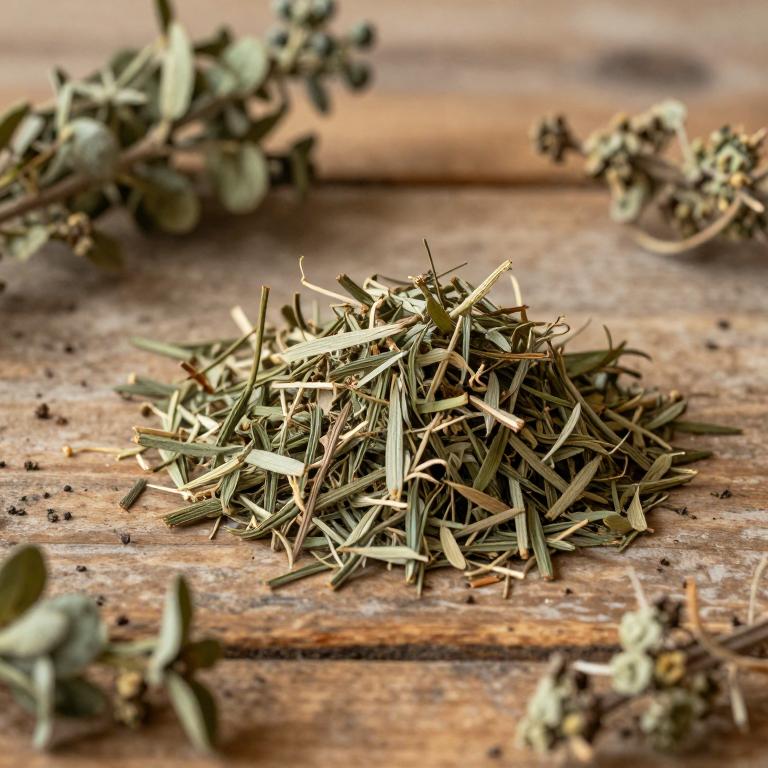
, scientifically known as Phlomis armeniaca, is a resilient perennial herb native to the rugged landscapes of Armenia. Renowned for its velvety foliage and striking yellow flowers, this medicinal plant is traditionally valued in folk medicine for its potential anti-inflammatory, antimicrobial, and antioxidant properties, offering diverse therapeutic possibilities.
- Family
- Lamiaceae
- Native range
- Europe
- Parts used
- Not available
- Common names
- Not available
- Scientific synonyms
- Phlomis Nympharum
Names and Synonyms
Scientific Names
Accepted name
Phlomis armeniacaSynonyms
- Phlomis nympharum
Sources: Wikidata, Catalogue of Life
Taxonomical Classification
This plant belongs to the kingdom Plantae and the phylum Streptophyta, falling under the class Equisetopsida and subclass Magnoliidae. It is classified within the order Lamiales and the family Lamiaceae. Finally, it is identified by the genus Phlomis.
| Rank | Classification |
|---|---|
| Kingdom | Plantae |
| Phylum | Streptophyta |
| Class | Equisetopsida |
| Subclass | Magnoliidae |
| Order | Lamiales |
| Family | Lamiaceae |
| Genus | Phlomis |
Sources: The World Checklist of Vascular Plants (WCVP)
Distribution
This plant exhibits a specific geographical distribution that spans across several distinct regions. Within Middle Europe, its presence can be identified in Germany. Moving eastward, the species is also found throughout the Caucasus region, specifically within the Transcaucasus. Additionally, it is widely distributed across Western Asia, with a notable presence in Türkiye. These locations highlight the diverse environmental range inhabited by Phlomis armeniacowa.
| Region | Area |
|---|---|
| Middle Europe | Germany |
| Caucasus | Transcaucasus |
| Western Asia | Türkiye |
Sources: The World Checklist of Vascular Plants (WCVP)
Botanical Identification
Life history
The life history of Phlomis armeniacа is characterized by its status as a perennial plant, allowing it to persist through multiple growing seasons and establish a stable presence within its ecological niche. In terms of its structural growth strategy, the species functions as a chamaephyte, meaning its perennating buds are located close to the soil surface, often protected by leaf litter or the substrate. This life form enables the plant to withstand environmental fluctuations while maintaining the capacity for seasonal regrowth. Over its lifespan, the plant cycles through stages of vegetative development and reproductive phases, utilizing its perennial nature to endure varying climatic conditions common to its habitat.
- Life form :
- chamaephyte
- Lifecycle :
- perennial
Morphology
The morphology of Phlomis armeniacca is characterized by its growth form as a herb, displaying a non-woody structure throughout its vegetative parts. It functions as an independent organism, exhibiting no parasitic tendencies, and maintains a terrestrial habit rather than being epiphytic. As a self-supporting plant, it does not possess any climbing mechanisms, whether obligatory or facultative, and relies on its own structural integrity to maintain an upright presence in its natural habitat.
- Climber :
- self-supporting
- Epiphyte :
- terrestrial
- Growth form :
- herb
- Parasite :
- independent
- Woodiness :
- non-woody
Reproduction
Reproduction in Phlomis armeniacca is facilitated through the production of seeds, which serve as the primary mechanism for genetic dispersal and colonization. The reproductive success of the species is closely linked to the physical characteristics of its seeds, which exhibit a highly consistent morphology. Detailed quantitative analysis of the seed characteristics reveals that the seed mass is remarkably uniform, with a recorded mean mass of 0.0077 g. This uniformity is further evidenced by the fact that both the maximum and minimum measured seed mass values are identical at 0.0077 g, indicating a lack of significant variance in weight within the sampled population. This precise and stable seed mass is a critical factor in the plant's reproductive strategy, influencing dispersal patterns and subsequent seedling establishment in its natural habitat.
- Seed mass mean:
- 0.0077 g
Sources: Global Inventory of Floras and Traits (GIFT)
Chemicals
Phlomis armeniaca has 10 reported phytochemicals identified across 0 scientific publications and several other databases. The most consistently reported chemicals include Betulalbuside A, Forsythoside B, Germacrene D, Hexahydrofarnesyl acetone, Leucosceptoside A.
| Chemical | Supporting sources | Consensus |
|---|---|---|
| Betulalbuside A | 1 supporting sources | ★☆☆☆☆ |
| Forsythoside B | 1 supporting sources | ★☆☆☆☆ |
| Germacrene D | 1 supporting sources | ★☆☆☆☆ |
| Hexahydrofarnesyl acetone | 1 supporting sources | ★☆☆☆☆ |
| Leucosceptoside A | 1 supporting sources | ★☆☆☆☆ |
| Linalool | 1 supporting sources | ★☆☆☆☆ |
| Martynoside | 1 supporting sources | ★☆☆☆☆ |
| Phlinoside B | 1 supporting sources | ★☆☆☆☆ |
| Phlinoside C | 1 supporting sources | ★☆☆☆☆ |
| n-Hexadecanoic acid | 1 supporting sources | ★☆☆☆☆ |
Betulalbuside A
- Biological & pharmaceutical bulletin
Forsythoside B
- Biological & pharmaceutical bulletin
Germacrene D
- Food science and biotechnology
Hexahydrofarnesyl acetone
- Food science and biotechnology
Leucosceptoside A
- Biological & pharmaceutical bulletin
Linalool
- Food science and biotechnology
Martynoside
- Biological & pharmaceutical bulletin
Phlinoside B
- Biological & pharmaceutical bulletin
Phlinoside C
- Biological & pharmaceutical bulletin
n-Hexadecanoic acid
- Food science and biotechnology
Activities
Phlomis armeniaca has 3 reported activities identified across 0 scientific publications and several other databases. The most consistently reported activities include Antioxidant, Cytostatic, Cytotoxic.
| Activity | Supporting sources | Consensus |
|---|---|---|
| Antioxidant | 1 supporting sources | ★☆☆☆☆ |
| Cytostatic | 1 supporting sources | ★☆☆☆☆ |
| Cytotoxic | 1 supporting sources | ★☆☆☆☆ |
Antioxidant
- Food science and biotechnology
Cytostatic
- Biological & pharmaceutical bulletin
Cytotoxic
- Biological & pharmaceutical bulletin
Preparations
Phlomis armeniaca has 1 reported preparations identified across 0 scientific publications and several other databases. The most consistently reported preparations include methanolic extracts.
| Preparation | Supporting sources | Consensus |
|---|---|---|
| Methanolic extracts | 1 supporting sources | ★☆☆☆☆ |
Methanolic extracts
- Biological & pharmaceutical bulletin