golden polypod
Phlebodium decumanum · Accepted scientific name
Scientific literature: Very Sparse (5 studies) · ★☆☆☆☆
Golden polypod, scientifically known as Phlebodium decumanum, is a resilient fern celebrated for its diverse therapeutic potential. Traditionally utilized in various cultures, this plant possesses bioactive compounds with antioxidant and anti-inflammatory properties. It serves as a fascinating subject in ethnobotany, offering promising insights into natural medicinal applications.
- Family
- Polypodiaceae
- Native range
- Northern America
- Parts used
- Not available
- Common names
- Golden Polypod
- Scientific synonyms
- Chrysopteris Multiserialis · Chrysopteris Decumana · 7 more
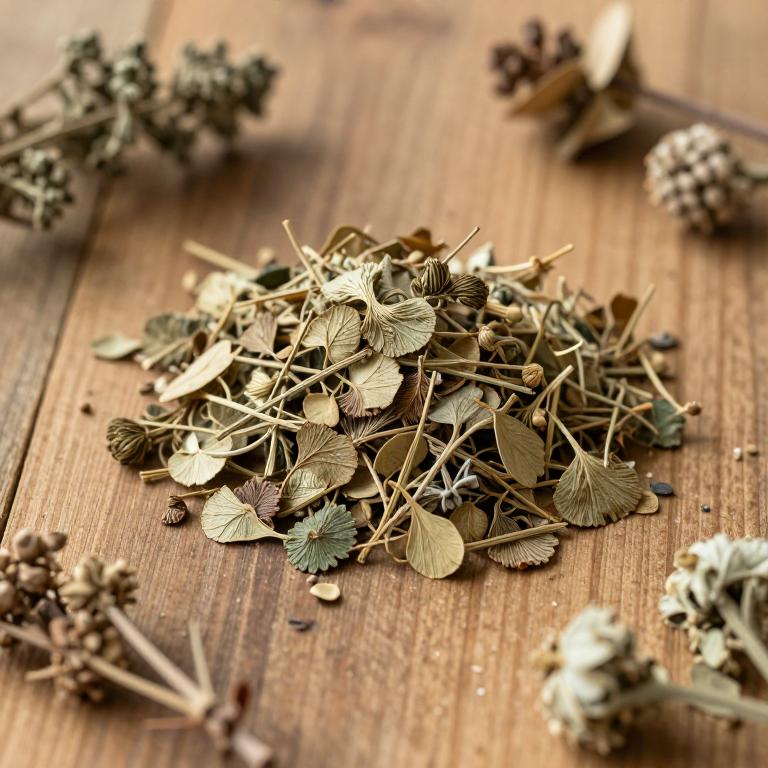
Names and Synonyms
Common Names
- golden polypod
Scientific Names
Accepted name
Phlebodium decumanumSynonyms
- Chrysopteris multiserialis
- Chrysopteris decumana
- Phlebodium dictyocallis
- Campyloneurum decumanum
- Pleopeltis decumana
- Polypodium dictyocallis
- Polypodium decumanum
- Phlebodium multiseriale
- Chrysopteris dictyocallis
Regional and Traditional Names
Spanish:
- Helecho azul
Sources: Wikidata, Catalogue of Life
Taxonomical Classification
This plant belongs to the kingdom Plantae and is classified under the phylum Streptophyta within the class Equisetopsida. It is further organized into the subclass Polypodiinae and the order Polypodiales, falling under the family Polypodiaceae. Ultimately, its taxonomic identity is defined by the genus Phlebodium.
| Rank | Classification |
|---|---|
| Kingdom | Plantae |
| Phylum | Streptophyta |
| Class | Equisetopsida |
| Subclass | Polypodiinae |
| Order | Polypodiales |
| Family | Polypodiaceae |
| Genus | Phlebodium |
Sources: The World Checklist of Vascular Plants (WCVP)
Distribution
This plant exhibits a broad presence across several regions in Mexico, including the Northeast and the Gulf areas. It is also widely distributed throughout the Southwest and Southeast portions of the country. Beyond the borders of Mexico, its range extends into the tropical landscapes of Central America. Specifically, the species can be found growing within the territory of Belize. This diverse distribution highlights the plant's ability to inhabit various ecological zones across these regions.
| Region | Area |
|---|---|
| Mexico | Mexico Northeast |
| Mexico | Mexico Gulf |
| Mexico | Mexico Southwest |
| Mexico | Mexico Southeast |
| Central America | Belize |
| Central America | Costa Rica |
| Central America | Guatemala |
| Central America | Honduras |
| Caribbean | Dominican Republic |
| Caribbean | Jamaica |
Sources: The World Checklist of Vascular Plants (WCVP)
Botanical Identification
Ecology
The ecology of Phlebodium decumanum is characterized by its presence across a diverse array of Brazilian biomes and forest types, including Cerrado (latu sensu), Floresta Estacional Perenifólia, Floresta Estacional Semidecidual, Floresta Ombrófila (also known as Floresta Pluvial), and Floresta Ombrófila Mista. This plant demonstrates significant adaptability to varying topographical settings, occupying an extensive elevational range that begins at sea level (0 m AMSL) and extends up to a maximum altitude of 1200 m AMSL.
- Elevational range max:
- 1200 m AMSL
- Elevational range min:
- 0 m AMSL
- Habitat :
- Cerrado (lato sensu), Floresta Estacional Perenifólia, Floresta Estacional Semidecidual, Floresta Ombrófila (= Floresta Pluvial), Floresta Ombrófila Mista
Life history
The life history of Phlebodium decumanum is characterized by its status as a perennial organism, allowing it to persist in its environment through multiple growing seasons. As a long-lived epiphyte, it establishes itself on host trees or rocky substrates, where it undergoes a continuous cycle of growth and maturation. Its developmental process involves the gradual expansion of its creeping rhizomes, which serve as the structural foundation for the plant's long-term survival. These rhizomes facilitate vegetative spreading and nutrient storage, ensuring the plant can withstand fluctuations in moisture and resource availability. Through this perennial lifecycle, Phlebodium decumanum maintains a stable presence within its ecological niche, periodically producing fronds and participating in reproductive cycles that contribute to its long-term persistence and colonization of new habitats.
- Lifecycle :
- perennial
Morphology
The morphology of Phlebodium decumanum is characterized by its growth form as a non-woody herb, specifically categorized as a forb. It functions as an obligatory holoepiphyte, meaning it relies on host structures for support throughout its life cycle, yet it remains an independent organism rather than a parasite. Although it can exist in terrestrial environments, its ecological niche is primarily defined by its epiphytic nature. The plant exhibits a self-supporting climbing habit, which allows it to occupy various strata without the need for tendrils or specialized climbing organs typical of vines or lianas. Its structural development is entirely non-woody, maintaining a flexible and herbaceous composition that facilitates its survival in the diverse habitats ranging from semiaquatic to terrestrial settings.
- Aquatic :
- terrestrial
- Climber :
- self-supporting
- Epiphyte :
- holoepiphyte
- Epiphyte :
- obligatory
- Growth form :
- herb
- Growth form :
- forb
- Parasite :
- independent
- Woodiness :
- non-woody
Sources: Global Inventory of Floras and Traits (GIFT)
Chemicals
Phlebodium decumanum has 5 reported phytochemicals identified across 0 scientific publications and several other databases. The most consistently reported chemicals include 8(r)-hydroxylinoleic acid, Linoleic, Polyunsaturated Fatty Acids (PUFAs), adenosine, arachidonic acid.
| Chemical | Supporting sources | Consensus |
|---|---|---|
| 8(r)-hydroxylinoleic acid | 1 supporting sources | ★☆☆☆☆ |
| Linoleic | 1 supporting sources | ★☆☆☆☆ |
| Polyunsaturated Fatty Acids (PUFAs) | 1 supporting sources | ★☆☆☆☆ |
| adenosine | 1 supporting sources | ★☆☆☆☆ |
| arachidonic acid | 1 supporting sources | ★☆☆☆☆ |
8(r)-hydroxylinoleic acid
- Prostaglandins, leukotrienes, and essential fatty acids
Linoleic
- Prostaglandins, leukotrienes, and essential fatty acids
Polyunsaturated Fatty Acids (PUFAs)
- Prostaglandins, leukotrienes, and essential fatty acids
adenosine
- Planta medica
arachidonic acid
- Prostaglandins, leukotrienes, and essential fatty acids
Preparations
Phlebodium decumanum has 4 reported preparations identified across 0 scientific publications and several other databases. The most consistently reported preparations include Calaguala, calaguala extract, extract, standardized water soluble fraction.
| Preparation | Supporting sources | Consensus |
|---|---|---|
| Calaguala | 1 supporting sources | ★☆☆☆☆ |
| Calaguala extract | 1 supporting sources | ★☆☆☆☆ |
| Extract | 1 supporting sources | ★☆☆☆☆ |
| Standardized water soluble fraction | 1 supporting sources | ★☆☆☆☆ |
Calaguala
- Planta medica
Calaguala extract
- The Journal of pharmacy and pharmacology
Extract
- Planta medica
Standardized water soluble fraction
- International immunopharmacology