Philodendron megalophyllum
Philodendron megalophyllum · Accepted scientific name
Scientific literature: Very Sparse (3 studies) · ★☆☆☆☆
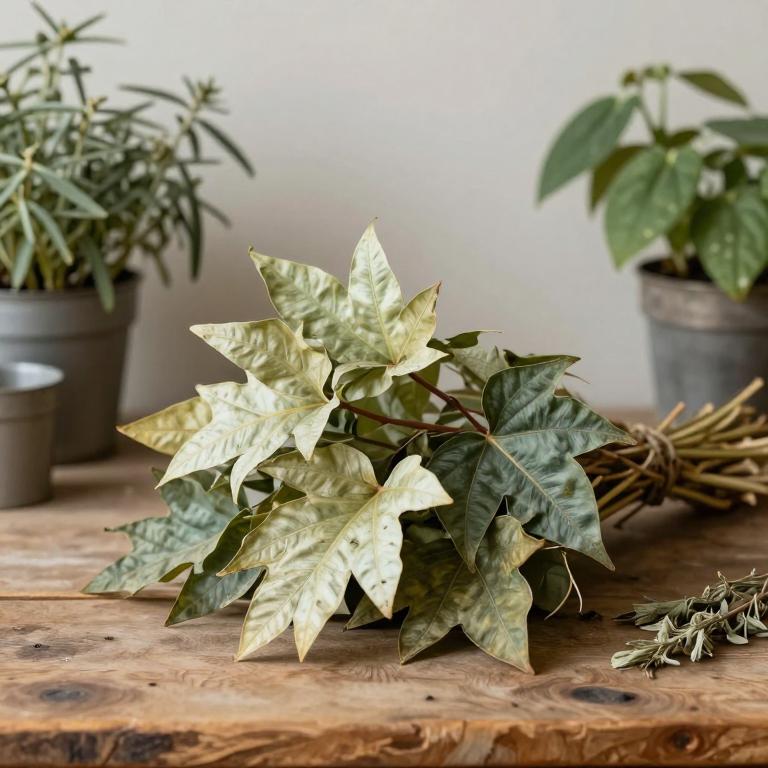
, scientifically known as Philodendron megalophyllum, is a captivating tropical climber prized for its lush, heart-shaped foliage. Native to rainforest environments, this plant is celebrated in botanical circles for its ornamental beauty. While primarily used as a decorative specimen, its unique morphology offers fascinating insights into tropical biodiversity.
- Family
- Araceae
- Native range
- Southern America
- Parts used
- Not available
- Common names
- Not available
- Scientific synonyms
- Anthurium Stahelii
Names and Synonyms
Scientific Names
Accepted name
Philodendron megalophyllumSynonyms
- Anthurium stahelii
Sources: Wikidata
Taxonomical Classification
This plant belongs to the kingdom Plantae and the phylum Streptophyta, falling under the class Equisetopsida and subclass Magnoliidae. Within the order Alismatales and the family Araceae, it is classified under the genus Philodendron. Specifically, its taxonomic identity is defined as Philodendron megalophyllum.
| Rank | Classification |
|---|---|
| Kingdom | Plantae |
| Phylum | Streptophyta |
| Class | Equisetopsida |
| Subclass | Magnoliidae |
| Order | Alismatales |
| Family | Araceae |
| Genus | Philodendron |
Sources: The World Checklist of Vascular Plants (WCVP)
Distribution
This plant is primarily distributed across several distinct regions within the tropical Americas. In the Caribbean, its presence is specifically noted in the islands of Trinidad and Tobago. Moving to the mainland, it can be found throughout various parts of Northern South America. Its range extends across the territories of Guyana, Suriname, and French Guiana. Additionally, the species is documented to inhabit the diverse landscapes of Venezuela.
| Region | Area |
|---|---|
| Caribbean | Trinidad-Tobago |
| Northern South America | French Guiana |
| Northern South America | Guyana |
| Northern South America | Suriname |
| Northern South America | Venezuela |
| Western South America | Bolivia |
| Western South America | Colombia |
| Western South America | Ecuador |
| Western South America | Peru |
| Brazil | Brazil Southeast |
Sources: The World Checklist of Vascular Plants (WCVP)
Botanical Identification
Ecology
The ecology of Philodendron megalophyllum is defined by its presence within specific forest ecosystems and a restricted altitudinal niche. This species thrives within diverse Amazonian forest structures, specifically inhabiting Floresta de Igapó, Floresta de Terra Firme, and Floresta de Várzea. Its distribution is confined to a narrow elevational range, occurring between a minimum of 350 m AMSL and a maximum of 400 m AMSL.
- Elevational range max:
- 400 m AMSL
- Elevational range min:
- 350 m AMSL
- Habitat :
- Floresta de Igapó, Floresta de Terra Firme, Floresta de Várzea
Morphology
The morphology of Philodendron megalophyllum is characterized by its growth form as a non-woody herb. It functions as a hemiepiphyte, exhibiting an obligatory epiphytic lifestyle during certain stages of its development, though it maintains a terrestrial presence. The plant acts as a self-supporting climber, possessing the structural capacity to ascend without being an obligatory vine or liana. In terms of its ecological niche and habitat, it exhibits a versatile range of moisture tolerances, transitioning between aquatic, semiaquatic, and terrestrial environments. Furthermore, it is an independent organism, functioning without any parasitic relationship to its host.
- Aquatic :
- terrestrial
- Climber :
- self-supporting
- Epiphyte :
- hemiepiphyte
- Epiphyte :
- obligatory
- Growth form :
- herb
- Parasite :
- independent
- Woodiness :
- non-woody
Sources: Global Inventory of Floras and Traits (GIFT)
Chemicals
Philodendron megalophyllum has 2 reported phytochemicals identified across 0 scientific publications and several other databases. The most consistently reported chemicals include Condensed Tannins, Hydrolyzable Tannins.
| Chemical | Supporting sources | Consensus |
|---|---|---|
| Condensed Tannins | 1 supporting sources | ★☆☆☆☆ |
| Hydrolyzable Tannins | 1 supporting sources | ★☆☆☆☆ |
Condensed Tannins
- Journal of ethnopharmacology
Hydrolyzable Tannins
- Journal of ethnopharmacology
Conditions
Philodendron megalophyllum has 1 reported investigations on conditions identified across 0 scientific publications and several other databases. The most consistently reported conditions include snakebites.
| Condition | Supporting sources | Consensus |
|---|---|---|
| Snakebites | 1 supporting sources | ★☆☆☆☆ |
Snakebites
- Journal of ethnopharmacology
Preparations
Philodendron megalophyllum has 1 reported preparations identified across 0 scientific publications and several other databases. The most consistently reported preparations include aqueous extracts.
| Preparation | Supporting sources | Consensus |
|---|---|---|
| Aqueous extracts | 1 supporting sources | ★☆☆☆☆ |
Aqueous extracts
- Journal of ethnopharmacology