Green Olive Tree
Phillyrea latifolia · Accepted scientific name
Scientific literature: Very Sparse (30 studies) · ★☆☆☆☆
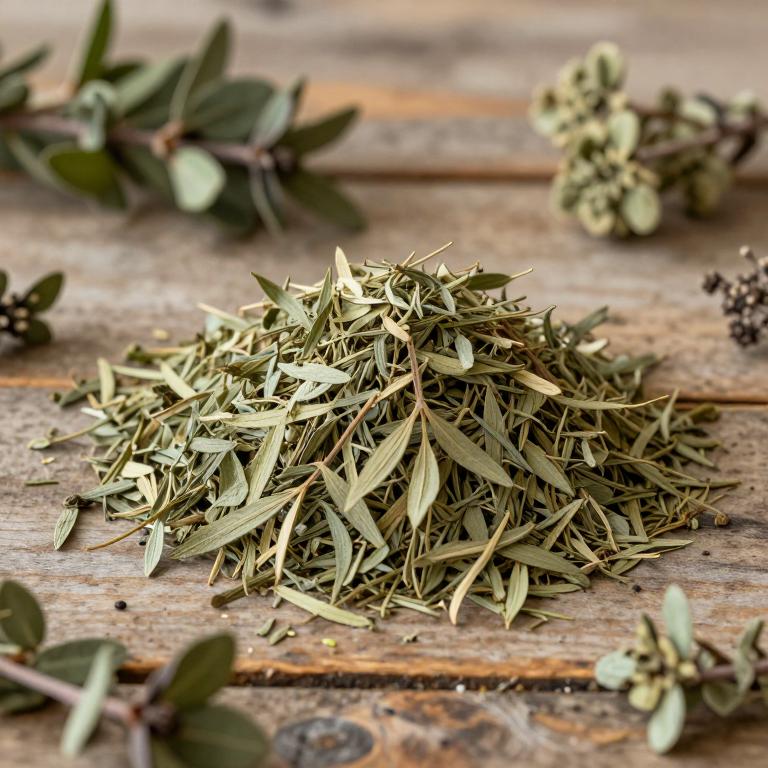
Green Olive Tree, scientifically known as Phillyrea latifolia, is a resilient evergreen shrub native to the Mediterranean region. Renowned for its leathery leaves and small white flowers, this hardy plant thrives in rocky soils. It holds significant ethnobotanical value, often utilized in traditional remedies for its diverse medicinal properties.
- Family
- Oleaceae
- Native range
- Europe
- Parts used
- Leaf
- Common names
- Green Olive Tree
- Scientific synonyms
- Olea Latifolia · Phillyrea Angustifolia Subsp. Latifolia · 179 more
Names and Synonyms
Common Names
- Green Olive Tree
Scientific Names
Accepted name
Phillyrea latifoliaSynonyms
- Olea latifolia
- Phillyrea angustifolia subsp. latifolia
- Phillyrea angustifolia subsp. media
- Phillyrea latifolia subsp. media
- Phillyrea subangustifolia subsp. stricta
- Phillyrea subangustifolia subsp. virgata
- Phillyrea latifolia var. rodriguezii
- Phillyrea latifolia f. spinosa
- Phillyrea latifolia var. ilicifolia
- Phillyrea latifolia f. ilicifolia
- Phillyrea vulgaris var. latifolia
- Phillyrea latifolia f. rotundifolia
- Phillyrea latifolia var. media
- Phillyrea latifolia subsp. stricta
- Phillyrea buxifolia
- Phillyrea latifolia f. pendula
- Phillyrea pendula
- Phillyrea colmeiroana
- Phillyrea racemosa
- Phillyrea quercifolia
- Phillyrea pedunculata
- Phillyrea prunellifolia-media
- Phillyrea subangustifolia subsp. rigoi
- Phillyrea subangustifolia subsp. alaternifolia
- Phillyrea subangustifolia subsp. sagarrae
- Phillyrea subangustifolia subsp. patxoti
- Phillyrea subangustifolia subsp. mezerifolia
- Phillyrea subangustifolia subsp. martonnei
- Phillyrea medianifolia subvar. stroblii
- Phillyrea medianifolia subsp. vayedana
- Phillyrea medianifolia var. corsica
- Phillyrea medianifolia subsp. jordanii
- Phillyrea medianifolia subsp. prunellifolia
- Phillyrea medianifolia subsp. heribaudii
- Phillyrea medianifolia subsp. aguilaris
- Phillyrea media var. buxifolia
- Phillyrea medianifolia subsp. caballeroi
- Phillyrea latifolia var. obliqua
- Phillyrea quercifolia subsp. floribunda
- Phillyrea quercifolia subsp. hickelis
- Phillyrea barceloi subsp. knochei
- Phillyrea barceloi subsp. marcetii
- Phillyrea barceloi subsp. moraudii
- Phillyrea barceloi subsp. flahaultiana
- Phillyrea cordifolia subsp. oblongifolia
- Phillyrea spinosa var. grandidentata
- Phillyrea pachyphylla subsp. augustinii
- Phillyrea subangustifolia subsp. vallisvidrerae
- Phillyrea medianifolia subsp. ilicifolia
- Phillyrea medianifolia subsp. allorgeana
- Phillyrea medianifolia subsp. verdagueri
- Phillyrea medianifolia subsp. danielis
- Phillyrea medianifolia var. anselmii
- Phillyrea medianifolia subsp. heracliana
- Phillyrea medianifolia subsp. dionysiana
- Phillyrea medianifolia subsp. paui
- Phillyrea medianifolia subsp. bercialis
- Phillyrea medianifolia subsp. timbalii
- Phillyrea medianifolia subsp. flichei
- Phillyrea medianifolia subsp. fernandii
- Phillyrea longifolia subsp. maireana
- Phillyrea longifolia subsp. andreuana
- Phillyrea longifolia subsp. salvadoris
- Phillyrea longifolia subsp. laguardae
- Phillyrea longifolia subsp. briquetii
- Phillyrea longifolia subsp. tournefortii
- Phillyrea cordifolia subsp. parlatorei
- Phillyrea media var. rodriguezii
- Phillyrea cordifolia subsp. vinyalsii
- Phillyrea cordifolia subsp. navasii
- Phillyrea latifolia subsp. daninii
- Phillyrea fontserei
- Phillyrea foliosa
- Phillyrea cadevallii
- Phillyrea divaricata
- Phillyrea barceloi
- Phillyrea oblongifolia
- Phillyrea major
- Phillyrea bolivaris
- Phillyrea aeolica
- Phillyrea arbutifolia
- Phillyrea ellipticifolia
- Phillyrea jahandiezii
- Phillyrea isabelis
- Phillyrea integrifolia
- Phillyrea barrandonis
- Phillyrea ilicifolia
- Phillyrea hybrida
- Phillyrea grandifolia
- Phillyrea media
- Phillyrea trabutii
- Phillyrea latifolia var. laevis
- Phillyrea latifolia var. buxifolia
- Phillyrea laevis
- Phillyrea media var. grandifolia
- Phillyrea cordifolia var. kebdanensis
- Phillyrea longifolia
- Phillyrea ligustrifolia
- Phillyrea latifolia var. castellana-media
- Phillyrea media var. ligustrifolia
- Phillyrea jordani-media
- Phillyrea caroli
- Phillyrea media var. virgata
- Phillyrea daveauana
- Phillyrea medianifolia f. majorifolia
- Phillyrea coriacea
- Phillyrea media var. pendula
- Phillyrea cordifolia
- Phillyrea medianifolia subsp. frondosa
- Phillyrea medianifolia
- Phillyrea media var. oleifolia
- Phillyrea medianifolia subsp. jorroi
- Phillyrea martini
- Phillyrea nerifolia-media
- Phillyrea obliqua
- Phillyrea latifolia var. spinosa
- Phillyrea angustifolia subsp. rodriguezii
- Phillyrea subangustifolia subsp. fontqueri
- Phillyrea latifolia subsp. rodriguezii
- Phillyrea subangustifolia subsp. microdonta
- Phillyrea medianifolia subsp. luciae
- Phillyrea medianifolia subsp. souliei
- Phillyrea variabilis
- Phillyrea medianifolia var. balearica
- Phillyrea pachyphylla
- Phillyrea medianifolia var. costei
- Phillyrea olleri
- Phillyrea medianifolia var. buxifolia
- Phillyrea subangustifolia
- Phillyrea stricta
- Phillyrea spinosa
- Phillyrea rubioana
- Phillyrea medianifolia subsp. montserratensis
- Phillyrea virgata
- Phillyrea medianifolia subsp. castellana
- Phillyrea ellipticifolia subsp. bordoyana
- Phillyrea valentina
- Phillyrea bolivaris subsp. foliosa
- Phillyrea oleifolia
- Phillyrea quercifolia subsp. xavieri
- Phillyrea obtusata
- Phillyrea cordifolia var. strobli
- Phillyrea laevis subsp. gastonis
- Phillyrea subangustifolia subsp. sudrei
- Phillyrea subangustifolia subsp. valdesulcata
- Phillyrea subangustifolia var. diazii
- Phillyrea subangustifolia subsp. cneorifolia
- Phillyrea subangustifolia var. oleastrifolia
- Phillyrea medianifolia subsp. neriifolia
- Phillyrea medianifolia subsp. crenatifolia
- Phillyrea medianifolia subsp. tortesii
- Phillyrea medianifolia subsp. maurorum
- Phillyrea longifolia subsp. pujiulae
- Phillyrea longifolia subsp. pardilloana
- Phillyrea longifolia subsp. degenii
- Phillyrea longifolia subsp. unamunoana
- Phillyrea longifolia subsp. loretii
- Phillyrea longifolia subsp. closiana
- Phillyrea longifolia subsp. laurifolia
- Phillyrea longifolia subsp. reynieri
- Phillyrea longifolia subsp. vidalii
- Phillyrea longifolia subsp. forestieri
- Phillyrea longifolia subsp. grandifolia
- Phillyrea cordifolia subsp. gaudiana
- Phillyrea cordifolia subsp. webbiana
- Phillyrea cordifolia subsp. burnatii
- Phillyrea cordifolia subsp. sanmiguelis
- Phillyrea cordifolia subsp. sallentii
- Phillyrea cordifolia subsp. puigii
- Phillyrea cordifolia subsp. rabassaletana
- Phillyrea cordifolia subsp. barrerae
- Phillyrea cordifolia subsp. fernandezii
- Phillyrea cordifolia subsp. gonzaleziana
- Phillyrea latifolia var. serrata
- Phillyrea latifolia var. integrifolia
- Phillyrea spinosa var. latifolia
- Phillyrea spinosa var. angustifolia
- Phillyrea latifolia f. buxifolia
- Phillyrea latifolia var. rotundifolia
- Phillyrea variabilis subsp. stricta
- Phillyrea variabilis var. latifolia
Regional and Traditional Names
Spanish:
- Labiérnago de hoja ancha
German:
- Breitblättrige Steinlinde
- Breitblaettrige Steinlinde
- Breitblättrige Steinlinde
French:
- Filaire a lages feuilles
- Filaire à feuilles larges
Sources: Wikidata, Catalogue of Life
Taxonomical Classification
This plant belongs to the kingdom Plantae within the phylum Streptophyta and the class Equisetopsida. Classified under the subclass Magnoliidae and the order Lamiales, it is a member of the Oleaceae family. Specifically, it is categorized under the genus Phillyrea.
| Rank | Classification |
|---|---|
| Kingdom | Plantae |
| Phylum | Streptophyta |
| Class | Equisetopsida |
| Subclass | Magnoliidae |
| Order | Lamiales |
| Family | Oleaceae |
| Genus | Phillyrea |
Sources: The World Checklist of Vascular Plants (WCVP)
Distribution
This plant is primarily distributed across several regions within Southwestern Europe. It can be found growing in the Balearic Islands, known as Baleares. Its presence extends to the islands of Corsica and Sardegna. Additionally, the species is documented within the territories of France. Finally, its geographical range includes the coastal areas of Portugal.
| Region | Area |
|---|---|
| Southwestern Europe | Baleares |
| Southwestern Europe | Corse |
| Southwestern Europe | France |
| Southwestern Europe | Portugal |
| Southwestern Europe | Sardegna |
| Southwestern Europe | Spain |
| Southeastern Europe | Albania |
| Southeastern Europe | Bulgaria |
| Southeastern Europe | Greece |
| Southeastern Europe | Italy |
Sources: The World Checklist of Vascular Plants (WCVP)
Botanical Identification
Ecology
The ecology of Phillyrea latifolia is characterized by its preference for specific Mediterranean landscapes, where it primarily thrives within shrubberies. These dense, woody formations provide the structural complexity necessary for its growth and survival within its native ecosystem. In terms of topographical distribution, the species occupies a distinct vertical niche, maintaining an average elevational range of approximately 450 m AMSL (meters above sea level). This positioning within the mid-elevation zones helps define its ecological role and spatial interaction with the surrounding flora and fauna.
- Elevational range mean:
- 450 m AMSL
- Habitat :
- shrubberies
Life history
The life history of Phillyrea latifolia is characterized by a long-lived, perennial lifecycle, ensuring its persistence within its natural Mediterranean habitats over many years. In terms of its structural growth and survival strategies, the plant exhibits distinct life forms depending on its developmental stage and environmental context, primarily functioning as a phanerophyte due to its woody, shrubby nature where buds are borne on branches above the ground. Additionally, it can be classified as a nanophanerophyte, reflecting its stature as a small shrub with relatively short woody stems. These biological traits allow the species to maintain a stable presence in its ecosystem, navigating seasonal variations through its enduring perennial structure.
- Life form :
- nanophanerophyte
- Life form :
- phanerophyte
- Lifecycle :
- perennial
Morphology
The morphology of Phillyrea latifolia is characterized by a woody growth form that can manifest as either a shrub or a tree, reaching a maximum plant height of approximately 15 m. As a terrestrial species, it does not exhibit aquatic or semiaquatic tendencies, nor does it function as an epiphyte or a climber; instead, it is a self-supporting organism that does not rely on other structures for elevation, such as lianas or vines. Furthermore, the plant is an independent organism rather than a parasite, maintaining its own physiological processes without being an obligatory or facultative parasite on host plants.
- Aquatic :
- terrestrial
- Climber :
- self-supporting
- Epiphyte :
- terrestrial
- Growth form :
- shrub
- Growth form :
- tree
- Parasite :
- independent
- Plant height max:
- 15 m
- Woodiness :
- woody
Physiology
The physiology of Phillyrea latifolia is characterized by a C3 photosynthetic pathway, a metabolic strategy common among many Mediterranean woody shrubs that facilitates carbon fixation under temperate conditions. This plant exhibits a Specific Leaf Area (SLA) with a mean value of 78.38 cm²/g, a parameter that reflects its leaf thickness and density, indicating a functional adaptation to optimize the balance between light interception and water conservation within its ecological niche.
- Photosynthetic pathway :
- C3
- Specific Leaf Area (SLA) mean:
- 78.38 cm²/g
Reproduction
The reproduction of Phillyrea latifolia is characterized by a specific seasonal flowering period that typically begins in April and concludes in May. The plant produces fruit in the form of a fleshy drupe, which is indehiscent in nature. These fruits have an average length of 0.71 cm and an average width of 0.75 cm. Dispersal is achieved through a zoochorous syndrome, meaning the seeds are spread by animals. The seeds contained within the fruit exhibit a consistent volume of 16 mm³, with no variance between the minimum and maximum recorded values. Regarding seed mass, there is significant variability, ranging from a minimum of 0.0003 g to a maximum of 0.04154 g, with a mean seed mass of approximately 0.027895 g.
- Dehiscence :
- indehiscent
- Dispersal syndrome :
- zoochorous
- Flowering time :
- Apr
- Flowering time :
- May
- Fruit dryness :
- fleshy
- Fruit length mean:
- 0.71 cm
- Fruit type :
- drupe
- Fruit width mean:
- 0.75 cm
- Seed mass max:
- 0.04154 g
- Seed mass mean:
- 0.027895 g
- Seed mass min:
- 3e-04 g
- Seed volume max:
- 16 mm³
Sources: Global Inventory of Floras and Traits (GIFT)
Plant Parts
Phillyrea latifolia has 1 reported plant parts identified across 2 scientific publications and several other databases that are studied for medicinal purposes. The most consistently reported plant part include leaf.
| Plant part | Supporting sources | Consensus |
|---|---|---|
| Leaf | 2 supporting sources | ★☆☆☆☆ |
Leaf
- Pharmaceutical biology
- Journal of ethnopharmacology
Chemicals
Phillyrea latifolia has 12 reported phytochemicals identified across 2 scientific publications and several other databases. The most consistently reported chemicals include Luteolin 7-O-glucoside, Apigenin 7-O-glucoside, Apigenin 7-O-rutinoside, Betulin, CHLOROGENIC ACID.
| Chemical | Supporting sources | Consensus |
|---|---|---|
| Luteolin 7-O-glucoside | 2 supporting sources | ★☆☆☆☆ |
| Apigenin 7-O-glucoside | 1 supporting sources | ★☆☆☆☆ |
| Apigenin 7-O-rutinoside | 1 supporting sources | ★☆☆☆☆ |
| Betulin | 1 supporting sources | ★☆☆☆☆ |
| CHLOROGENIC ACID | 1 supporting sources | ★☆☆☆☆ |
| Coniferin | 1 supporting sources | ★☆☆☆☆ |
| Ligustroflavone | 1 supporting sources | ★☆☆☆☆ |
| Oleuropeoside | 1 supporting sources | ★☆☆☆☆ |
| Phillyrin | 1 supporting sources | ★☆☆☆☆ |
| Salidroside | 1 supporting sources | ★☆☆☆☆ |
Luteolin 7-O-glucoside
- Pharmaceutical biology
- Journal of ethnopharmacology
Apigenin 7-O-glucoside
- Journal of ethnopharmacology
Apigenin 7-O-rutinoside
- Journal of ethnopharmacology
Betulin
- Dr. Duke
CHLOROGENIC ACID
- Pharmaceutical biology
Coniferin
- Planta medica
Ligustroflavone
- Journal of ethnopharmacology
Oleuropeoside
- Zeitschrift fur Naturforschung. C, Journal of biosciences
Phillyrin
- Planta medica
Salidroside
- Planta medica
Activities
Phillyrea latifolia has 13 reported activities identified across 2 scientific publications and several other databases. The most consistently reported activities include AntiHIV, Anticarcinomic, Antidiabetic, Antifeedant, Antiflu.
| Activity | Supporting sources | Consensus |
|---|---|---|
| AntiHIV | 1 supporting sources | ★☆☆☆☆ |
| Anticarcinomic | 1 supporting sources | ★☆☆☆☆ |
| Antidiabetic | 1 supporting sources | ★☆☆☆☆ |
| Antifeedant | 1 supporting sources | ★☆☆☆☆ |
| Antiflu | 1 supporting sources | ★☆☆☆☆ |
| Antiinflammatory | 1 supporting sources | ★☆☆☆☆ |
| Antitumor | 1 supporting sources | ★☆☆☆☆ |
| Antiviral | 1 supporting sources | ★☆☆☆☆ |
| Aphidifuge | 1 supporting sources | ★☆☆☆☆ |
| Cytotoxic | 1 supporting sources | ★☆☆☆☆ |
AntiHIV
- Dr. Duke
Anticarcinomic
- Dr. Duke
Antidiabetic
- Pharmaceutical biology
Antifeedant
- Dr. Duke
Antiflu
- Dr. Duke
Antiinflammatory
- Dr. Duke
Antitumor
- Dr. Duke
Antiviral
- Dr. Duke
Aphidifuge
- Dr. Duke
Cytotoxic
- Dr. Duke
Conditions
Phillyrea latifolia has 2 reported investigations on conditions identified across 2 scientific publications and several other databases. The most consistently reported conditions include jaundice, weight loss.
| Condition | Supporting sources | Consensus |
|---|---|---|
| Jaundice | 1 supporting sources | ★☆☆☆☆ |
| Weight loss | 1 supporting sources | ★☆☆☆☆ |
Jaundice
- Journal of ethnopharmacology
Weight loss
- Pharmaceutical biology
Preparations
Phillyrea latifolia has 3 reported preparations identified across 2 scientific publications and several other databases. The most consistently reported preparations include boiled aqueous extract, methanolic extracts of the leaves, non-boiled aqueous extract.
| Preparation | Supporting sources | Consensus |
|---|---|---|
| Boiled aqueous extract | 1 supporting sources | ★☆☆☆☆ |
| Methanolic extracts of the leaves | 1 supporting sources | ★☆☆☆☆ |
| Non-boiled aqueous extract | 1 supporting sources | ★☆☆☆☆ |
Boiled aqueous extract
- Journal of ethnopharmacology
Methanolic extracts of the leaves
- Journal of ethnopharmacology
Non-boiled aqueous extract
- Journal of ethnopharmacology