Phenax angustifolius
Phenax angustifolius · Accepted scientific name
Scientific literature: Very Sparse (4 studies) · ★☆☆☆☆
, scientifically known as Phenax angustifolius, is a remarkable medicinal plant valued for its diverse therapeutic properties. Renowned for its potent bioactive compounds, it is traditionally used to treat various ailments. Understanding its botanical characteristics and pharmacological potential is essential for exploring its significant contributions to modern herbal medicine.
- Family
- Urticaceae
- Native range
- Southern America
- Parts used
- Leaf
- Common names
- Not available
- Scientific synonyms
- Boehmeria Angustifolia · Phenax Ulei
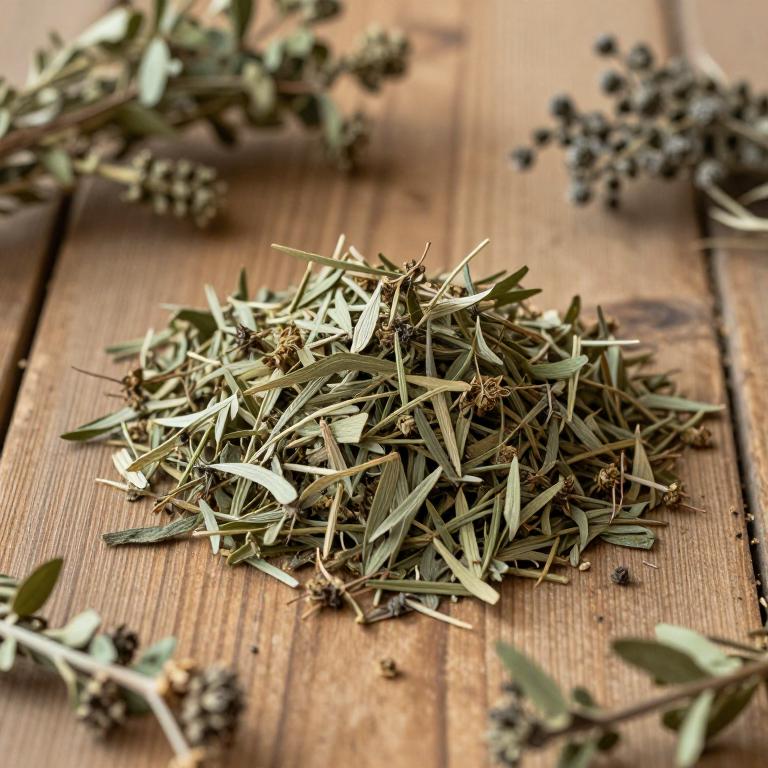
Names and Synonyms
Scientific Names
Accepted name
Phenax angustifoliusSynonyms
- Boehmeria angustifolia
- Phenax ulei
Sources: Wikidata
Taxonomical Classification
This plant belongs to the kingdom Plantae and is classified under the phylum Streptophyta within the class Equisetopsida. As a member of the subclass Magnoliidae and the order Rosales, it is further categorized into the family Urticaceae. Finally, it is identified under the specific genus Phenax.
| Rank | Classification |
|---|---|
| Kingdom | Plantae |
| Phylum | Streptophyta |
| Class | Equisetopsida |
| Subclass | Magnoliidae |
| Order | Rosales |
| Family | Urticaceae |
| Genus | Phenax |
Sources: The World Checklist of Vascular Plants (WCVP)
Distribution
This plant exhibits a widespread distribution across several distinct regions in the Americas. Within Central America, its presence is documented in both Costa Rica and Panamá. Moving toward Western South America, the species can be found in the territory of Colombia. Its range further extends into the southern reaches of the continent, specifically within Bolivia. Finally, the geographical footprint of this medicinal plant includes the country of Peru.
| Region | Area |
|---|---|
| Central America | Costa Rica |
| Central America | Panamá |
| Western South America | Bolivia |
| Western South America | Colombia |
| Western South America | Peru |
| Brazil | Brazil Southeast |
| Brazil | Brazil North |
Sources: The World Checklist of Vascular Plants (WCVP)
Botanical Identification
Ecology
The ecology of Phenax angustifolius is characterized by its remarkable adaptability across diverse forest ecosystems and a wide vertical distribution. This species can be found inhabiting a variety of environments, including riparian forests (Floresta Ciliar ou Galeria), terra firme forests (Floresta de Terra Firme), semi-deciduous seasonal forests (Floresta Estacional Semi-decidual), and ombrophilous or rainforest environments (Floresta Ombrófila). Its altitudinal tolerance is extensive, allowing it to thrive in habitats ranging from sea level (0 m AMSL) up to high-altitude elevations of 3300 m AMSL.
- Elevational range max:
- 3300 m AMSL
- Elevational range min:
- 0 m AMSL
- Habitat :
- Floresta Ciliar ou Galeria, Floresta de Terra Firme, Floresta Estacional Semidecidual, Floresta Ombrófila (= Floresta Pluvial)
Morphology
The morphology of Phenax angustifolius is characterized by a diverse set of structural adaptations, primarily manifesting as a woody herb. While it exhibits a growth form categorized as a herb, its structural integrity is defined by its woody nature. The plant is non-parasitic, functioning as an independent organism within its ecosystem. In terms of its habitat and life strategy, it is classified as a terrestrial species, though it occupies a niche that can range between aquatic, semiaquatic, and terrestrial environments. It does not function as an epiphyte, remaining strictly terrestrial rather than exhibiting holoepiphytic, hemiepiphytic, or facultative epiphytic tendencies. Additionally, the plant is self-supporting in its growth habit, lacking the climbing mechanisms associated with lianas, vines, or obligatory or facultative climbers.
- Aquatic :
- terrestrial
- Climber :
- self-supporting
- Epiphyte :
- terrestrial
- Growth form :
- tree
- Growth form :
- herb
- Parasite :
- independent
- Woodiness :
- woody
Sources: Global Inventory of Floras and Traits (GIFT)
Plant Parts
Phenax angustifolius has 1 reported plant parts identified across 1 scientific publications and several other databases that are studied for medicinal purposes. The most consistently reported plant part include leaf.
| Plant part | Supporting sources | Consensus |
|---|---|---|
| Leaf | 1 supporting sources | ★☆☆☆☆ |
Leaf
- Journal of natural products
Chemicals
Phenax angustifolius has 3 reported phytochemicals identified across 1 scientific publications and several other databases. The most consistently reported chemicals include Isovitexin, Quercetin 3-O-alpha-L-rhamnopyranoside, Vitexin.
| Chemical | Supporting sources | Consensus |
|---|---|---|
| Isovitexin | 1 supporting sources | ★☆☆☆☆ |
| Quercetin 3-O-alpha-L-rhamnopyranoside | 1 supporting sources | ★☆☆☆☆ |
| Vitexin | 1 supporting sources | ★☆☆☆☆ |
Isovitexin
- Journal of natural products
Quercetin 3-O-alpha-L-rhamnopyranoside
- Journal of natural products
Vitexin
- Journal of natural products
Preparations
Phenax angustifolius has 1 reported preparations identified across 1 scientific publications and several other databases. The most consistently reported preparations include ethanolic extract of the leaves.
| Preparation | Supporting sources | Consensus |
|---|---|---|
| Ethanolic extract of the leaves | 1 supporting sources | ★☆☆☆☆ |
Ethanolic extract of the leaves
- Journal of natural products