Phaseolus ritensis
Phaseolus ritensis · Accepted scientific name
Scientific literature: Very Sparse (0 studies) · ★☆☆☆☆
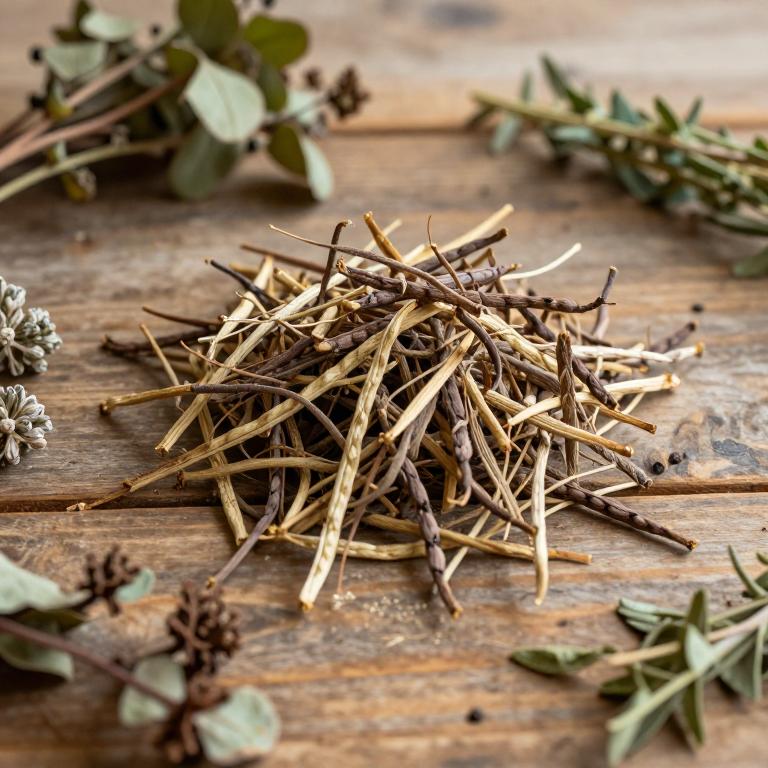
Phaseolus ritensis is a unique botanical species that holds significant interest for both researchers and traditional herbalists. While many members of its genus are known for their edible beans, this particular plant offers distinct medicinal potential through its root system. The roots are carefully harvested and processed to create various therapeutic preparations, most notably specialized teas. These infusions are often utilized in folk medicine to address specific health concerns through their bioactive compounds. Understanding the proper preparation of these root-based teas is essential for maximizing their traditional benefits.
- Synonyms
- Phaseolus Maculatus Subsp. Ritensis
- Common names
- Not available
- Family
- Fabaceae
- Distribution
- Africa
- Plant Parts
- Root
Classification
Common Names
Phaseolus ritensis is a versatile legume known by several distinct names across different regions and languages. In Spanish-speaking areas, it is frequently referred to as Frijol de Monte. It is also widely recognized by its English common name, the Santa Rita Mountain bean. Interestingly, the plant carries the descriptive Czech name fazuľa škvrnitá arizonská. These various monikers highlight the plant's widespread presence and its cultural significance in different parts of the world.
Sources: Catalogue of Life (COL)
Synonyms
Phaseolus ritensis is a botanical species that is frequently identified under a different taxonomic designation. In various scientific databases, it is recognized by its synonym, Phaseolus maculatus subsp. ritensis. This nomenclature overlap often occurs as researchers refine the evolutionary classifications of the genus. Understanding these naming variations is essential for ensuring accuracy in botanical studies and field research. Consequently, distinguishing between these terms helps botanists maintain consistency across different biological records.
Sources: The World Checklist of Vascular Plants (WCVP)
Taxonomy
Phaseolus ritensis is a unique organism belonging to the kingdom Plantae. Within this vast biological kingdom, it is specifically classified under the class Equisetopsida. Its evolutionary lineage continues through the order Fabales, which brings it into closer taxonomic proximity to other legumes. This plant is further defined by its membership in the family Fabaceae, a group known for its diverse botanical characteristics. Ultimately, it is identified by its specific genus, Phaseolus, which places it within a well-studied group of species.
| Rank | Classification |
|---|---|
| Kingdom | Plantae |
| Phylum | Streptophyta |
| Class | Equisetopsida |
| Subclass | Magnoliidae |
| Order | Fabales |
| Family | Fabaceae |
| Genus | Phaseolus |
Sources: The World Checklist of Vascular Plants (WCVP)
Distribution
Geographic Regions
Phaseolus ritensis maintains a broad geographic presence across much of Northern America, with a significant concentration found throughout Mexico. Its distribution spans various Mexican regions, including the Central, Northeast, Northwest, and Southwest territories. In addition to its Mexican range, the species extends its reach into the Southwestern United States. Specifically, the plant is known to thrive within the state of Arizona. This wide-ranging habitat underscores the plant's ability to adapt to diverse environmental conditions across the continent.
Sources: The World Checklist of Vascular Plants (WCVP)
Identification
Biological Activities
Compounds
Conditions
Preparations
Phaseolus ritensis is prepared as a tea by the Mountain Pima of Chihuahua, Mexico. This traditional preparation utilizes the root xylem of the plant to create a nutritional beverage. Researchers analyzed these native teas to determine their specific mineral content, including iron, copper, and zinc. The study highlights how this particular plant species contributes to the traditional dietary practices of the region. Such medicinal and nutritional uses underscore the cultural importance of preparing Phaseolus ritensis in this manner.
Parts used
Phaseolus ritensis is a plant of significant interest due to its traditional use by the Mountain Pima of Chihuahua, Mexico. Within these cultural practices, the plant is utilized specifically for its root xylem to create nutritious teas. Researchers have analyzed these native brews to determine their essential mineral compositions, including iron, copper, and zinc. This study highlights how specific plant parts, such as the root of Phaseolus ritensis, contribute to the dietary minerals available to local populations. Understanding these botanical relationships provides valuable insight into the medicinal and nutritional heritage of the region.