Peucedanum alsaticum
Peucedanum alsaticum · Accepted scientific name
Scientific literature: Very Sparse (19 studies) · ★☆☆☆☆
, scientifically known as Peucedanum alsaticum, is a perennial herb belonging to the Apiaceae family. Native to various European regions, this plant is distinguished by its delicate white umbels. While often noted for its ecological presence, it holds significant interest in botanical studies regarding its unique phytochemical properties.
- Family
- Apiaceae
- Native range
- Europe
- Parts used
- Fruit
- Common names
- Not available
- Scientific synonyms
- Ligusticum Alsaticum · Peucedanum Sulcatum · 15 more
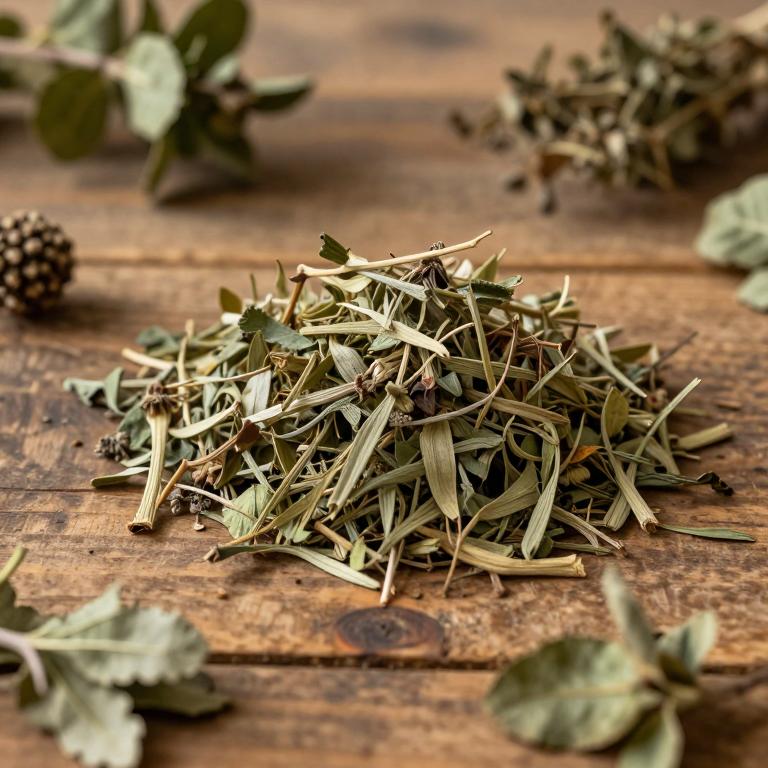
Names and Synonyms
Scientific Names
Accepted name
Peucedanum alsaticumSynonyms
- Ligusticum alsaticum
- Peucedanum sulcatum
- Pteroselinum alsaticum
- Cynorhiza sulcata
- Mylinum commutatum
- Selinum sulcatum
- Johrenia pichleri
- Cervaria alsatica
- Xanthoselinum alsaticum var. discolor
- Peucedanum alsaticum f. nikolovii
- Cnidium alsaticum
- Peucedanum lubimenkoanum
- Peucedanum nymanii
- Xanthoselinum alsaticum
- Selinum alsaticum
- Cervaria alsatica var. luteola
- Xanthoselinum alsaticum var. albiflorum
Regional and Traditional Names
German:
- Elsässer Haarstrang
Sources: Wikidata
Taxonomical Classification
This plant belongs to the kingdom Plantae and is classified within the phylum Streptophyta and the class Equisetopsida. As a member of the subclass Magnoliidae and the order Apiales, it is further nested within the family Apiaceae. Ultimately, it is categorized under the genus Peucedanum.
| Rank | Classification |
|---|---|
| Kingdom | Plantae |
| Phylum | Streptophyta |
| Class | Equisetopsida |
| Subclass | Magnoliidae |
| Order | Apiales |
| Family | Apiaceae |
| Genus | Peucedanum |
Sources: The World Checklist of Vascular Plants (WCVP)
Distribution
This plant is primarily distributed throughout the regions of Middle Europe. Within this central European territory, its presence is specifically documented in Germany. It can also be found across the landscapes of Austria and Hungary. Furthermore, the species extends its range into the territories of Czechia and Slovakia. Finally, its geographical distribution includes the country of Poland.
| Region | Area |
|---|---|
| Middle Europe | Austria |
| Middle Europe | Czechia-Slovakia |
| Middle Europe | Germany |
| Middle Europe | Hungary |
| Middle Europe | Poland |
| Southwestern Europe | France |
| Southeastern Europe | Albania |
| Southeastern Europe | Bulgaria |
| Southeastern Europe | Romania |
| Southeastern Europe | NW. Balkan Pen. |
Sources: The World Checklist of Vascular Plants (WCVP)
Botanical Identification
Ecology
The ecology of Peucedanum alsaticum is characterized by its ability to colonize a variety of terrestrial environments, showing a particular affinity for diverse landscapes ranging from open spaces to shaded areas. It is commonly found inhabiting forests and forest edges, where it utilizes the transitional light conditions provided by the periphery of woodland ecosystems. Furthermore, the species thrives in meadows, where it can access sufficient sunlight and soil moisture, and it is also known to occur within the managed landscapes of parks. This broad ecological plasticity allows it to establish itself across different successional stages and vegetation structures within its range.
- Habitat :
- forest,forestedges,meadows,parks
Life history
The life history of Peucedanum alsaticum is characterized by its existence as a perennial plant, allowing it to persist across multiple growing seasons. As a hemicryptophyte, its regenerative buds are located at or just below the soil surface, protected by leaf litter or surface debris during unfavorable periods. The species exhibits a deciduous nature, shedding its foliage annually as it transitions through its seasonal cycles.
- Deciduousness :
- deciduous
- Life form :
- hemicryptophyte
- Lifecycle :
- perennial
Morphology
The morphology of Peucedanum alsaticum is characterized by its growth form as a non-woody herb. This plant is strictly self-supporting rather than being a climber, liana, or vine, and it functions as an independent organism without parasitic tendencies. In terms of stature, the plant typically reaches an average height of 0.75 m, though its size can vary significantly, with individuals ranging from a minimum height of 0.5 m to a maximum height of 1.2 m.
- Climber :
- self-supporting
- Growth form :
- herb
- Parasite :
- independent
- Plant height max:
- 1.2 m
- Plant height mean:
- 0.75 m
- Plant height min:
- 0.5 m
- Woodiness :
- non-woody
Physiology
The physiology of Peucedanum alsaticum is characterized by a C3 photosynthetic pathway, a metabolic strategy typical of many members of the Apiaceae family that allows the plant to fix carbon dioxide through the Calvin cycle. In this process, the enzyme RuBisCO facilitates the initial carboxylation, making the plant particularly reliant on favorable environmental conditions, such as moderate temperatures and adequate moisture, to minimize photorespiration. The plant's physiological efficiency is closely tied to its ability to regulate stomatal conductance to balance CO2 uptake with transpiration rates. This metabolic framework supports the synthesis of secondary metabolites and essential oils within its tissues, which are integral to its chemical profile and overall biological function.
- Photosynthetic pathway :
- C3
Reproduction
The reproduction of Peucedanum alsaticum is characterized by a specific flowering phenology and specialized pollination and dispersal mechanisms. The flowering period is concentrated in the month of July, with both the start and end of the blooming cycle occurring during this time. The plant utilizes a biotic pollination syndrome, specifically relying on insects to facilitate the transfer of pollen. While the species is capable of self-fertilization, its reproductive success is closely tied to these insect interactions. Following successful fertilization, the plant produces seeds with a highly variable mass; the mean seed mass is approximately 0.0012295 g, with individual seeds ranging from a minimum of 0.000498 g to a maximum of 0.0015 g. Once mature, the seeds are dispersed via an anemochorous syndrome, meaning they are primarily spread by the action of the wind.
- Dispersal syndrome :
- anemochorous
- Flowering time :
- Jul
- Pollination syndrome :
- insect
- Pollination syndrome :
- biotic
- Seed mass max:
- 0.0015 g
- Seed mass mean:
- 0.0012295 g
- Seed mass min:
- 0.000498 g
- Self fertilization :
- present
Sources: Global Inventory of Floras and Traits (GIFT)
Plant Parts
Peucedanum alsaticum has 1 reported plant parts identified across 1 scientific publications and several other databases that are studied for medicinal purposes. The most consistently reported plant part include fruit.
| Plant part | Supporting sources | Consensus |
|---|---|---|
| Fruit | 1 supporting sources | ★☆☆☆☆ |
Fruit
- Journal of AOAC International
Chemicals
Peucedanum alsaticum has 13 reported phytochemicals identified across 1 scientific publications and several other databases. The most consistently reported chemicals include Alsaticol, Alsaticocoumarin A, Astragalin, Bergamottin, Divaricatol.
| Chemical | Supporting sources | Consensus |
|---|---|---|
| Alsaticol | 2 supporting sources | ★☆☆☆☆ |
| Alsaticocoumarin A | 1 supporting sources | ★☆☆☆☆ |
| Astragalin | 1 supporting sources | ★☆☆☆☆ |
| Bergamottin | 1 supporting sources | ★☆☆☆☆ |
| Divaricatol | 1 supporting sources | ★☆☆☆☆ |
| Fatty acids | 1 supporting sources | ★☆☆☆☆ |
| Furanocoumarin | 1 supporting sources | ★☆☆☆☆ |
| Furanocoumarins | 1 supporting sources | ★☆☆☆☆ |
| Ledebouriellol | 1 supporting sources | ★☆☆☆☆ |
| Notoptol | 1 supporting sources | ★☆☆☆☆ |
Alsaticol
- Journal of chromatography. A
- Journal of separation science
Alsaticocoumarin A
- Journal of chromatography. A
Astragalin
- Journal of AOAC International
Bergamottin
- Phytomedicine : international journal of phytotherapy and phytopharmacology
Divaricatol
- Journal of separation science
Fatty acids
- Chemistry & biodiversity
Furanocoumarin
- Journal of chromatography. A
Furanocoumarins
- Phytomedicine : international journal of phytotherapy and phytopharmacology
Ledebouriellol
- Journal of separation science
Notoptol
- Journal of separation science
Conditions
Peucedanum alsaticum has 4 reported investigations on conditions identified across 1 scientific publications and several other databases. The most consistently reported conditions include Gram-positive bacteria, epilepsy, infectious diseases, seizures.
| Condition | Supporting sources | Consensus |
|---|---|---|
| Gram-positive bacteria | 1 supporting sources | ★☆☆☆☆ |
| Epilepsy | 1 supporting sources | ★☆☆☆☆ |
| Infectious diseases | 1 supporting sources | ★☆☆☆☆ |
| Seizures | 1 supporting sources | ★☆☆☆☆ |
Gram-positive bacteria
- Chemistry & biodiversity
Epilepsy
- Phytomedicine : international journal of phytotherapy and phytopharmacology
Infectious diseases
- Chemistry & biodiversity
Seizures
- Phytomedicine : international journal of phytotherapy and phytopharmacology