Petunia axillaris subsp. axillaris
Petunia axillaris subsp. axillaris · Accepted scientific name
Scientific literature: Very Sparse (0 studies) · ★☆☆☆☆
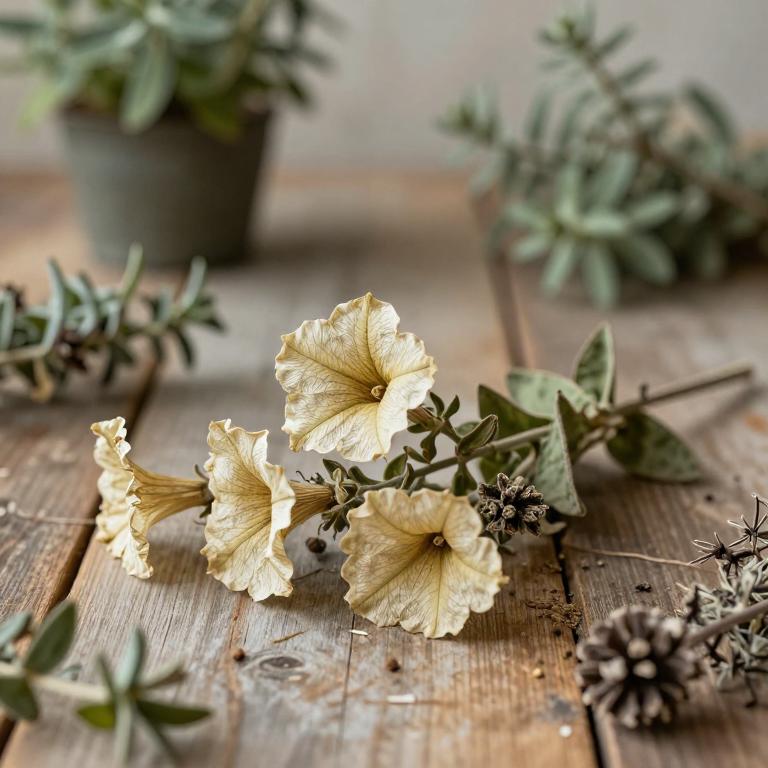
Petunia axillaris subsp. axillaris is a fragrant flowering plant widely recognized for its striking white blooms and nocturnal scent. This specific subspecies is frequently studied in botanical research due to its unique chemical profile and biological properties. To explore its therapeutic or pesticidal potential, scientists often utilize an aqueous extract derived from its plant tissues. This preparation method allows for the efficient mobilization of water-soluble bioactive compounds within the solution. Understanding the characteristics of this extract provides valuable insights into the plant's diverse phytochemical applications.
- Synonyms
- Nicotiana Axillaris Var. Nyctaginiflora · Petunia Propinqua · 4 more
- Common names
- Not available
- Family
- Solanaceae
- Distribution
- Not available
- Plant Parts
- Not available
Classification
Common Names
Petunia axillaris subsp. axillaris is a distinct botanical variety widely recognized for its striking appearance. In English-speaking regions, this plant is most commonly referred to by the name Large white petunia. Those living in German-speaking areas often identify the same species as the Weißblütige Petunie. Despite these different linguistic labels, both names describe the same beautiful flowering organism. Understanding these various common names helps gardeners and botanists connect across different cultures and languages.
Sources: Catalogue of Life (COL)
Synonyms
Petunia axillaris subsp. axillaris is a taxonomically complex plant that has been identified by various scientific names throughout history. It is formally recognized as having several synonyms, including the designations Nicotiana axillaris var. nyctaginiflora and Nicotiana axillaris var. propinqua. Researchers have also cataloged this subspecies under the names Nicotiana nyctaginiflora and Nicotiana obtusisepala. Furthermore, the plant is sometimes referred to in botanical literature as Petunia nyctaginiflora. Understanding these overlapping classifications is essential for maintaining accuracy in botanical studies and plant identification.
Sources: The World Checklist of Vascular Plants (WCVP)
Taxonomy
Petunia axillaris subsp. axillaris is a distinct botanical specimen belonging to the kingdom Plantae. Within this vast biological realm, it is classified under the class Equisetopsida. This plant is further organized into the order Solanales, a group that highlights its evolutionary lineage. It falls under the specific genus Petunia, which defines its unique physical characteristics. Finally, its placement within the family Solanaceae connects it to a diverse group of well-known flowering plants.
| Rank | Classification |
|---|---|
| Kingdom | Plantae |
| Phylum | Streptophyta |
| Class | Equisetopsida |
| Subclass | Magnoliidae |
| Order | Solanales |
| Family | Solanaceae |
| Genus | Petunia |
Sources: The World Checklist of Vascular Plants (WCVP)
Distribution
Geographic Regions
Petunia axillaris subsp. axillaris is a remarkable plant species characterized by a remarkably wide and diverse geographic distribution. It can be found across various regions of Africa, including Macaronesia and the Cape Verde islands. Its presence extends into tropical Asia, specifically throughout the Indian Subcontinent and the state of Assam in India. Furthermore, the subspecies has established itself within the Australasia region, particularly in New South Wales, Australia. This expansive range highlights the plant's ability to thrive in many different global environments.
Sources: The World Checklist of Vascular Plants (WCVP)
Identification
Biological Activities
Compounds
Conditions
Petunia axillaris subsp. axillaris is not mentioned in the provided abstracts as having any effect on Herpes simplex virus-1. Instead, the research focuses on the antiviral potential of Annona muricata and Petunia nyctaginiflora. The study specifically tested these extracts against HSV-1 and a clinical isolate from a human keratitis lesion. Results indicated that both the ethanolic extract of A. muricata and the aqueous extract of P. nyctaginiflora demonstrated an ability to inhibit the cytopathic effect on Vero cells. Both substances achieved a minimum inhibitory concentration of 1 mg/ml during these tests.
Preparations
Petunia axillaris subsp. axillaris is not mentioned in the provided abstract. The text specifically discusses the properties of Annona muricata and Petunia nyctaginiflora. While the research mentions an aqueous extract of P. nyctaginiflora, it does not address Petunia axillaris subsp. axillaris. Therefore, no relationship regarding its preparation as an aqueous extract can be established from this source. The data provided is limited strictly to the two aforementioned species.