Persicaria tinctoria
Persicaria tinctoria · Accepted scientific name
Scientific literature: Very Sparse (22 studies) · ★☆☆☆☆
Persicaria tinctoria, scientifically known as Persicaria tinctoria, is a versatile medicinal plant prized for its deep pigment and therapeutic potential. Historically utilized in traditional practices, it offers significant antioxidant properties. This robust herb serves as a vital botanical resource, bridging the gap between natural dyeing and holistic wellness.
- Family
- Polygonaceae
- Native range
- Europe
- Parts used
- Fruit
- Common names
- Not available
- Scientific synonyms
- Pogalis Tinctoria · Ampelygonum Tinctorium · 1 more
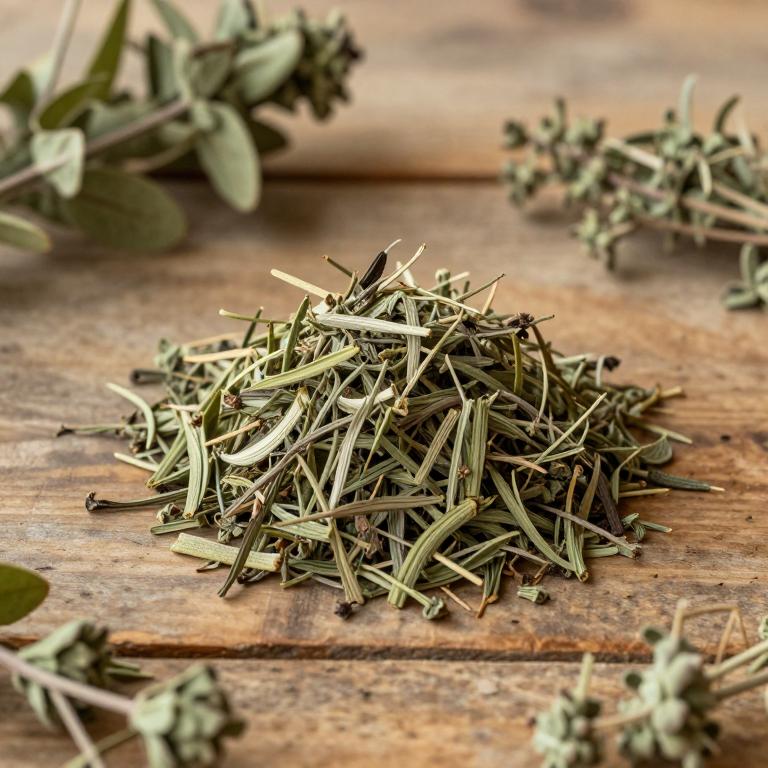
Names and Synonyms
Scientific Names
Accepted name
Persicaria tinctoriaSynonyms
- Pogalis tinctoria
- Ampelygonum tinctorium
- Polygonum tinctorium
Regional and Traditional Names
German:
- Polygonum tinctorium
Sources: Wikidata, Catalogue of Life
Taxonomical Classification
This plant belongs to the kingdom Plantae and is classified within the phylum Streptophyta and the class Equisetopsida. Following the subclass Magnoliidae, it is placed in the order Caryophyllales and the family Polygonaceae. Ultimately, it is identified by the genus Persicaria.
| Rank | Classification |
|---|---|
| Kingdom | Plantae |
| Phylum | Streptophyta |
| Class | Equisetopsida |
| Subclass | Magnoliidae |
| Order | Caryophyllales |
| Family | Polygonaceae |
| Genus | Persicaria |
Sources: The World Checklist of Vascular Plants (WCVP)
Distribution
This plant exhibits a broad geographical distribution spanning across several distinct regions of Eurasia. In Middle Europe, its presence is specifically noted within Germany. Moving eastward, the species can also be found throughout Ukraine in Eastern Europe. Its range extends significantly into the Russian Far East, where it inhabits the Kuril Islands and the Sakhalin region. Additionally, the plant is well-established in the Primorye territory of the Russian Far East.
| Region | Area |
|---|---|
| Middle Europe | Germany |
| Eastern Europe | Ukraine |
| Russian Far East | Kuril Is. |
| Russian Far East | Primorye |
| Russian Far East | Sakhalin |
| Caucasus | North Caucasus |
| Caucasus | Transcaucasus |
| China | China South-Central |
| China | Hainan |
| China | Manchuria |
Sources: The World Checklist of Vascular Plants (WCVP)
Botanical Identification
Ecology
The ecology of Persicaria tinctoria is characterized by its opportunistic growth patterns, as it is commonly found both cultivated in intentional settings and naturalized in weed-infested places. This species thrives in disturbed environments where competition from other ruderal vegetation is high, often colonizing areas with moist, nitrogen-rich soils. Its ability to naturalize suggests a high degree of adaptability to various anthropogenic landscapes, allowing it to persist in disturbed ground and neglected patches of vegetation where it can outcompete less vigorous weeds.
- Habitat :
- cultivated and naturalized in weed-infested places
Life history
The life history of Persicaria tinctoria is characterized by an annual lifecycle, meaning the plant completes its entire biological development—from germination to seed production—within a single growing season. As an annual species, it begins its life cycle by germinating from seeds in the soil, typically following seasonal moisture availability. During its vegetative phase, the plant focuses on rapid growth, establishing a robust structure of stems and foliage to maximize photosynthetic capacity. This growth phase transitions into a reproductive stage where the plant produces flowers to facilitate pollination. Once fertilization occurs, the plant directs its remaining energy into the development of seeds, ensuring the survival of the next generation before the parent organism senesces at the end of the year. Because it follows this annual pattern, the plant does not persist through dormant periods as a perennial would, instead relying on the dispersal of its seeds to reappear in subsequent growing seasons.
- Lifecycle :
- annual
Morphology
The morphology of Persicaria tinctoria is characterized by its growth form as a non-woody herb. As a self-supporting plant, it does not exhibit climbing tendencies such as a liana or vine, maintaining a structural habit that is categorized as self-supporting rather than obligatory or facultative. The plant reaches a variable height, with a minimum height of 0.3 m, a maximum height of 0.8 m, and an average plant height of approximately 0.725 m.
- Climber :
- self-supporting
- Growth form :
- herb
- Plant height max:
- 0.8 m
- Plant height mean:
- 0.725 m
- Plant height min:
- 0.3 m
- Woodiness :
- non-woody
Physiology
The physiology of Persicaria tinctoria is characterized by specific morphological dimensions of its foliage and a distinct metabolic profile regarding nutrient acquisition. The leaves exhibit significant variability in size, with lengths ranging from a minimum of 3 cm to a mean of 5.5 cm, reaching a maximum of 8 cm. Correspondingly, the leaf width varies from a minimum of 2 cm to a maximum of 4 cm. In terms of its nitrogen metabolism, the plant does not function as a nitrogen fixer, meaning it lacks the symbiotic relationship with diazotrophic bacteria required to convert atmospheric nitrogen into a usable form, relying instead on the uptake of available nitrogen from the soil substrate.
- Leaf length max:
- 8 cm
- Leaf length mean:
- 5.5 cm
- Leaf length min:
- 3 cm
- Leaf width max:
- 4 cm
- Leaf width min:
- 2 cm
- Nitrogen fixer :
- no
Reproduction
The reproduction of Persicaria tinctoria is characterized by a biotic pollination syndrome, primarily driven by insects, which facilitates the fertilization process. The flowering period typically spans from July to September, during which the plant produces inflorescences that vary in length from a minimum of 0.02 m to a maximum of 0.05 m. Following successful pollination, the plant develops small fruits with dimensions ranging from a minimum length of 0.2 cm to a maximum of 0.25 cm, maintaining an average fruit length of approximately 0.225 cm.
- Flowering time :
- Jul
- Flowering time :
- Sep
- Fruit length max:
- 0.25 cm
- Fruit length mean:
- 0.225 cm
- Fruit length min:
- 0.2 cm
- Inflorescence length max:
- 0.05 m
- Inflorescence length min:
- 0.02 m
- Pollination syndrome :
- insect
- Pollination syndrome :
- biotic
Sources: Global Inventory of Floras and Traits (GIFT)
Plant Parts
Persicaria tinctoria has 1 reported plant parts identified across 1 scientific publications and several other databases that are studied for medicinal purposes. The most consistently reported plant part include fruit.
| Plant part | Supporting sources | Consensus |
|---|---|---|
| Fruit | 1 supporting sources | ★☆☆☆☆ |
Fruit
- Zhongguo Zhong yao za zhi = Zhongguo zhongyao zazhi = China journal of Chinese materia medica
Chemicals
Persicaria tinctoria has 9 reported phytochemicals identified across 1 scientific publications and several other databases. The most consistently reported chemicals include Tryptanthrin, 3,5,4'-trihydroxy-6,7-methylenedioxyflavone, INDICAN, Indirubin, NO.
| Chemical | Supporting sources | Consensus |
|---|---|---|
| Tryptanthrin | 4 supporting sources | ★★☆☆☆ |
| 3,5,4'-trihydroxy-6,7-methylenedioxyflavone | 1 supporting sources | ★☆☆☆☆ |
| INDICAN | 1 supporting sources | ★☆☆☆☆ |
| Indirubin | 1 supporting sources | ★☆☆☆☆ |
| NO | 1 supporting sources | ★☆☆☆☆ |
| PHENANTHRENE | 1 supporting sources | ★☆☆☆☆ |
| kaempferol | 1 supporting sources | ★☆☆☆☆ |
| nitric oxide | 1 supporting sources | ★☆☆☆☆ |
| pigment | 1 supporting sources | ★☆☆☆☆ |
Tryptanthrin
- Biological & pharmaceutical bulletin
- Applied biochemistry and biotechnology
- Journal of natural products
- International immunopharmacology
3,5,4'-trihydroxy-6,7-methylenedioxyflavone
- Journal of pharmaceutical and biomedical analysis
INDICAN
- Toxicon : official journal of the International Society on Toxinology
Indirubin
- Evidence-based complementary and alternative medicine : eCAM
NO
- Journal of ethnopharmacology
PHENANTHRENE
- Food additives & contaminants. Part A, Chemistry, analysis, control, exposure & risk assessment
kaempferol
- Bioscience, biotechnology, and biochemistry
nitric oxide
- Journal of ethnopharmacology
pigment
- General pharmacology
Activities
Persicaria tinctoria has 3 reported activities identified across 1 scientific publications and several other databases. The most consistently reported activities include Antibacterial, Antioxidant, Antiviral.
| Activity | Supporting sources | Consensus |
|---|---|---|
| Antibacterial | 1 supporting sources | ★☆☆☆☆ |
| Antioxidant | 1 supporting sources | ★☆☆☆☆ |
| Antiviral | 1 supporting sources | ★☆☆☆☆ |
Antibacterial
- Scientific data
Antioxidant
- Applied biochemistry and biotechnology
Antiviral
- Scientific data
Conditions
Persicaria tinctoria has 4 reported investigations on conditions identified across 1 scientific publications and several other databases. The most consistently reported conditions include antiviral, inflammatory bowel disease, tumor, ulcerative colitis.
| Condition | Supporting sources | Consensus |
|---|---|---|
| Antiviral | 1 supporting sources | ★☆☆☆☆ |
| Inflammatory bowel disease | 1 supporting sources | ★☆☆☆☆ |
| Tumor | 1 supporting sources | ★☆☆☆☆ |
| Ulcerative colitis | 1 supporting sources | ★☆☆☆☆ |
Antiviral
- Scientific data
Inflammatory bowel disease
- Journal of pharmaceutical and biomedical analysis
Tumor
- Scientific data
Ulcerative colitis
- Journal of pharmaceutical and biomedical analysis
Preparations
Persicaria tinctoria has 3 reported preparations identified across 1 scientific publications and several other databases. The most consistently reported preparations include AcOEt extract, Naju Jjok, tryptanthrin.
| Preparation | Supporting sources | Consensus |
|---|---|---|
| Acoet extract | 1 supporting sources | ★☆☆☆☆ |
| Naju jjok | 1 supporting sources | ★☆☆☆☆ |
| Tryptanthrin | 1 supporting sources | ★☆☆☆☆ |
Acoet extract
- Journal of ethnopharmacology
Naju jjok
- Phytomedicine : international journal of phytotherapy and phytopharmacology
Tryptanthrin
- International immunopharmacology