Persicaria stagnina
Persicaria stagnina · Accepted scientific name
Scientific literature: Very Sparse (7 studies) · ★☆☆☆☆
Persicaria stagnina, is a fascinating aquatic perennial known for its unique ability to thrive in wetland habitats. Often referred to as water smartweed, this medicinal plant possesses diverse bioactive properties. It is valued in traditional herbalism for its potential therapeutic applications, offering significant interest for pharmacological and botanical research.
- Family
- Polygonaceae
- Native range
- Asia-Tropical
- Parts used
- Not available
- Common names
- Not available
- Scientific synonyms
- Persicaria Barbata Var. Stagnina · Polygonum Barbatum Var. Stagninum · 6 more
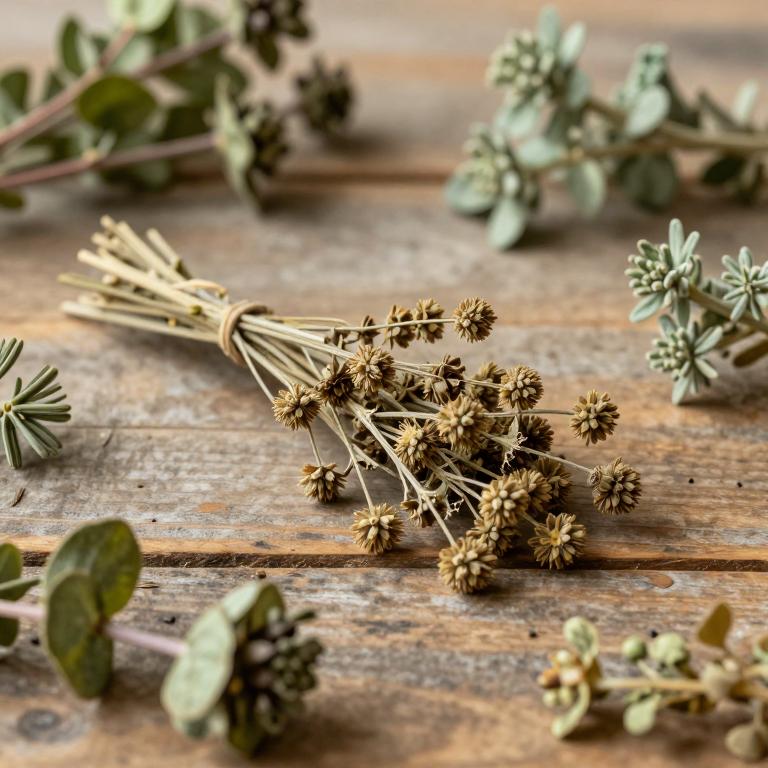
Names and Synonyms
Scientific Names
Accepted name
Persicaria stagninaSynonyms
- Persicaria barbata var. stagnina
- Polygonum barbatum var. stagninum
- Persicaria barbata subsp. stagnina
- Polygonum stagninum
- Polygonum conspersum
- Polygonum hornemannii
- Polygonum goyalparae
- Persicaria hosseusii
Sources: Wikidata
Taxonomical Classification
This plant belongs to the kingdom Plantae within the phylum Streptophyta and the class Equisetopsida. It is further classified under the subclass Magnoliidae and the order Caryophyllales. Ultimately, it is a member of the family Polygonaceae within the genus Persicaria.
| Rank | Classification |
|---|---|
| Kingdom | Plantae |
| Phylum | Streptophyta |
| Class | Equisetopsida |
| Subclass | Magnoliidae |
| Order | Caryophyllales |
| Family | Polygonaceae |
| Genus | Persicaria |
Sources: The World Checklist of Vascular Plants (WCVP)
Distribution
This plant, known scientifically as Persicaria stagnina, exhibits a specific distribution across the Indian Subcontinent. It can be found growing within the diverse landscapes of India and its neighboring country, Bangladesh. Its range also extends into the mountainous regions of the East Himalaya. Furthermore, the species is documented to inhabit parts of Pakistan. Finally, the plant has a notable presence in the specific region of Assam.
| Region | Area |
|---|---|
| Indian Subcontinent | Assam |
| Indian Subcontinent | Bangladesh |
| Indian Subcontinent | East Himalaya |
| Indian Subcontinent | India |
| Indian Subcontinent | Pakistan |
| Indian Subcontinent | West Himalaya |
| Indo-China | Myanmar |
| Indo-China | Thailand |
| Malesia | Malaya |
Sources: The World Checklist of Vascular Plants (WCVP)
Botanical Identification
Ecology
The ecology of Persicaria stagnina is characterized by its occurrence within specific altitudinal gradients, typically thriving in environments ranging from a minimum elevation of 250 m AMSL to a maximum elevation of 1175 m AMSL. This plant is specialized to inhabit wetland or semi-aquatic habitats, often found in marshy areas, shallow waters, or damp soils where moisture is consistently available. Its distribution is closely tied to these hydrological conditions, allowing it to occupy niche ecological zones within its elevational range where competition from terrestrial flora is limited by water saturation.
- Elevational range max:
- 1175 m AMSL
- Elevational range min:
- 250 m AMSL
Life history
The life history of Persicaria stagnina is characterized by its status as a perennial plant, allowing it to persist through multiple growing seasons. As a perennial species, it possesses the ability to survive unfavorable environmental conditions by utilizing underground structures to re-emerge annually. Its life cycle is closely tied to its preference for wetland or aquatic habitats, where it establishes itself and undergoes seasonal stages of vegetative growth and reproduction. Depending on the specific environmental stressors and resource availability, the plant's longevity and reproductive output can be variable, though it primarily relies on its perennial nature to maintain stable populations within its ecological niche.
- Lifecycle :
- perennial
Morphology
The morphology of Persicaria stagnina is characterized by its classification as a non-woody herb, exhibiting a growth form consistent with a herbaceous plant. This species displays a versatile ecological habit, ranging from aquatic and semiaquatic environments to terrestrial habitats. It functions as a self-supporting organism rather than a climber, maintaining its structure independently without the need for external support. Furthermore, it is an independent plant that does not exhibit parasitic behavior, and it maintains a terrestrial lifestyle rather than acting as an epiphyte.
- Aquatic :
- terrestrial
- Climber :
- self-supporting
- Epiphyte :
- terrestrial
- Growth form :
- herb
- Parasite :
- independent
- Woodiness :
- non-woody
Sources: Global Inventory of Floras and Traits (GIFT)
Chemicals
Persicaria stagnina has 1 reported phytochemicals identified across 0 scientific publications and several other databases. The most consistently reported chemicals include Stagninol.
| Chemical | Supporting sources | Consensus |
|---|---|---|
| Stagninol | 1 supporting sources | ★☆☆☆☆ |
Stagninol
- Die Pharmazie
Activities
Persicaria stagnina has 3 reported activities identified across 0 scientific publications and several other databases. The most consistently reported activities include Analgesic, Antiinflammatory, Diuretic.
| Activity | Supporting sources | Consensus |
|---|---|---|
| Analgesic | 2 supporting sources | ★☆☆☆☆ |
| Antiinflammatory | 1 supporting sources | ★☆☆☆☆ |
| Diuretic | 1 supporting sources | ★☆☆☆☆ |
Analgesic
- Pharmaceutical biology
- Die Pharmazie
Antiinflammatory
- Die Pharmazie
Diuretic
- Die Pharmazie
Conditions
Persicaria stagnina has 2 reported investigations on conditions identified across 0 scientific publications and several other databases. The most consistently reported conditions include analgesic, diuretic.
| Condition | Supporting sources | Consensus |
|---|---|---|
| Analgesic | 1 supporting sources | ★☆☆☆☆ |
| Diuretic | 1 supporting sources | ★☆☆☆☆ |
Analgesic
- Die Pharmazie
Diuretic
- Die Pharmazie
Preparations
Persicaria stagnina has 1 reported preparations identified across 0 scientific publications and several other databases. The most consistently reported preparations include crude extract.
| Preparation | Supporting sources | Consensus |
|---|---|---|
| Crude extract | 1 supporting sources | ★☆☆☆☆ |
Crude extract
- Die Pharmazie