Persicaria posumbu
Persicaria posumbu · Accepted scientific name
Scientific literature: Very Sparse (12 studies) · ★☆☆☆☆
, scientifically known as Persicaria posumbu, is a versatile medicinal herb widely utilized in traditional Ayurvedic medicine. Often found in tropical regions, this plant is celebrated for its potent anti-inflammatory, antimicrobial, and antioxidant properties. It serves as a vital natural remedy for treating various skin ailments and digestive issues.
- Family
- Polygonaceae
- Native range
- Asia-Temperate
- Parts used
- Leaf · Root
- Common names
- Not available
- Scientific synonyms
- Polygonum Posumbu
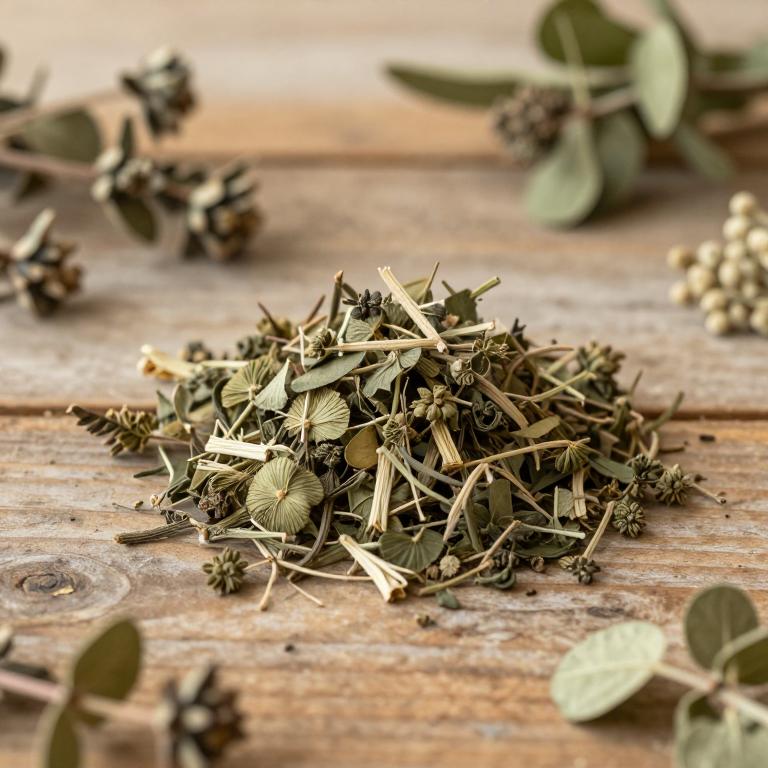
Names and Synonyms
Scientific Names
Accepted name
Persicaria posumbuSynonyms
- Polygonum posumbu
Sources: Wikidata, Catalogue of Life
Taxonomical Classification
This plant belongs to the kingdom Plantae within the phylum Streptophyta and the class Equisetopsida. Classified under the subclass Magnoliidae and the order Caryophyllales, it is a member of the family Polygonaceae. Finally, its taxonomic designation is completed within the genus Persicaria.
| Rank | Classification |
|---|---|
| Kingdom | Plantae |
| Phylum | Streptophyta |
| Class | Equisetopsida |
| Subclass | Magnoliidae |
| Order | Caryophyllales |
| Family | Polygonaceae |
| Genus | Persicaria |
Sources: The World Checklist of Vascular Plants (WCVP)
Distribution
This plant exhibits a broad geographical range across several distinct Asian regions. In the Russian Far East, its presence is noted in both the Kuril Islands and the Primorye region. Its distribution extends into the Caucasus, specifically within the Transcaucasus area. Within China, the species can be found throughout the South-Central provinces. Additionally, the plant reaches a southern extent in the tropical environment of Hainan.
| Region | Area |
|---|---|
| Russian Far East | Kuril Is. |
| Russian Far East | Primorye |
| Caucasus | Transcaucasus |
| China | China South-Central |
| China | Hainan |
| China | Manchuria |
| China | China North-Central |
| China | China Southeast |
| China | Tibet |
| Eastern Asia | Japan |
Sources: The World Checklist of Vascular Plants (WCVP)
Botanical Identification
Ecology
The ecology of Persicaria posumbu is characterized by its broad adaptability to diverse topographical and hydrological landscapes. It thrives in a variety of environments, including forests, mountainous terrains, riverbanks, shrubberies, and stony places, demonstrating a high tolerance for different substrate types. This plant occupies a significant altitudinal gradient, with its distribution spanning from lowlands at 150 m AMSL to high-altitude regions reaching a maximum of 3000 m AMSL. On average, the species is found at an elevation of approximately 1575 m AMSL, indicating a preference for mid-to-high altitude ecological niches within its range.
- Elevational range max:
- 3000 m AMSL
- Elevational range mean:
- 1575 m AMSL
- Elevational range min:
- 150 m AMSL
- Habitat :
- forest, mountains, rivers, shrubberies, stony places
Life history
The life history of Persicaria posumbu is characterized by an annual lifecycle, meaning the plant completes its entire biological progression—from germination to seed production—within a single growing season. As an annual species, it typically emerges following seasonal moisture or temperature shifts, rapidly establishing its vegetative structure to take advantage of available nutrients and light. Throughout its short lifespan, the plant focuses heavily on reproductive development, culminating in the production of flowers and seeds that ensure the survival of the next generation before the individual plant dies off at the end of its cycle. This rapid developmental strategy allows it to colonize disturbed habitats or seasonal wetlands effectively, relying on the dispersal of its seeds to persist in the environment across successive years.
- Lifecycle :
- annual
Morphology
The morphology of Persicaria posumbu is characterized by its growth form as a non-woody herb. This plant is an independent species, functioning as a terrestrial organism rather than an epiphyte or parasite. It exhibits a versatile ecological range, capable of thriving in aquatic, semiaquatic, or terrestrial habitats. Structurally, it is a self-supporting plant, lacking the climbing tendencies of a liana or vine. In terms of stature, the plant maintains a relatively low profile, with a height ranging from a minimum of 0.45 m to a maximum of 0.7 m.
- Aquatic :
- terrestrial
- Climber :
- self-supporting
- Epiphyte :
- terrestrial
- Growth form :
- herb
- Parasite :
- independent
- Plant height max:
- 0.7 m
- Plant height min:
- 0.45 m
- Woodiness :
- non-woody
Physiology
The physiological structure of the foliage in Persicaria posumbu is characterized by a distinct range of morphological dimensions that define its photosynthetic surface area. The leaves exhibit a variable length, typically maintaining a mean length of 4.5 cm, though they can fluctuate between a minimum of 3 cm and a maximum of 6 cm. This longitudinal variation is complemented by a relatively narrow width profile, which ranges from a minimum of 1 cm to a maximum of 2 cm. These specific leaf dimensions contribute to the plant's overall vegetative architecture, facilitating efficient light interception and gas exchange within its natural habitat.
- Leaf length max:
- 6 cm
- Leaf length mean:
- 4.5 cm
- Leaf length min:
- 3 cm
- Leaf width max:
- 2 cm
- Leaf width min:
- 1 cm
Reproduction
The reproduction of Persicaria posumbu is characterized by a specific flowering phenology and the development of small, specialized reproductive structures. The flowering period typically commences in August and concludes in October, although the timing can be variable depending on environmental conditions. During this phase, the plant produces inflorescences that range in length from a minimum of 0.05 m to a maximum of 0.1 m. Following successful pollination, the plant develops dry fruits that exhibit a consistent size profile; these fruits typically measure a minimum of 0.2 cm, with a mean length of 0.225 cm and a maximum length of 0.25 cm. The resulting seeds are highly uniform in volume, maintaining a consistent measurement of 1.4 mm³ for the minimum, mean, and maximum values recorded.
- Flowering time :
- Aug
- Flowering time :
- Oct
- Fruit dryness :
- dry
- Fruit length max:
- 0.25 cm
- Fruit length mean:
- 0.225 cm
- Fruit length min:
- 0.2 cm
- Inflorescence length max:
- 0.1 m
- Inflorescence length min:
- 0.05 m
- Seed volume max:
- 1.4 mm³
Sources: Global Inventory of Floras and Traits (GIFT)
Plant Parts
Persicaria posumbu has 3 reported plant parts identified across 3 scientific publications and several other databases that are studied for medicinal purposes. The most consistently reported plant part include leaf, root, stem.
| Plant part | Supporting sources | Consensus |
|---|---|---|
| Leaf | 1 supporting sources | ★☆☆☆☆ |
| Root | 1 supporting sources | ★☆☆☆☆ |
| Stem | 1 supporting sources | ★☆☆☆☆ |
Leaf
- Fitoterapia
Root
- Fitoterapia
Stem
- Fitoterapia
Chemicals
Persicaria posumbu has 7 reported phytochemicals identified across 3 scientific publications and several other databases. The most consistently reported chemicals include (-)-Epicatechin, apigenin, genistein, kaempferol, luteolin.
| Chemical | Supporting sources | Consensus |
|---|---|---|
| (-)-Epicatechin | 1 supporting sources | ★☆☆☆☆ |
| apigenin | 1 supporting sources | ★☆☆☆☆ |
| genistein | 1 supporting sources | ★☆☆☆☆ |
| kaempferol | 1 supporting sources | ★☆☆☆☆ |
| luteolin | 1 supporting sources | ★☆☆☆☆ |
| myricetin | 1 supporting sources | ★☆☆☆☆ |
| quercetin | 1 supporting sources | ★☆☆☆☆ |
(-)-Epicatechin
- Fitoterapia
apigenin
- Fitoterapia
genistein
- Fitoterapia
kaempferol
- Fitoterapia
luteolin
- Fitoterapia
myricetin
- Fitoterapia
quercetin
- Fitoterapia
Preparations
Persicaria posumbu has 1 reported preparations identified across 3 scientific publications and several other databases. The most consistently reported preparations include leaves extract.
| Preparation | Supporting sources | Consensus |
|---|---|---|
| Leaves extract | 1 supporting sources | ★☆☆☆☆ |
Leaves extract
- Fitoterapia